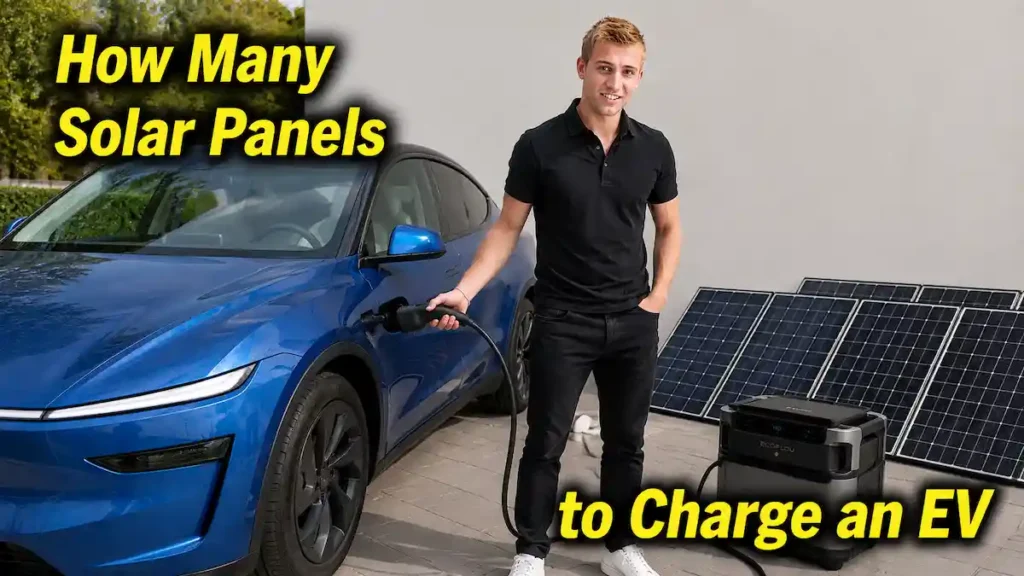
Thinking about using solar panels to charge your electric car? The first thing you probably want to know is—how many do you actually need? that answer comes down to a few key things: how far you drive each day, the size of your EV’s battery, and how much sunlight your roof actually gets. Some folks find a small rooftop setup covers them just fine, while others need a bigger system—or even battery storage—before solar charging works all year long.
Let’s get practical. We’ll use real numbers here so you know just what sort of solar system it takes to charge your EV at home, especially as we head into 2026.
If you’re just looking for a simple answer, most electric vehicles need between 10 and 25 solar panels to support regular home charging in 2026. The exact number depends on how far you drive each day, the efficiency of your EV, and the size of your solar setup.
Light drivers can often get by with fewer panels, while daily commuters or heavier vehicles will need a larger system to stay fully powered without relying too much on the grid.
What Solar System Size Do You Actually Need for EV Charging?
Before looking at exact numbers, it’s important to understand that EV charging demand is not the same for every household. Your driving pattern, vehicle size, and whether you use battery storage all play a major role in how big your solar system needs to be.
Instead of guessing, it’s better to match your driving habits with a realistic system size range.
| Driving Style | Recommended Solar System | Battery Storage |
|---|---|---|
| Light daily driving | 5–6 kW system | Optional |
| Daily commuting | 6–8 kW system | Recommended |
| Heavy driving / long distance | 10 kW+ | Strongly recommended |
| Multiple EVs | 12–15 kW+ | Large battery bank required |
This table is not about exact limits — it’s a practical guide based on real-world usage. In most homes, energy demand changes daily, so the goal is to size your system with some flexibility rather than running it at maximum capacity all the time.
Light drivers can often manage with a smaller system, especially if charging happens during peak sunlight hours. Daily commuters usually benefit from mid-sized systems that balance home use and EV charging. Heavy drivers or multi-EV households typically need larger setups with battery storage to stay fully independent.
How Much Solar Does an EV Really Need?
If you want a real answer—not just the stuff you see in ads—you need to start with honest energy usage. Your electric car doesn’t always use the same amount of power; it comes down to how far you drive, your style behind the wheel, and how efficient your car is.
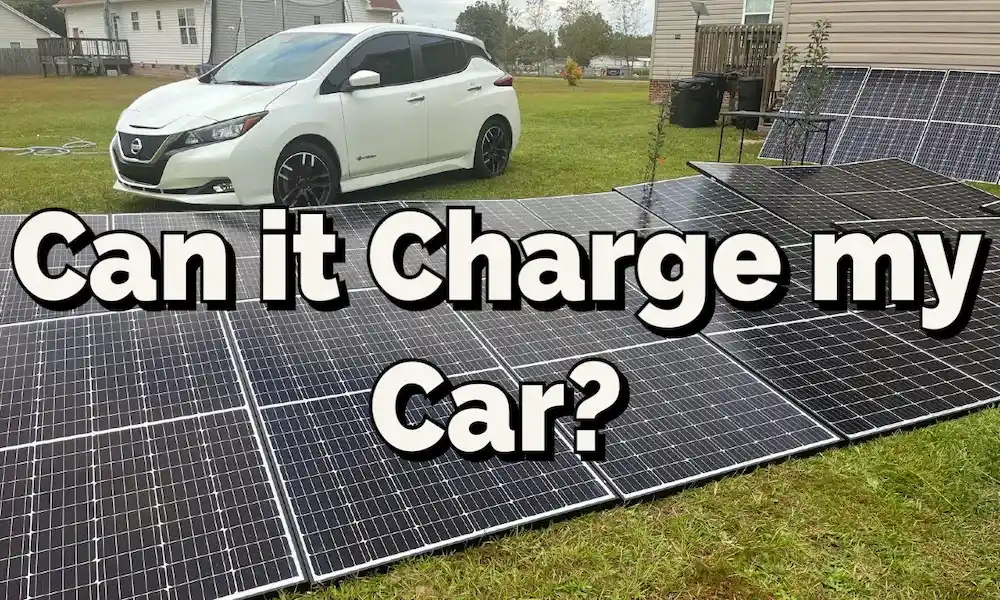
Image by Rodney Hunt
Most EVs need somewhere between 25 and 35 kWh for a full charge, but on a regular day, most people don’t use that much. Average drivers use about 6 to 15 kWh per day for normal commuting or errands. That’s the number that actually matters when deciding how many solar panels you’ll need.
A typical solar panel for home use gives you between 350 and 450 watts, which adds up to about 1.5 to 2 kWh per day under decent sunlight. What does that mean in plain terms? You don’t just slap a single panel on your roof and expect to power a car—you need a small group of panels working together to make up your daily driving needs.
So, if you don’t drive much and stick to local trips, you could get by with 10 to 12 panels. Got a regular commute? Most people need around 15 to 20 panels. If you drive a lot, have a big EV, or want to be totally independent from the grid, you’ll be looking at 25 panels or more.
While these numbers give a good starting point, the real-world setup can vary depending on system design and storage capacity. For a deeper breakdown of how solar actually performs in real conditions, see our guide on how much solar power is needed for EV charging systems in different home setups.
What Does a Real Setup Look Like?
Homeowners usually think in terms of system size, not just a pile of panels. For light EV use, a 6kW solar system typically does the trick, especially if you’re okay boosting it with some electricity from the grid or you’re mindful of your energy use. It’s a great entry level—enough to cut your bills, but not break the bank.
Step it up to an 8kW or 10kW system and daily charging for your EV starts to feel effortless for most households. This is the sweet spot for a lot of people—enough to keep up with your home’s electricity needs and your car charging, without making you depend too much on the grid.
If you drive a lot, have a bigger vehicle, or you’ve got more than one EV in the garage, larger systems—think 12kW and up—are the way to go. At this point, solar takes over as your main energy source, and people usually add battery storage to make sure they can still charge up even at night or when the weather’s bad.
Installation costs and system design also play a big role in whether your EV charging setup will work efficiently long term. We’ve covered a full breakdown of home solar EV installation costs and setup requirements in different regions for homeowners planning a system upgrade.
Different electric vehicles also have different energy demands, so matching your EV type with the right solar-friendly car can make a big difference in how efficient your system performs.
| EV Model | Best For | Solar Compatibility |
|---|---|---|
| Tesla Model Y | Daily home charging | Excellent |
| Hyundai Ioniq 6 | High efficiency commuting | Excellent |
| Ford F-150 Lightning | Home backup + EV power | Very Good |
| Aptera | Solar-assisted driving | Unique |
| Lightyear 2 | Solar integration future tech | Emerging |
In most cases, Tesla and Hyundai EVs tend to work best with standard home solar systems, while newer solar-focused EVs like Aptera represent where the technology is heading.
Costs and What Really Pays Off
How much this all costs depends mainly on how big a system you pick. But here’s the thing: long-term value matters more than what you pay up front. Smaller systems cost less at first, but you’ll still need the grid sometimes. Going bigger means shelling out more money now, but you get more freedom and protection against rising bills down the road.
Most people land somewhere in the middle—enough panels to cut bills noticeably without spending a fortune. These mid-sized systems hit a nice balance, saving you money over time and making the installation costs feel worthwhile once you’re using less power from the grid.
How Does This Work in Day-to-Day Life?
Everything depends on your habits. If you mostly drive short trips, a smaller solar setup (and charging when the sun’s strong) usually does the job.
Daily commuters need a system that’s a little more steady and reliable—that’s where a medium-size solar array makes sense. You get enough energy for the car and home, with less risk of running short.
If you drive long distances, have a big SUV, or use your car a ton, you’ll need a bigger setup. Here, solar isn’t just about saving money; it means you’re much more likely to always have the power you need, day or night.
Quick Solar Sizing Guide for EV Charging (2026)
If you want to keep things simple, here’s what most EV owners actually need—without getting bogged down in complicated calculations.
The number of solar panels you’ll need mostly comes down to two things: what kind of EV you drive and how far you go each day. Smaller electric cars that don’t rack up lots of miles won’t need many panels. Bigger vehicles or folks who drive a lot will need a much larger solar setup to stay off the grid.
Here’s how it usually breaks down:
- Small EV or light daily driving: about 8 to 12 panels
- Standard EV with regular commuting: roughly 12 to 20 panels
- SUVs, long-range EVs, or high-mileage drivers: expect 20 to 30 (or more) panels
These numbers are based on average sunlight and standard home panels (350–450W each). Your actual needs could be a little higher or lower depending on where you live, how much roof room you have, and if you add battery storage.
The key idea is simple: the more you drive, the more energy you burn, so you’ll need more panels to stay truly energy independent.
Real Calculation
To understand how this works in real life, it helps to break the numbers down instead of guessing.
Let’s say your EV uses around 10 kWh per day for normal driving. Now, a typical solar panel produces about 1.5 to 2 kWh per day, depending on sunlight conditions and location.
So the basic calculation looks like this:
10 kWh daily usage ÷ 1.8 kWh per panel ≈ 6 solar panels
At first glance, that seems low, but in real-world conditions you always need to account for:
- system losses (inverter efficiency)
- cloudy days
- battery charging/storage losses
- seasonal sunlight variation
When you adjust for these factors, the practical system size usually increases by 30% to 70%, which brings a realistic setup closer to 10–12 panels for light EV use, and much higher for daily full charging.
This is why most homeowners don’t rely on raw math alone — they size their system based on real-world energy demand, not just theoretical output. before choosing a system, it’s also important to understand what financial support is available. In many regions, homeowners can reduce installation costs significantly through EV solar incentives and government rebate programs in 2026.
FREQUENTLY ASKED QUESTIONS
Can solar panels fully charge an electric car?
Yep, solar panels can fully charge your EV—if your system is big enough. With enough panels and maybe battery storage, most homes can handle daily EV charging without leaning too much on the grid. If your system’s on the small side, you’ll probably cover part (but not all) of your charging.
How many solar panels do I need for an EV?
Most EV owners need somewhere between 10 and 25 panels. Light drivers can get by with fewer, while folks with long commutes or larger EVs need more power to keep charging reliably.
What size solar system works best for EV charging?
For most households, a home EV charging setup lands in the 6kW to 10kW range. Smaller systems cover light use; if you’re charging daily or want real energy independence, go bigger.
Can I charge an EV using just solar power?
You can, as long as your system can keep up. You’ll want enough solar output during the day and, ideally, battery storage if you plan to charge at night or on cloudy days. If you skip battery backup, you might still draw some power from the grid on occasion.
FINAL CONCLUSION
The number of solar panels needed to charge an EV is not a fixed figure — it depends entirely on how you drive, how much energy your car consumes, and how large your solar system is.
For most homeowners in 2026, a mid-sized solar setup offers the best balance between cost, reliability, and performance. Instead of focusing only on panel count, the smarter approach is to size your system based on daily energy usage and future needs.
As solar technology continues to improve, EV charging at home is becoming more practical, more affordable, and increasingly independent from the grid — making solar-powered transportation a realistic option for everyday drivers. beyond the technical side, there’s also a growing shift toward renewable-powered transportation. We explore this deeper in our breakdown of how clean energy charging is reshaping EV usage and home energy systems.
Author