The Tesla Solar Roof is a roofing system that effectively presents renewable energy in a beautiful manner for homeowners wishing to beautify their homes. Unlike traditional panels capable of mounting on your roof, it offers glass tiles, styled to resemble slate, Tuscan, or smooth roofing styles, into which integrate with solar. But in 2026, there is, of course, the big question: How much cost?
Top Solar Picks examines real-world pricing down to specifications and installation, pros and cons, and payback considerations so you could think and decide if the luxury solar option is meant for you.
What is The Tesla Solar Roof?
The Tesla Solar Roof is intended to replace an existing roof with a system of active solar tiles combined with inactive filler tiles giving the appearance of seamlessness. The active tiles include high-efficiency monocrystalline photovoltaic cells that produce the electricity to power your home, while the inactive tiles cover shaded or edge areas, making the roof appear visually uniform.
In 2025, Tesla will offer four styles: Smooth, Textured, Slate, and Tuscan. Each tile measures 15″x45″ and produces 72 watts of power. The tiles connect to a Tesla inverter, which transforms DC electricity from the tiles into AC electricity. The optional Powerwall batteries allow the additional energy to be saved for nighttime use or outages, increasing your home’s energy independence.
Tesla Solar Roof Specs (2026)
Here’s a very thorough introduction to the technical specifications for Tesla Solar Roof in 2025:
- Power output: 72W per active tile (ideal system: 10- 20 kW)
- Efficiency: Tile 19.8%, system 11-14.5% (whereas they are 15-22% for conventional panels)
- Durability: Class 4 hail (2″ @ 90 mph), 166 mph wind, Class A fire
- Warranty: 25 years on power (to 80% output) and 25 years on product/weatherproofing
- Weight: 13.5 lbs per square foot; similar to concrete tiles
- Inverter: Tesla Solar Inverter, 97.5% CEC efficiency, app controlled for monitoring
According to Tesla, improvements in their V4 tiles increased low-light performance from 5–10% and included hail protection upgrades in particularly storm-prone areas. Real-world installed examples in 2024-2025 suggest that, as a whole, systems produce slightly less than “traditional” panels because of the inactive tiles and flat mounting angles.
How Much Will a Tesla Solar Roof Cost in 2026?
The cost of a Tesla solar roof is dependent on the size of the roof, complexity, and optional upgrades. Here is a practical estimate from all installations:
- Small (5-8 kW, 1200 sq ft): $60,000-$80,000 pre-incentive; $42,000-$56,000 after 30% ITC. Estimated monthly savings: $50-$75. Payback: 12-18 years.
- Average (10-15 kW, 2000 sq ft): $100,000-$111,000 pre-incentive; $70,000-$78,000 after 30% ITC. Monthly savings: $120-$180. Payback: 15-22 years.
- Large (20+ kW, 3,000+ sq ft): $150,000-$200,000 pre-incentive; $105,000-$140,000 after 30% ITC. Monthly savings: $200-$300. Payback: 18-25 years.
These costs assume removal of the old roof ($6,000-$20,000), underlayment, tiles, inverter, permits, and labor. Most homeowners also add 2-3 Tesla Powerwalls ($11,500 each), increasing the total cost by $23,000-$34,500.
Installation Process & Timeline
Most of the installation is done by Tesla, but there can be a few steps certified through third parties. Typical timeline in 2025:
- Design & Quote (1-3 days): Tesla online tool takes an address and usage to generate a custom layout.
- Assessment (1-2 weeks): Virtual or in-person scans of the roof for completing the design.
- Permitting (3-8 weeks): Tesla is submitting local permits. This is where things get delayed.
- Installation time frame: 1-2 weeks for full roof removal, tile installation, and optional Powerwall set up.
- Inspection, PTO (2-6 weeks): approval by the utility and finally the commissioning of the system.
- Total timeline: 3-6 months, varying by state, roof complexity, and board availability.
Tesla Solar Roof vs. Conventional Solar Panels Plus Roof Replacement
A Tesla Solar Roof cannot be beaten when it comes to aesthetics, but everything is an efficiency and economics game. Below is an average 12 kW system comparison:
- Total Cost: Tesla Solar Roof: $100K-$111K | Panels + Roof: $40K-$50K
- Per Watt: Tesla: $7-$16 | Panels: $2.50-$3.50
- Efficiency: Tesla: 11%-14.5% | Panels: 15%-22%
- Annual Output: Tesla: 15,000-18,000 kWh | Panels: 18,000-21,000 kWh
- Payback: Tesla: 15-25 years | Panels: 7-12 years.
- Install Time: Tesla: 3-9 months | Panels: 1-3 months
- Best For: Tesla: Aesthetics & new roofs | Panels: ROI & flexibility
If return on investment is to be as quick as possible, then the panels still offer the better solution. In contrast, for visibility and a roof replacement, Tesla Solar Roof is one of a kind; it’s special.
Related Posts
Pros & Cons of Tesla Solar Roof
Advantages:
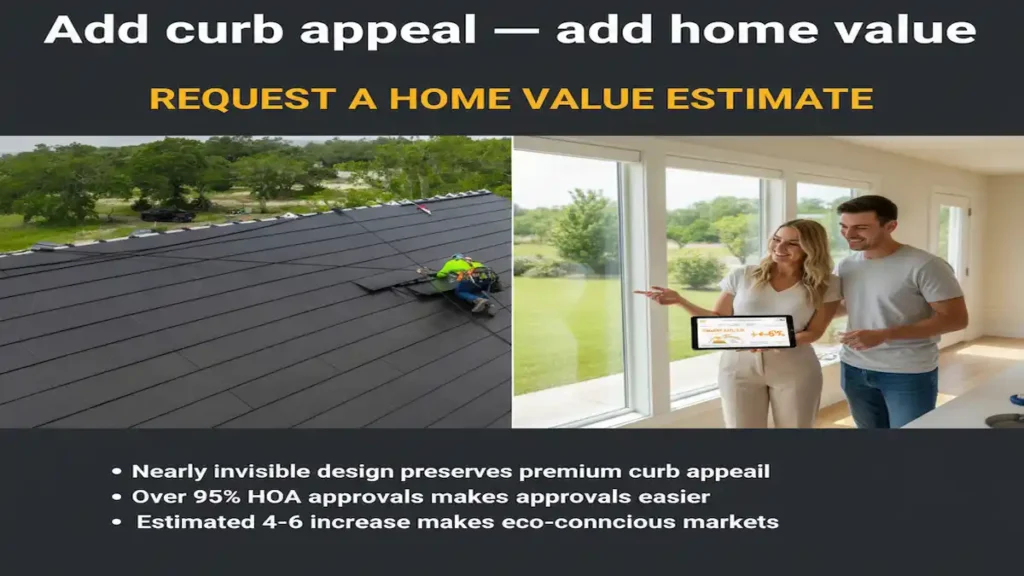
- Visual appeal is seamless, making it ideal for luxury homes or homes restricted by HOAs.
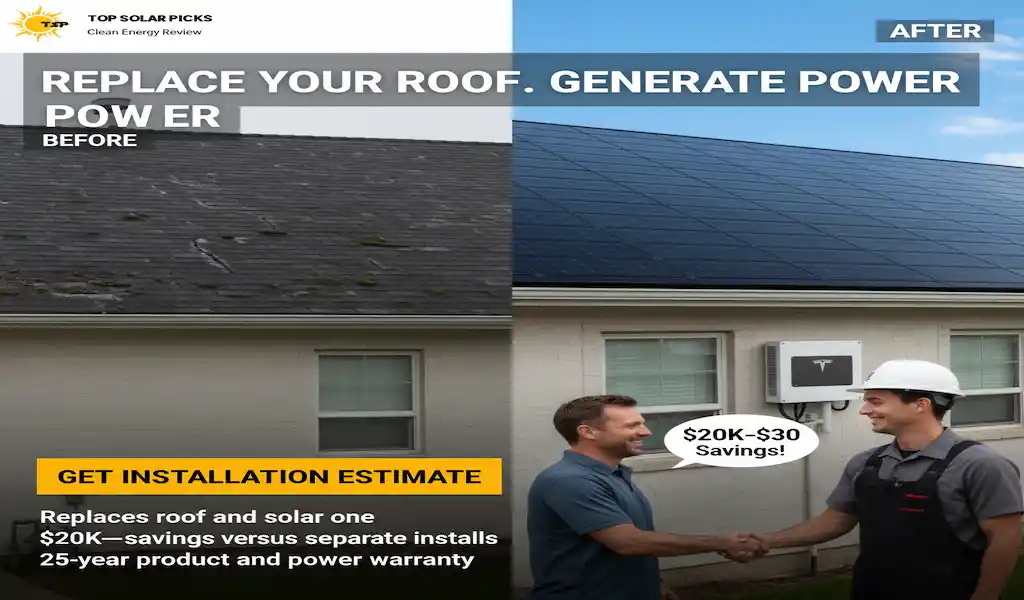
- Controls roof replacement and generation of solar power all in one.
- Class 4 hail, Class A fire, and up to 166 mph wind resistance.
- Integrated Powerwall and monitoring app.
- 25-year warranties covering both power and weatherproofing.
Disadvantages:
- Very high initial price saw between 2.5 and 4 times the cost on a per-watt basis compared to panels.
- System-wide efficiencies are a little lower, hovering just around 11-14.5.
- Installation delays that could arise from permits or from the lack of proper third-party crews.
- The system is non-modular, hence there are no options for adding tiles later.
- Limited installer availability in certain areas.
Returning the investment in Tesla Solar Roof
The average payback period is between 15 and 25 years depending on system size, availability of sunlight, the price of electricity, and the number of Powerwalls. This is significantly longer than traditional panels which pay back in about 7 to 12 years. A Tesla Solar Roof can uplift home values by 4 to 6% and offset 60 to 100% of electricity bills in very sunny areas.
An easy formula for payback on investment: Net Cost ÷ Annual savings = Payback Years
Example: 78,000 net cost ÷ 4,500 annual savings = 17 years.
Frequently Asked Questions
Does a Tesla Solar Roof increase home value?
Indeed, it can increase home value by around 4 to 6 percent in particular neighborhoods keen on sustainability.
Is it good for cloudy places?
Indeed, a drop in production of around 20 to 30 percent could be expected; nevertheless, the system will still offset 60 to 80 percent of the electricity bills.
Can I later add tiles?
No, the Tesla Solar Roof has to be installed and replaced all at once since it operates as a standalone system.
Does it weigh more than a traditional roof?
No, the tiles weigh around 13.5 pounds per square foot, similar to concrete tiles.
When can I purchase it in the UK?
Currently on waitlist; expected cost £22K-55k, eligible for SEG once launched.
Final Verdict
The Tesla Solar Roof is poised for releases in 2026. It encompasses the best standards in solar aesthetics and durability. It will suit homeowners needing the new roof, who value design, and want seamless integration in the Tesla ecosystem.
Yet this option cannot apply to pure ROI purposes since it commands high upfront costs and long payback cycles. In most households, the traditional solar panel still proves quicker, less pricey, and more efficient. But for anyone looking for luxury, long-term strength, and a roof that doubles as energy generation, there’s really nothing else out there to compare with the Tesla Solar Roof.

 FAQs
FAQs