
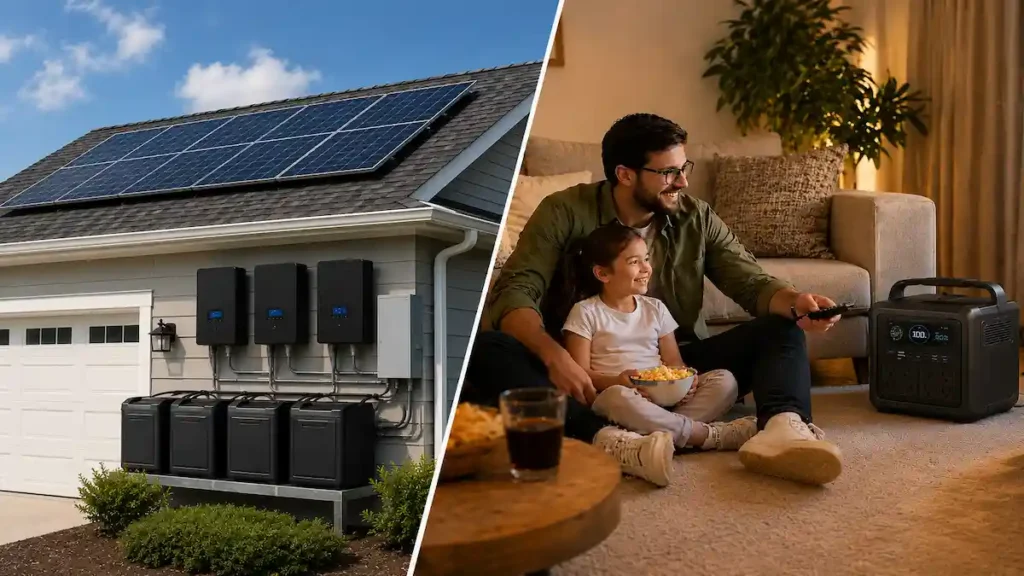
A lot of homeowners are weighing whether a solar generator or a full home solar system is the smarter choice in 2026. Electricity bills keep climbing, outages still happen in many of places, and more folks just want some control over their energy.
Honestly, it’s easy to get mixed up. The names are pretty similar, both run on solar power, both promise backup juice, and both sound like a good way to break free from the grid. But when you actually see them working day in and day out, the gap is obvious.
Solar generators are all about convenience and having standby power for emergencies. Full home solar systems, though, are meant for steady energy production and powering everything in your house day-to-day, so you become less reliant on utilities. that basic difference changes the whole game.
Most people only realize the difference after buying
A solar generator is basically a battery that stores electricity. You charge it, either from the wall or from solar panels, and then you use that stored energy when you need it. It is portable, flexible, and easy to set up.
That is why brands like EcoFlow and Bluetti have become so popular. People like the idea of something you can just plug in and immediately use during a blackout without needing installers or roof work.
But the limitation is something many people only notice after living with it for a while. Once the battery is drained, you are waiting again. You are back to recharging.
A home solar system behaves differently. It doesn’t rely on a fixed stored amount of energy in the same way. It keeps generating electricity every day as long as there is sunlight. That energy can run your home directly and, if there is a battery system attached, store extra power for later.
This is why systems like the Tesla Powerwall are often paired with rooftop solar. The goal is not just backup power. The goal is continuous energy supply.

Why You Can Trust Top Solar Picks
We compare real-world solar performance, charging reliability, long-term user experiences, and practical testing — not just manufacturer claims. Products from brands like EcoFlow, Bluetti, Jackery, and Eco-Worthy are cross-checked using actual usage data and customer feedback.
Learn more →Solar Generator vs Home Solar System Comparison
| Feature | Solar Generator | Home Solar System |
|---|---|---|
| Purpose | Emergency backup power | Long-term electricity generation |
| Installation | Not required | Required (professional setup) |
| Cost (upfront) | Low to medium | High |
| Power capacity | Limited | High (can power entire home) |
| Running time | Depends on battery size | Continuous during sunlight |
| Portability | Yes | No |
| Maintenance | Very low | Moderate |
| Electricity bill savings | Minimal | Significant |
| Works during blackout | Yes (limited time) | Yes (with battery system) |
| Expandability | Limited | High |
| Best use case | Renters, emergencies, small backup | Homeowners, long-term savings |
Where most people get the comparison wrong
The biggest mistake in this comparison is assuming both systems are trying to do the same job. They are not.
A solar generator is closer to an emergency tool. Something you keep ready for outages, travel, or situations where the grid goes down unexpectedly.
A home solar system is closer to infrastructure. It is part of the house itself. It is designed to reduce electricity costs over years, not just provide temporary backup.
Once you see it like that, the comparison stops being “which one is better” and becomes “what problem am I trying to solve?”
What actually happens in real usage
In real life, a solar generator is usually enough for keeping essentials running. Things like a fridge, lights, Wi-Fi, phones, and small electronics can run comfortably depending on the size of the system.
But homes don’t run on essentials alone.
The moment you add air conditioning, cooking appliances, water heating, or multiple devices running at the same time, the energy demand increases quickly. That is where portable systems start to show their limits.
A home solar system handles that situation differently because it is not working from a fixed battery alone. It is producing electricity continuously during the day. So instead of slowly draining stored energy, it is replenishing it while also powering the home.
That is the core difference in performance.
Cost is where the decision usually becomes emotional
Solar generators feel easier to buy because the cost is lower upfront. You can get a small system without thinking too much about long-term commitment. That makes it attractive for quick decisions or emergency planning.
A home solar system is a completely different financial step. It requires installation, planning, and a much higher upfront investment. But over time, it can reduce electricity bills significantly depending on usage and local energy costs.
So the real comparison is not just price. It is short-term spending versus long-term savings.
One is something you buy for convenience today. The other is something you install to reduce costs for years.
Explore the latest solar deals and discounts on trusted brands like Bluetti, EcoFlow, ECO-WORTHY, and Jackery. Browse solar generators, panels, and accessories at great prices.
View DealsWhy solar generators are growing so fast
The rise in solar generators is not random. It is happening because people want control without complexity.
Nobody wants to deal with permits, installers, or roof modifications if all they need is backup power. A solar generator gives them that control immediately.
It is especially useful for renters, apartment residents, and people who move frequently. You can take it with you, store it, or expand it depending on your needs.
But that flexibility also comes with limits. It is not designed to scale into full household energy replacement unless you invest heavily in larger systems.
Why home solar is still the long-term winner
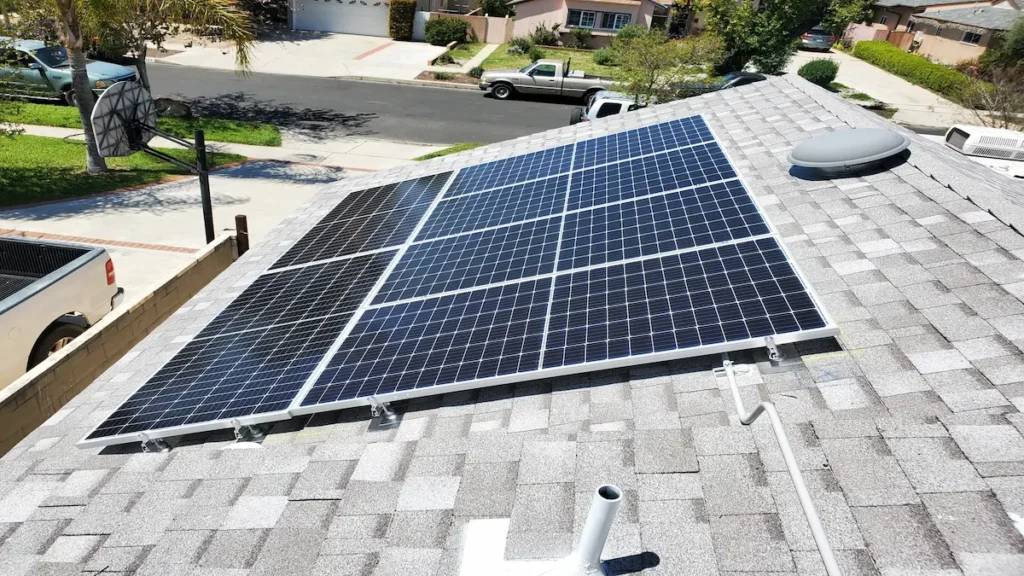
Image by Nrg Clean Power
Even with all the improvements in portable systems, home solar still dominates when it comes to long-term energy independence.
The reason is simple: it produces electricity every single day.
Instead of thinking about backup, you start thinking about replacement. Your home begins generating part or all of its own electricity, which reduces dependence on utility companies.
Over time, that changes how electricity costs affect you. Instead of reacting to rising bills, you are producing your own energy.
That shift is what makes home solar a long-term investment rather than just a product.
The part most comparisons ignore
One thing that rarely gets explained properly is real household energy behavior.
People usually think in terms of devices. A fridge uses this much, a TV uses that much. But in reality, homes don’t operate in isolation.
Multiple systems run at the same time. Energy spikes happen without warning. Weather affects usage. Air conditioning alone can change everything.
So when someone buys a system based only on device estimates, they often end up surprised.
This is why undersizing is one of the most common mistakes in both solar generators and home solar systems.
A simple way to understand the decision
If you strip everything down, the decision becomes much simpler than most people think.
A solar generator is for situations where you want immediate backup power without changing your home setup.
A home solar system is for situations where you want to reduce or replace electricity usage over time.
They are not competing in the same category. They just overlap in a few situations, which is where the confusion comes from.
The hybrid approach more people are choosing
There is also a growing middle path.
Some homeowners now use rooftop solar for daily energy needs while keeping a solar generator for emergencies or flexibility.
It makes sense because no single system covers every scenario perfectly.
If the grid goes down for a short time, the generator handles essentials. If it is a long-term reduction in electricity bills, the solar system handles that.
Together, they create a more complete energy setup.
Final thought
The choice between a solar generator and a home solar system is not really about which one is better. It is about what kind of energy life you want.
If you want something simple, portable, and ready for emergencies, a solar generator fits that role.
If you want something that gradually changes how your home consumes electricity, a full solar system is the better path.
Most people don’t choose wrong because of bad products. They choose wrong because they don’t match the system to their actual need.
Once that part is clear, the decision becomes much easier.
Author

John Tanko is the founder of Top Solar Picks and a solar energy researcher whose work has been featured in leading technology and sustainability publications. Learn more on our About page.