If you’re planning a solar conversion for an RV or skoolie in 2026, the biggest question isn’t whether it’s possible — it’s whether it still makes financial sense now that the federal 30% solar tax credit has ended. The good news is that solar conversions haven’t stalled; they’ve simply shifted. Falling battery prices, better panels, and state-level incentives are now doing most of the heavy lifting.
This guide also provides accurate 2026 estimates, compares typical RV and skoolie solar builds, and describes remaining savings post-federal ITC sunset. Whether you’re planning a modest weekend setup or a full-time off-grid system, this article is designed to help you make decisions with real numbers instead of guesswork.
Why 2026 Is a Turning Point for RV and Skoolie Solar Conversions
The end of the federal Investment Tax Credit on December 31, 2025 marked a turning point, not an ending. For years, the ITC helped offset large system costs, but it also encouraged oversizing. In 2026, solar conversions are once again being driven by fundamentals: equipment pricing, roof space, energy usage, and local incentives. Even with the federal ITC ended, several states continue offering strong rebates and incentives — see our guide to the top 7 U.S. states offering massive EV and solar incentives in 2025 for details.
Lithium iron phosphate (LiFePO4) battery prices are projected to fall another 15–20% year over year, particularly for server-rack and modular systems. Bifacial solar panels are now mainstream and can deliver 20–30% more energy on reflective surfaces like white RV roofs and skoolie bus tops. Inverter-chargers and all-in-one systems have also matured, improving efficiency and reliability while simplifying installation.
The result is a market where well-planned systems still make sense — and poorly planned ones get expensive fast.
RV vs Skoolie Solar: What Actually Matters
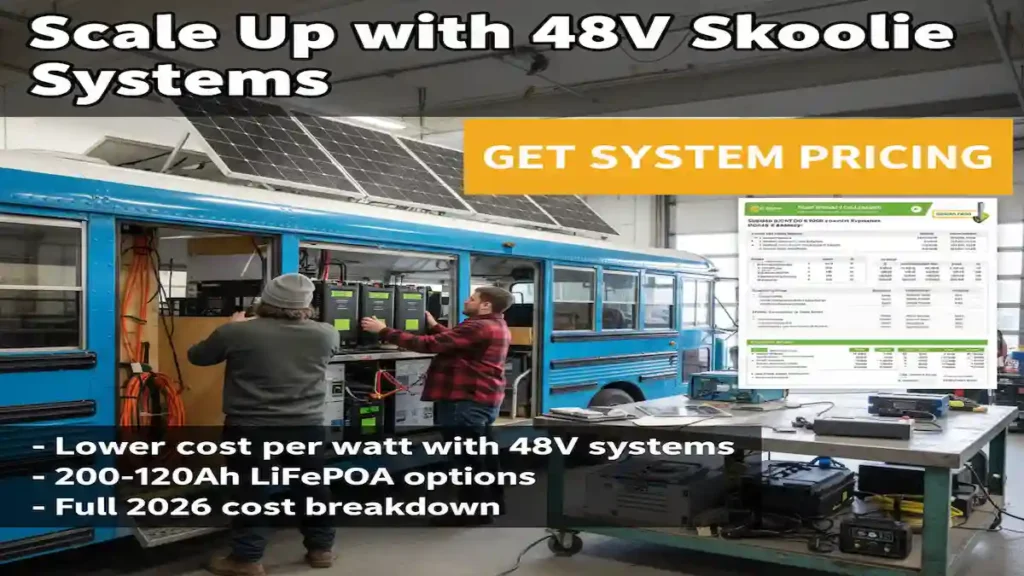
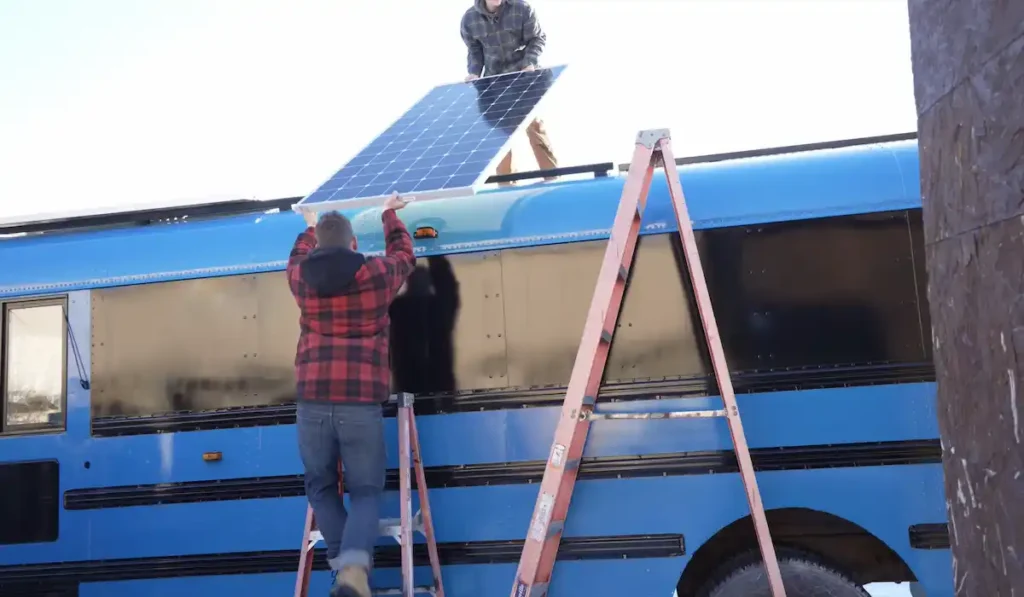
RVs and skoolies solve the same power problem very differently. Skoolies have a clear structural advantage: large, flat roofs that easily support 2–4kW of rigid solar panels. That roof space lowers cost per watt and makes 48-volt battery systems practical, reducing wiring losses and improving efficiency. For full-time off-grid living, skoolies remain the most cost-effective platform for large solar installations. Just like charging your EV at home with solar, skoolies and RVs need careful energy planning; see our guide to top EVs you can charge with solar power at home in 2025 for practical examples.
Flexibility is the priority in RVs. Since the roofs are small and often curvy, many RV owners use a combination of rigid and flexible panels with some portable electricity-generating solar generators. This would obviously raise the cost per watt but allows the system to adapt to shade and seasonal travel, as well as multi-vehicle use.
In short, skoolies are better set with fixed, larger systems where the cost per watt gets lower in the long run, while RVs, instead, are hybrid, prioritizing portability and adaptability.
Cost Comparison of Solar Conversion: RV VS Skoolie in 2026
RV conversion costs in the solar arena are extremely varied, depending upon the kind of vehicle, the amount of power expected, and the extent to which the system will be permanent. To make this easy to comprehend at a glance, here’s a table that shows how realistic 2026 solar builds compare between RVs and skoolies — showing up where each platform saves and where the costs pile on as systems get larger. Many RV owners start with portable generators; our review of the best solar generators and kits for RV boondocking 2025 shows which units handle full-time off-grid use.
In practice, skoolies become more cost-efficient as system size increases, while RV solar setups trade higher cost per watt for portability and flexibility.
Life Inside an RV or Skoolie After a Solar Conversion
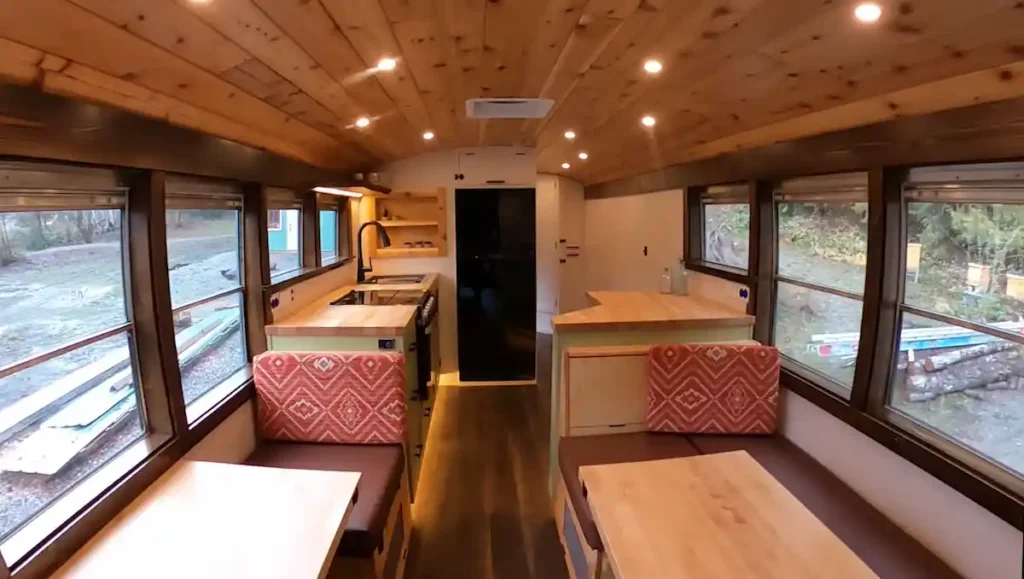
Solar conversion does not simply install panels on the top; it changes the interior setup of your RV or skoolie into a fully functional, livable, and comfortable area. The difference is instantly felt as all lights, fans, and appliances run smoothly from battery power, leaving you without worrying about the schedule of your day regarding the runtime of the generator or limited hours in the sun. Understanding how much solar is needed for daily appliance loads is crucial — see is the sun enough? What it takes to charge an EV with solar panels for a detailed look at real-world energy calculations.
Living Area: All fans and lights in a sitting room run continuously, making it a pleasant living area-it’s much closer to having an actual home than a makeshift campsite because you can also use all your smaller appliances, such as coffee machines or your computer.
Bedroom: The fact that solar power does away with both noise and heat from the generators in sleeping quarters ensures that fans and lights can work continuously, while devices can still recharge overnight, thus making the area calmer and quieter to enhance comfort for long-haul travel. Plus, it also makes the trip’s experience better.
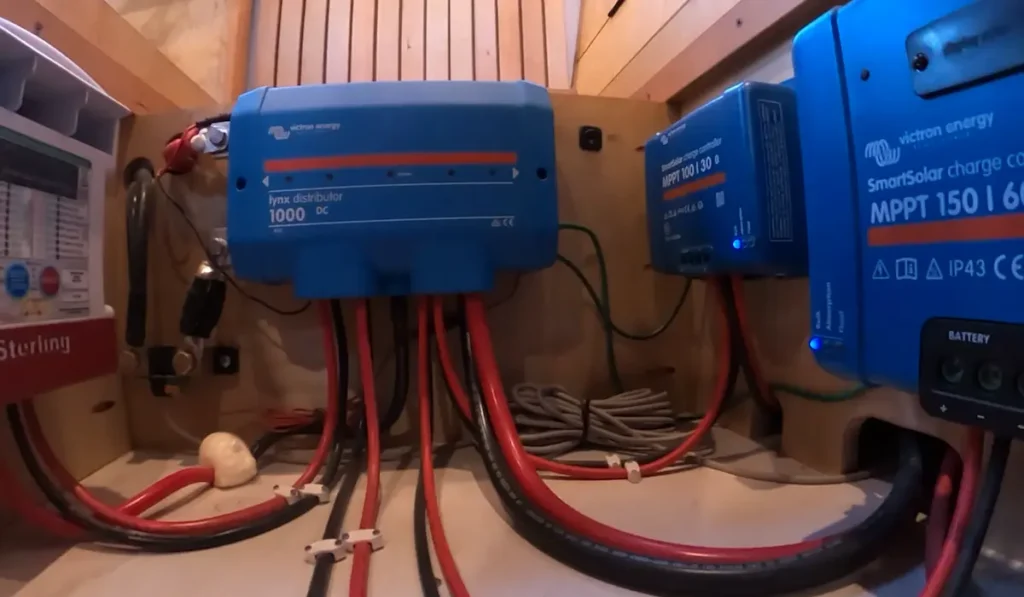
Inverter & Battery System: Truly, the workhorse is the inverter coupled with a LiFePO4 battery bank. The inverter works day and night when faithfully sized so that every area inside-from the kitchen to the bedroom electronics-receives good supply. When these components work well together, the interior becomes more about enjoying space than managing energy.
For the skoolies, a bigger roof means a bigger system which means there is ample room for larger appliances feeding even the highest power demand. The RV owners generally use a combination of top-mounted and portable panels to further enhance flexibility and so that even smaller interiors can be functional and efficient.
The outcome? A space totally usable, quiet, and predictable with solar power. Daily life becomes easier-no generator noise, no propane cycling, and energy compromises. With a great solar system, the indoors become a liveable space, be it while cooking, sleeping, or working and relaxing.
Is a Solar RV or Skoolie Conversion Still Worth It in 2026?
For most full-time travelers, the answer is yes — but only if the system is sized correctly. Solar still eliminates generator fuel costs, campground fees, and noise restrictions, often paying for itself within four to seven years depending on usage and travel style.
Weekend RV users may see slower financial returns but gain convenience and independence. Full-time skoolie dwellers benefit the most, as large systems allow near-indefinite off-grid living in favorable weather.
The biggest mistake in 2026 isn’t undersizing — it’s overspending on capacity you’ll rarely use.
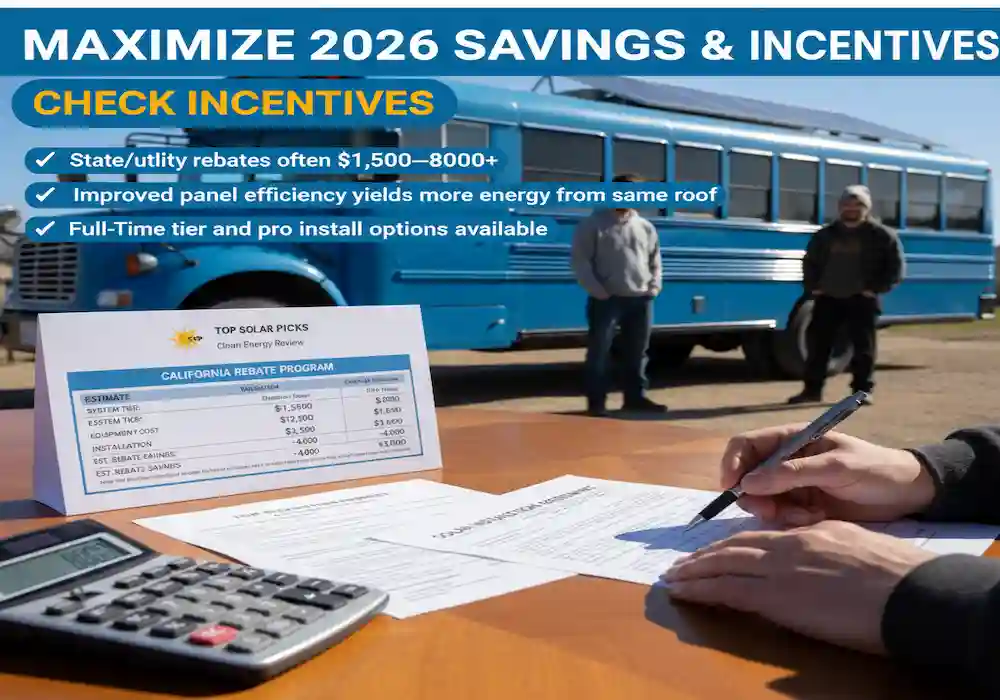
Remaining Rebates and Incentives in 2026 (After Federal ITC)
With the federal credit gone, savings now come primarily from state and utility programs.
California: SGIP battery incentives, utility adders, and clean-energy programs can still deliver $3,000–$8,000+.
New York: NY-Sun incentives and tax exemptions remain active, offering up to $5,000.
Massachusetts: SMART and Mass Save programs focus on battery storage, with $2,000–$5,000 potential.
Texas (Austin): Austin Energy rebates typically range from $2,500–$3,000.
Midwest & Pacific Northwest: Utility programs in states like Oregon, Illinois, and Wisconsin range from $1,500–$6,000, depending on provider.
Incentives listed above are based on current utility filings and state energy program data as of December 2025. Availability and funding caps change frequently, so always confirm details with state energy offices or your local utility before purchasing equipment. Many state incentives resemble clean energy charging programs for EVs — see our analysis on clean energy charging: can it reliably power your EV? for comparisons.”
“Urban solar infrastructure is growing as well; our guide to solar EV chargers in Washington, D.C. shows how city programs parallel off-grid RV solar solutions.
Best Practices for 2026 Solar Conversions
Bifacial rigid panels make the most sense for skoolies, while RVs benefit from combining roof-mounted panels with portable solar generators. Larger systems should move to 48-volt architectures for improved efficiency, while smaller RV setups perform well at 12 or 24 volts.
When sizing a system, calculate daily energy use and add at least a 50% buffer. A properly designed system should handle sunny days indefinitely and provide five to ten days of autonomy during extended cloud cover.
DIY builds can save 40–60% compared to professional installs, but electrical safety and proper protection components are non-negotiable.
Frequently Asked Questions
How much does a full skoolie solar setup cost in 2026?
Most full-time skoolie systems cost between $10,000 and $18,000 DIY, depending on battery capacity and appliance usage.
Is the federal solar tax credit still available?
No. The 30% federal ITC ended in 2025. Savings now come from state and utility incentives.
Which is better for solar, an RV or a skoolie?
Skoolies offer lower cost per watt and larger systems, while RVs provide flexibility and portability.
How long can you stay off-grid with solar?
With proper sizing, solar can support indefinite off-grid living in sunny conditions and five to ten days during extended cloudy periods.
Final Thoughts
Solar RV and skoolie conversions aren’t disappearing in 2026 — they’re becoming more intentional. With smarter sizing, falling battery costs, and targeted state incentives, solar remains one of the most practical investments for off-grid travel and living.
Plan carefully, size honestly, and build for how you actually live — not how you think you might someday.
By John Tanko, NABCEP-trained solar installer with 50,000+ miles of real-world off-grid experience.
Updated December 2025.



 FAQs
FAQs