
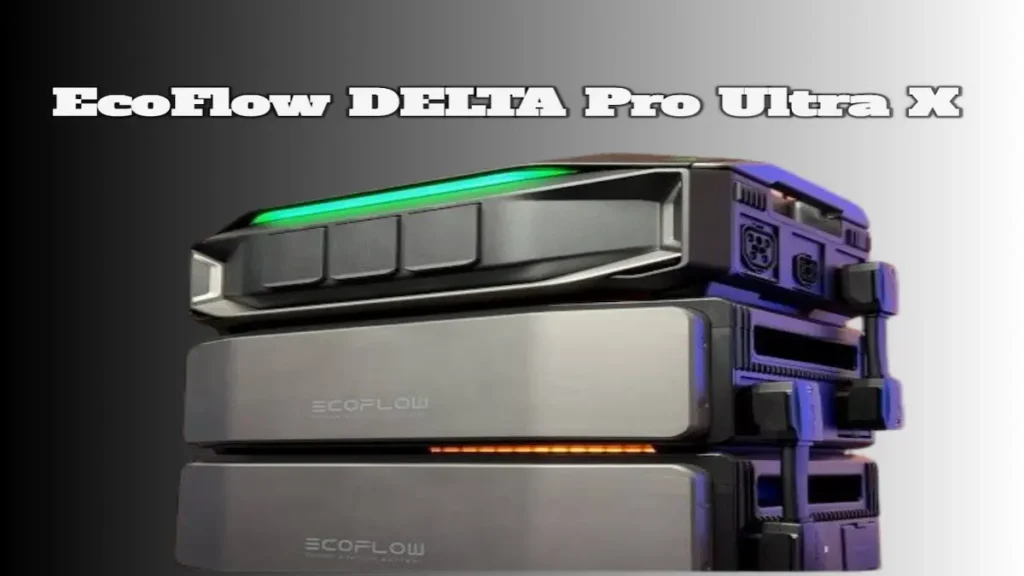
The rapidly increasing number of extreme weather events around the world, not to mention grid instability and rising electricity prices, has made the importance of reliable home energy increasingly relevant. The DELTA Pro Ultra X is EcoFlow’s entry into the modular backup market as one of the most efficient backup systems available in 2025. Designed as a scalable, high-power system for full-home loads, the integration of solar arrays, and temporary or permanent energy backup, With rising electricity prices and grid instability, many homeowners are now asking whether solar is worth it especially when paired with large-scale battery backup systems like the DELTA Pro Ultra X.
this review takes a closer look at the DELTA Pro Ultra X from the power output, expandability, design engineering, real-world performance, and overall value to homeowners standpoint.
Overview and Positioning
DELTA Pro Ultra X is basically a modular energy storage system that incorporates a 12 kW inverter and 6.144 kWh LFP battery modules. Such components can easily be paralleled together. This allows users to install a minimum configuration of up to 12.288 kWh, up to a maximum of 184.32 kWh using three inverters and thirty batteries. As such, the Ultra X is classified among full-house battery backup solutions and thus competes with similar offerings from companies such as Tesla (Powerwall 3), Anker (Solix F3800), and Enphase IQ systems.
The DELTA Pro Ultra X competes with other high-capacity systems, and when evaluating the best solar generators for home use in 2025, EcoFlow continues to stand out for scalability and inverter output.
Unlike other conventional batteries installed on walls in homes, the Ultra X employs a mobile and floor-standing design with wheels and quick-connect ports. Thus it can also serve not only homeowners but also renters, off-grid users, and folks who may want to buy a portable system, which they will move between homes. If you’re planning to set up the system at home, be sure to read our full guide on How to Install the DELTA Pro Ultra X Backup System (Step-by-Step Guide) for detailed instructions and safety tips.
Build Quality and Design
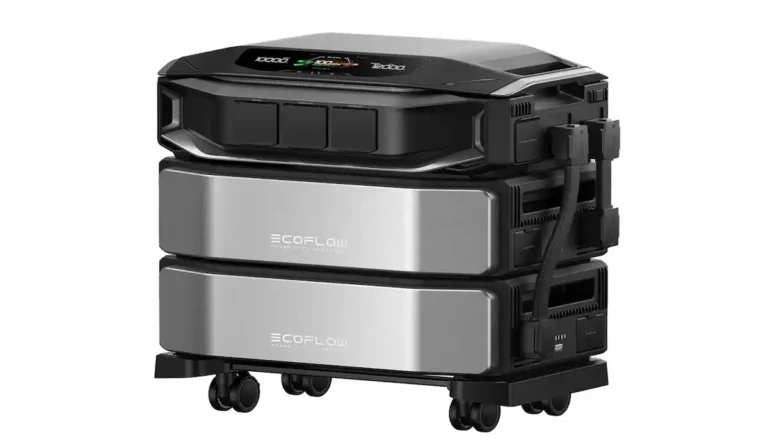
EcoFlow has minimalist, functional industrial design. Both the inverter and battery modules feature reinforced housings that allow for locking points, stackability, and connection. The inverter weighs around 34.5 kg, while the battery weighs in at 50.5 kg, making each one pretty hefty while still being movable due to integrated wheels. Dimensions are compact enough that they could be installed somewhere such as a garage, basement, storage room, or utility space with no special framing or structural reinforcement.
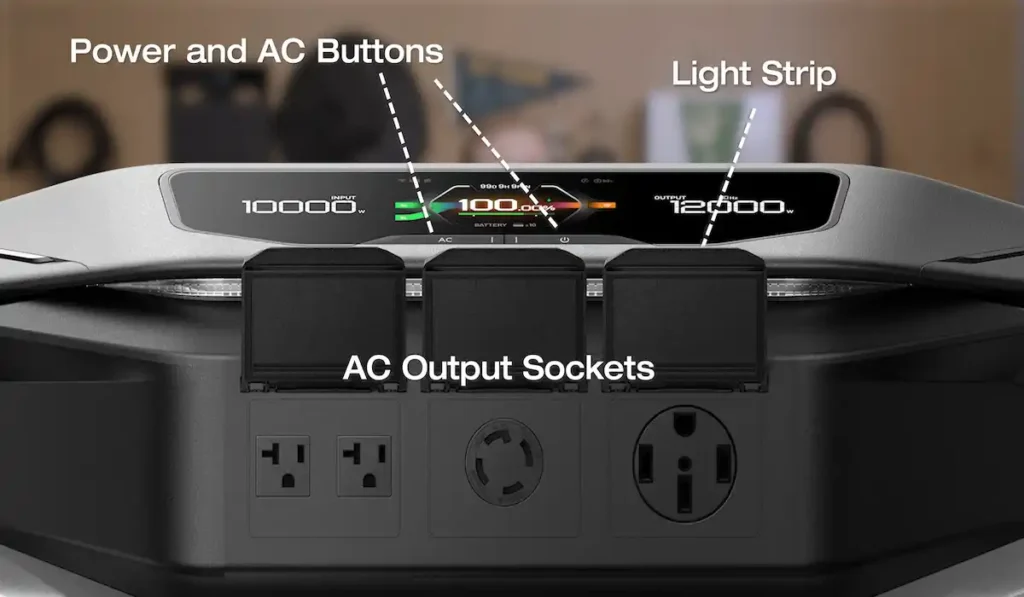
A built-in display provides real-time information about system status, charge levels, input and output power, and warnings. For remote monitoring, the EcoFlow app supports Wi-Fi and Bluetooth connectivity and offers detailed usage statistics, charging control, firmware updates, and integration with EcoFlow’s Smart Home Panel 3. EcoFlow’s industrial design and LFP battery architecture reflect what we’ve already seen in broader EcoFlow battery performance in real-world testing, particularly in the DELTA Pro Ultra lineup.
Technical Specifications
Capacity
The base system comes with two batteries for 12.288 kWh of total energy storage. Expansion is one of the Ultra X’s best characteristics by far-in support of up to ten batteries, amounting to 61.44 kWh of storage, all for one inverter; while three inverters will support a maximum of thirty batteries at 184.32 kWh. That scalability lets the Ultra X exist anywhere in the spectrum from short-duration back-up to complete off-grid energy solution.
Power Output
Continuous AC output to the customer will be 12 kW from each inverter at 120/240 V. Thus, connecting three systems in parallel increases the output to 36 kW. Such power levels are sufficient for simultaneous operation of central air conditioning units, well pumps, dryers, electric ranges, and many other high-demand household appliances.
Charging and Input
The AC input for grid or generator charging stands at robust 12 kW. Not to be outdone in solar characteristics, two MPPT inputs form a combined capability of 10 kW with a voltage range of 80-500 V and a maximum of 5 kW each. This means that the Ultra X will cater to many different residential solar arrays while facilitating a rapid recharge during sunlight hours.
Battery Chemistry and Safety
EcoFlow batteries are made with lithium iron phosphate (LFP), known for their long cycle life, thermal stability, and safety. Battery modules have an operating temperature of -4 to 113F and inverters go from -4 to 122F. Noise levels stayed very low, under 30 dB at half a meter distance during a 4 kW load. Thanks to its LFP chemistry and massive expandability, the Ultra X ranks among the best batteries for off-grid solar in 2025, particularly for users needing high daily throughput and long cycle life.
Environmental Protection
With IP54 protection against dust intrusion and light water sprays, the Ultra X can be installed almost anywhere in garages, carports, or semi-controlled environments.
Performance and Real-Life Scenario

The Ultra X does particularly well in applications that require sustained power. Their UPS function already switches load in less than 10 milliseconds in standalone mode and less than 20 milliseconds when connected through the Smart Home Panel 3. This transition is practically seamless for most electronic home appliances and saves computers from shutting down, routers from resetting, and medical devices from interruption.
In the scenario of a house, one 12 kW inverter can support most important circuits. Two or three inverters may be required for a larger home with electric HVAC or high-demand appliances. In the off-grid arrangement, the user can pair large battery banks with up to 10 kW of solar for basically continuous operation during good weather. This level of voltage stability and fast UPS switching mirrors what we’ve seen across EcoFlow’s off-grid power systems, including the DELTA 3 Series designed for smaller-scale installations.
On testing and user feedback, the Ultra X has shown to perform with excellent voltage stability under load, good AC charging speed, and impressive thermal performance even during prolonged high-wattage use.
What’s inside the box, then?
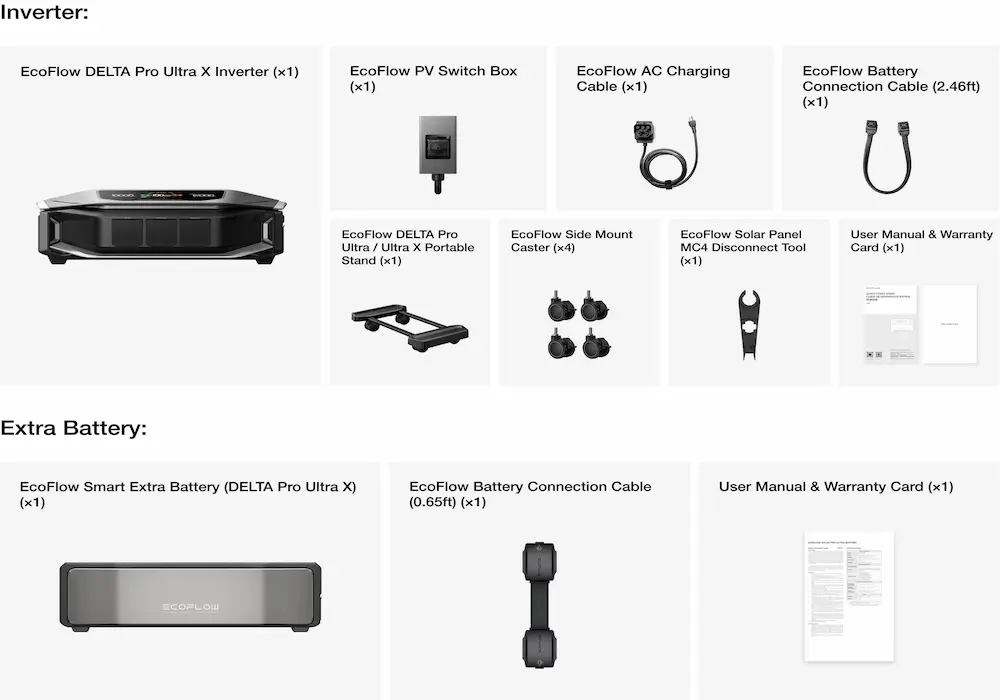
As a well-organized premium whole-home power system, EcoFlow gets its DELTA Pro Ultra X. Every single component arrives well packed and properly labeled so that it can be set up in the easiest possible way even for first-time users.
What is in the box:
• DELTA Pro Ultra X Inverter Unit
The heart of the system, the device responsible for converting electricity and distributing it across the system arrives with an internal display with an inbuilt cooling setup and built-in wheels attached for placing anywhere without struggle.
• DELTA Pro Ultra X Battery Module(s)
Each of the batteries has tough side handles and a durable housing and uses EcoFlow’s quick-connect ports for tool-free stacking. Two 6.144kWh batteries are included in the standard kit.
• AC Charging Cable
Heavy-duty cable designed to connect directly to outlet or dedicated 120/240V circuits when charging from the grid.
• DC / Solar Charging Cables
These high-voltage PV cables connect to solar arrays. These cables are intended to accept up to 10,000 watts of input and have been engineered specifically to minimize resistance and heat during charging at extremely high wattages.
• Battery Connection Cable
This special proprietary expansion cable links battery modules to the inverter. EcoFlow’s design locks tightly with a twist-and-seal mechanism so there is no risk of it disconnecting by accident.
• User Manual & Quick Start Guide
It gives clear, step-by-step documentation on safe procedures, operating modes, installation considerations, and pairing to smartphone applications.
• Warranty & Registration Card
A limited 5-year warranty backed by EcoFlow, including instructions regarding how to register your product for support and firmware updates.
It’s all preconfigured for a clean, simple, plug-and-play experience. Another interval-more inverters connected or longer battery banks-requires some additional cable and stacking hardware packed individually. The result feels as good as it gets, whether the Ultra X is being set up in a garage, utility room, or remote off-grid cabin-it’s unboxing at its professional, efficient, thoughtfully engineered best.
Can the DELTA Pro Ultra X Charge an Electric Vehicle?

One of the most practical advantages of the EcoFlow DELTA Pro Ultra X is its ability to charge an electric vehicle, turning the system into a portable Level 2 charging solution during outages or in off-grid locations. With a maximum 12kW AC output from a single inverter—and a NEMA 14-50 outlet built directly into the unit—the Ultra X can deliver the same style of charging you would expect from many home EV chargers.
In real use, this means most EVs can gain between 6 to 30 miles of range per hour, depending on the vehicle, charging efficiency, and the configuration of your Ultra X system. When expanded with multiple inverters (up to 36kW combined), the system can deliver far higher charging speeds, though most EVs will naturally cap input at their onboard charger’s limit.
Charging is simple: plug the EV’s Level 2 cable into the 14-50 port, enable output, and the vehicle handles the rest. Because the Ultra X uses pure sine wave AC power, EV onboard chargers recognize the connection immediately—no adapters, no special modes.
Where this truly shines is in emergency power situations. A prolonged grid outage can leave an electric vehicle stranded, but with a fully charged Ultra X setup—and especially when paired with solar input—you can replenish enough range daily to stay mobile. Off-grid property owners, RV users, and remote workers also benefit from this capability, as it eliminates dependence on public charging networks in isolated regions. EcoFlow’s ability to support EV charging extends its leadership in portable power solutions for electric vehicles, an area where systems like the DELTA 2 Max already excel.
It’s important to remember that charging an EV is energy-intensive. A standard Ultra X with 12.288kWh capacity can provide a meaningful emergency top-up, but extended or full charging sessions are better suited to expanded systems with multiple batteries. When combined with solar (up to 10kW), the system can operate as a sustainable, renewable EV charging station even during long-term grid outages.
Overall, the DELTA Pro Ultra X performs impressively as an EV-charging backup solution. It won’t replace a dedicated home charger for daily use, but it delivers reliable Level 2 charging power when it matters most—and that’s something few portable or modular whole-home batteries can claim.
Easy Installation and Integration

An important plus for the Ultra X is installation versatility. The system can be employed as an independent portable setup directly connected to appliances or critical circuits, or integrated into the home electrical systems via the Smart Home Panel 3, which controls up to 32 circuits with intelligent load management, phase balancing, and automatic transition between grid and battery power.
EcoFlow’s modular design reduces confirmably, installation time, and economic investment as opposed to the conventional wall-mounted systems. Those homeowners leaning on temporary setups can get the Ultra X up and running without hiring an electrician, while those aiming at full-home integration shall call upon a certified installer for completion. While the Ultra X targets whole-home backup, EcoFlow’s DNA comes from portable EcoFlow power solutions like the Trail series, making the transition from mobile to permanent setups seamless.
Comparison with the Best Competitors
Relative to the Tesla Powerwall 3, the Ultra X offers more flexibility with respect to expansion and mobility, while the Powerwall boast longer standard warranty and tighter solar inverter integration. The Anker Solix F3800 is more budget-friendly, though it trails the Ultra X in terms of maximum capacity and power output. Enphase’s IQ batteries provide strong solar integration but with far less portability. For readers comparing brands at different capacity levels, our Bluetti vs EcoFlow comparison breaks down how these companies differ across both portable and large-scale systems.
The Ultra X stands distinguished principally for the combination of scalability, mobility, high output, and good solar compatibility. Currently, it is among the few that can sustain both full home power and easy portability.
Pros and Cons
Pros
- Remarkable expandability from 12.288 kWh 184.32 kWh
- High continuous output of 12-36 kW
- 10 kW solar input for optimized off-grid performance
- LFP chemistry for safety and long life
- Stealth quiet operation and wide temperature tolerance
- Flexible installation options are both portable and integrated
Cons
- Pricey premium vis-à-vis the entry-level systems
- May prove difficult for one person to maneuver on site; heavy despite wheels
- App is prone to minor delays in synchronization from time to time
- Little data available on long-term reliability as it was just released
Where to Buy the EcoFlow DELTA Pro Ultra X
The EcoFlow DELTA Pro Ultra X can be purchased through EcoFlow’s official regional websites. Ordering from your local store guarantees authentic products, fast shipping, warranty protection, and access to EcoFlow’s customer support. Buying directly from the manufacturer also ensures you receive the latest firmware-ready units and any eligible promotional bundles.
For convenience, here are the official regional stores where the DELTA Pro Ultra X is available:
Each store offers region-specific pricing, plug types, shipping timelines, and tax details, making it easy to choose the correct configuration for your home. Whether you’re upgrading your existing EcoFlow setup or purchasing your first whole-home backup sys
Frequently Asked Questions (FAQs) on the DELTA Pro Ultra X
1. Is the EcoFlow DELTA Pro Ultra X strong enough to power an entire house?
Definitely. When correctly installed with a home transfer switch or smart home panel, DELTA Pro Ultra X can function as a full-home-series back-up system. Its inverter powers circuits of 12kW at 120/240V – hence, they can allow essential loads and many 240V appliances. With parallel operation (up to 36 kW), it can support almost any household load. Actual performance of the entire house is dependent on your total consumption and battery expansion size.
2. How long will the DELTA Pro Ultra X last for a power outage?
One 6.144kWh battery would able to power basic essentials (light, refrigerator, router, small appliances) for hours. With the standard dual-battery setup, 12.288kWh, most homes can run essentials for about 1 to 3 days depending on usage. In other words, to achieve multi-day to multi-week autonomy, you would need to enlarge the capacity to its maximum (up to 184.32 kWh), especially if you have the solar input. Actual run time depends on your load, number of batteries, and solar availability.
3. Can DELTA Pro Ultra X be charged solely with solar panels?
Yes. The DELTA Pro Ultra X allows a maximum of 10,000W solar input through two PV ports (5,000W each). This implies that the system inside can be considered a true off-grid system. Given sufficient sun and an adequate number of solar panels, the batteries could be topped off each day, and off-grid living could be maintained for good.
4. How does the DELTA Pro Ultra X differentiate from the standard DELTA Pro?
The DELTA Pro Ultra X is more advanced and with greater capacity designed for whole home power. The major differences between it and the standard DELTA Pro are:
- Much larger expandable battery system
- Higher inverter output (12 kw versus ~3.6 kw)
- Larger solar input capability
- A modular and stackable design for serious off-grid or home-backup use
- Better compatibility with home electrical panels and high-demand appliances
In essence, Ultra X is engineered for whole households ― not merely portable power.
5. Is DELTA Pro Ultra X worth it in terms of home backup or off-grid living?
For homeowners seeking reliable whole-home backup, reduced grid dependence, or off-grid solar operation, the DELTA Pro Ultra X offers tremendous long-term value. Its LiFePO₄ battery chemistry means it has a long cycle life, and its modular and expandable design fits the bill for many solar applications. Inverter output is comparable to that of many permanent home battery systems. Where outages are frequent, or where a scalable solar solution is warranted, the somewhat hefty investment is mostly justified.
Conclusion—The EcoFlow DELTA Pro Ultra X: Worth It?
The EcoFlow DELTA Pro Ultra X pint-sized giant will be able to give one of the most capable and best-engineered ranging from home energy storage systems in the year of 2025. Unique characteristics include high power output, great scalability, strong solar integration, and high mobility providing a product with impressive versatility. The Ultra X would be useful for homeowners wanting total energy independence, whole-home backup, or a flexible off-grid setup.
The upfront cost is high, but every penny is justified by the performance, scalability, and overall design-if you need an extremely dependable, future-proof backup solution. If you’re in a storm-prone area, if you live off-grid with solar power, or just need the ability to move your energy system, the EcoFlow Ultra X is one of your top picks today. If you’re still choosing the best solar generator for your home, the DELTA Pro Ultra X consistently ranks at the top for users who value scalability and long-term resilience.
Author

Top Solar Picks comprises solar enthusiasts and certified installers with more than 15 years of combined experience in renewable energy systems. Based in the heart of sunny Texas, our team has personally tested hundreds of solar generators, panels, and batteries.