
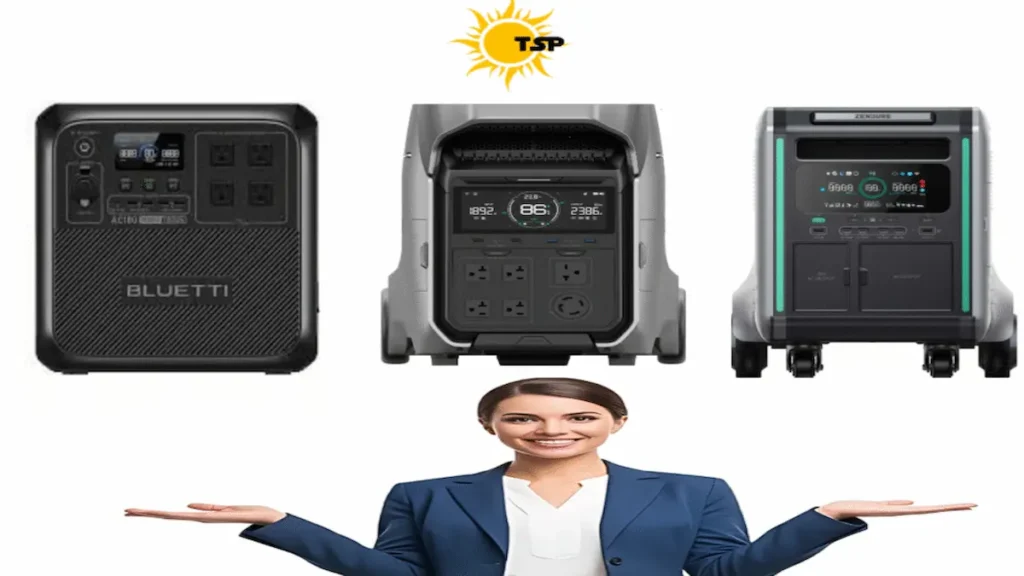
The best solar generator for blackouts at home is no longer a luxury—it’s becoming essential as power outages increase. In this comparison, EcoFlow and Bluetti are tested for real home backup performance in 2026.
If you’ve ever experienced a blackout, you know how quickly life comes to a stop—refrigerators shut down, phones die, and basic comfort disappears within hours.
That experience has changed how many families think about energy. A solar generator is no longer just a backup device—it is becoming a critical part of home resilience as storms intensify and power grids become less reliable.
This guide on Best Solar Generator for Blackouts at Home was last updated by John Tanko on April 12, 2026, to ensure accurate and up-to-date information for homeowners, farmers, and off-grid users.
In this Top Solar Picks guide, we’ll compare EcoFlow and Bluetti to help you choose the best solar generator for blackouts at home.
Why Solar Generators Are Changing the Game
For years, gas generators were the default. They worked, but at a price. They’re noisy enough to keep you awake, they pump out exhaust you don’t want near your kids, and worst of all — they rely on gasoline. Anyone who’s lived through a hurricane or winter storm knows what that means: long lines, empty pumps, and the stress of hoping fuel doesn’t run out before the lights come back on.
Solar generators flip that experience upside down. They’re silent. They’re safe to use indoors. And instead of fueling your anxiety, they’re fueled by the sun. If the outage lasts days, you just set up panels and keep going. No panic, no scarcity. That peace of mind is why so many families are searching for the best solar generator for home backup right now.
The Buying Factors That Actually Matter
When I talk to people considering their first solar generator, they usually ask the same questions: How long will it run? Can it handle my fridge? What about air conditioning?
The answers come down to a few key factors.
Key Buying Factors to Consider
Capacity tells you how much energy it stores. A small unit might keep your WiFi and lights on. A larger one can power your whole home for days.
Output power determines what you can plug in. It’s one thing to run a lamp, another to fire up a central AC or a well pump.
Charging speed matters during extended outages. The best models today can recharge to 80% in under an hour from a wall outlet, or steadily refill all day from solar panels.
Expandability makes a difference if your needs grow. Some models let you add batteries until you’re essentially building your own mini power plant.
And of course, durability and support matter. These aren’t cheap machines. Warranties, customer service, and battery longevity can turn a good investment into a lifelong one.
Can EcoFlow Run a Fridge During a Blackout?
Absolutely—EcoFlow can keep your fridge running during a blackout. That’s actually one of the main reasons people buy these power stations for home backup.
Most refrigerators pull anywhere from 100W up to 800W, depending on their size and efficiency. The smaller EcoFlow models will run your fridge for a few hours, but if you get something beefy like the EcoFlow DELTA Pro 3, you’re looking at many more hours—possibly all day or longer during an outage.
When you’re dealing with a blackout, what really matters is how much power you’re actually using. If you’re just running your fridge, your WiFi, and some lights, EcoFlow handles those basic needs without trouble for short or even medium-length outages.
That’s the big reason why people searching for solar generators for fridges during blackouts or backup systems for power outages often end up grabbing one of the bigger EcoFlow units.
How Long Can EcoFlow Power a Refrigerator?
How long an EcoFlow can run a refrigerator depends on two main things: the size of your EcoFlow power station and how energy-efficient your fridge is.
Most refrigerators use between 100W and 800W, but they don’t run constantly. They cycle on and off throughout the day, which helps extend battery life.
In real-world use, a mid-size EcoFlow unit can keep a fridge running for several hours during a blackout, while larger systems like the EcoFlow DELTA Pro series can last much longer — often covering a full day or more of essential use when only basic appliances are connected.
If you add solar panels, the runtime increases significantly because the system can recharge during daylight hours. This is why many homeowners rely on EcoFlow as a long-term refrigerator backup during power outages.
What Size EcoFlow Do You Need for a Fridge?
The right EcoFlow size for a refrigerator depends on how much backup power you actually want during an outage.
For short-term emergencies where you only need to keep a fridge cold, a smaller EcoFlow unit (around 1–2kWh capacity) can work. This is suitable for a few hours of backup power or occasional outages.
However, if you want reliable protection during longer blackouts, a larger EcoFlow system (4kWh and above, such as the DELTA Pro series) is the better choice. These units are designed to handle not just refrigerators, but also other essential home appliances like WiFi routers, lights, fans, and small kitchen devices.
For most households, the best setup is:
- Small EcoFlow units → short outages and emergency use
- Mid-size units → fridge + basic household essentials
- Large expandable systems → full home backup during extended blackouts
If you’re preparing for 24–72 hour power outages, choosing a higher-capacity EcoFlow ensures you won’t have to worry about running out of power when it matters most.
How Long Does a Solar Generator Last During a Power Outage?
A solar generator’s runtime during a blackout can be anywhere from a few hours up to several days. It really comes down to the battery size and how many things you plug in.
Day to day, it’s less about big specs and more about what you’re actually powering. If you’re being frugal—just charging your phone, keeping the WiFi on, maybe some lights—it’ll last you most of the day. If you add in your fridge or another heavy appliance, it drains way faster.
Smaller solar generators usually last just a few hours if you’re actually putting them to work. Mid-sized units can cover a day of essentials. The biggest home backup models can stretch to several days, especially if you’re able to recharge them with solar panels while the grid is down.
People are moving away from gas generators and looking for long-lasting solar generators for home blackouts, because you can expand these systems more easily and keep them going longer if the power’s out for days.
What Affects Solar Generator Runtime?
Several key factors determine how long your solar generator will last:
The first is battery size. Larger capacity means longer runtime across all devices.
The second is load demand. A fridge and router consume far less energy than appliances like microwaves or air conditioners.
The third factor is usage behavior. Running devices intermittently instead of continuously extends battery life significantly.
Finally, solar input can dramatically increase runtime. If you have solar panels connected, your generator can recharge during the day and continue powering your home at night.
Can Solar Panels Extend Power During a Blackout?
Yes — solar panels can significantly extend power during a blackout and are one of the most important parts of a full home backup system.
During daylight hours, solar panels recharge the battery while it is still being used. This allows you to run essential appliances continuously without fully draining the system.
In long outages lasting several days, solar input becomes critical. It turns a limited battery into a renewable off-grid power source, especially when combined with energy-efficient usage habits.
Best Solar Generator for a 24–72 Hour Blackout at Home
If you’re preparing for an outage that could last one to three days, you want a solar generator that’s big enough to keep all your basics running—without needing to recharge every few hours.
You’re probably not trying to run everything in your house, just the essentials: fridge, WiFi, lights, phone chargers. For this, high-capacity systems like the EcoFlow DELTA Pro 3, Bluetti AC240, and Zendure SuperBase V4600 are hard to beat. These are built to deliver reliable power for longer outages, and you can keep topping them up with solar panels if the blackout drags on.
That’s what makes these systems great for families who want real peace of mind when storms, grid failures, or multi-day blackouts hit.
Best Setup for a 2-Day Power Outage at Home
For a typical 48-hour blackout, the most efficient setup focuses on essentials only.
This includes:
- Refrigerator
- WiFi router
- LED lighting
- Phone and laptop charging
Running only these devices allows even mid-sized systems to last significantly longer.
Adding solar panels during the day ensures that your battery replenishes while you consume power, making it possible to stretch backup power across multiple days without interruption.
Can One Solar Generator Run a House for 3 Days?
Yes — but only under the right conditions.
A single solar generator can power a home for 3 days if:
- You are only running essential appliances
- The system has a large battery capacity
- Solar panels are used for recharging during daylight
However, running heavy appliances like air conditioners, electric heaters, or ovens will significantly reduce runtime.
For full household coverage, expandable systems like EcoFlow and Zendure are better suited because they allow you to increase capacity over time instead of being limited to a fixed battery size.
EcoFlow vs Bluetti for Running Home Appliances
Both EcoFlow and Bluetti make solid home backup units, but they each have their own strengths.
EcoFlow tends to be the go-to if you need to power demanding appliances—think refrigerators, pumps, maybe even an air conditioner. Plus, it charges up faster, which is handy for whole-home backup use.
Bluetti leans towards affordability and versatility. It does well running essentials like lights, fans, WiFi, and your fridge—basically, if you want good backup on a budget or don’t need to power heavy hitters, Bluetti’s a strong choice.
In real-world blackouts, both brands can cover your basics. But EcoFlow usually handles bigger loads better.
That’s why you’ll see a lot of people searching for EcoFlow vs Bluetti for home backup or trying to find the best solar generator for appliances in an outage.
Which Is Better for Fridge and Freezer Backup?
EcoFlow generally performs better for refrigerator and freezer backup because of its higher output capacity and faster recharge speed.
Bluetti can still power fridges efficiently, but EcoFlow handles larger or more energy-demanding refrigerators more comfortably over longer periods.
For users prioritizing food preservation during extended outages, EcoFlow is often the preferred choice.
Does a Solar Generator Damage a Refrigerator?
No — a properly sized solar generator does not damage a refrigerator.
Modern solar generators like EcoFlow and Bluetti produce stable, pure sine wave power, which is the same type of electricity delivered from the grid. This means sensitive appliances such as refrigerators, freezers, and microwaves operate normally without risk of damage.
In fact, solar generators are often safer than traditional gas generators because they provide cleaner, more stable output with no voltage spikes or fluctuations when properly used.
EcoFlow vs Bluetti Price vs Performance
When comparing price versus performance, Bluetti offers better entry-level affordability, while EcoFlow provides higher performance and scalability at a higher cost.
Bluetti is ideal for budget-conscious users who want dependable emergency backup.
EcoFlow is better suited for users who want long-term home energy security, higher wattage support, and faster recovery during outages.
What Size Solar Generator Do I Need for Home Backup?
The right size depends on what you actually need to keep running during a blackout.
If you’re just looking to charge devices and keep some lights on, a small system is all you need. Want to add the fridge and maybe a microwave? Go for a mid-sized unit with a bigger battery. If you’re thinking about backing up the whole house—including high-power stuff like air conditioning or a sump pump—you’ll need one of the expandable, heavy-duty models.
For most families, a mid-range solar generator strikes the best balance of cost and capability, especially for emergency situations.
And if you want to be ready for longer outages, systems from EcoFlow and Zendure are expandable—so you can add more batteries and keep up with your energy needs, instead of having to buy a brand new backup later on.
What Watt Solar Generator Do I Need for a Refrigerator?
Most refrigerators require between 500W and 800W during startup, with lower continuous consumption afterward.
A solar generator with at least 1000W output is recommended for safe fridge operation, but larger systems provide more stability and longer runtime.
If you plan to run additional devices alongside your refrigerator, a higher wattage system is strongly recommended.
Minimum Solar Generator Size for Emergency Use
For emergency use, the minimum recommended solar generator size should be able to handle at least essential appliances such as a fridge, lights, and communication devices.
Smaller systems can work for short outages, but for reliability during unexpected multi-hour or multi-day blackouts, a mid-range or expandable system is more practical.
| Feature | EcoFlow DELTA Pro 3 | Bluetti AC240 | Zendure SuperBase V4600 |
|---|---|---|---|
| Base Capacity | 4kWh (expandable up to 48kWh) | 1.5kWh (expandable up to 10kWh+) | 4.6/6.4kWh (expandable up to 46–92kWh) |
| Output Power | 4,000W continuous (6,000W surge), 120V & 240V | 2,400W (3,600W with Power Lifting) | 3,800W (7,600W with two units), 120V & 240V |
| Charging Speed | 0–80% in under 1 hour (wall); fast solar/car options | 0–80% in ~45 minutes (AC input) | Solar up to 3,000W; fast EV & wall charging options |
| Noise Level | Ultra-quiet — as low as ~30 dB (X-Quiet tech) | Moderate; outdoor-rated (IP65) — suited for camping & yard use | Standard; active cooling and smart thermal control |
| Durability | EV-grade LFP battery (4,000+ cycles) — long life | IP65 water/dust resistant — robust outdoor use | Rugged build with WiFi/app monitoring; designed for heavy use |
| Best For | Whole-home backup, AC & heavy appliances | Budget-conscious family backup, camping, RV | Off-grid living, large households, energy independence |
| Price (approx.) | $2,699 US / £2,399 UK / $3,599 CAD / €2,899 EU | $1,099 (discounted from $2,199) | $4,999 |
With those things in mind, let’s talk about the three heavy hitters.
EcoFlow DELTA Pro 3 Review
Whole Home Power Without Gas
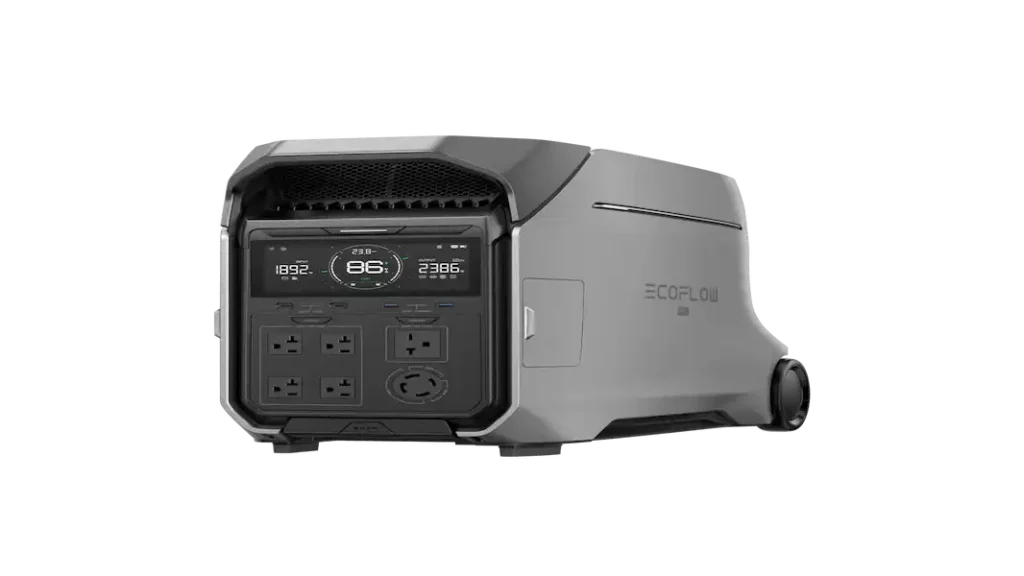
The EcoFlow DELTA Pro 3 isn’t just a solar generator — it’s the closest thing to replacing the old gas-powered monsters people have relied on for decades.
The first thing you notice is its capacity. At a base of 4kWh, it’s already impressive. But EcoFlow designed it to scale all the way up to a staggering 48kWh. That’s enough to keep an entire house running for a week. I’ve seen reports from Texas homeowners who powered their refrigerators, lights, internet, and even central air conditioning for three straight days. One Florida family said it was the first hurricane season they didn’t feel on edge because they knew the DELTA Pro 3 could handle whatever the storm left behind.
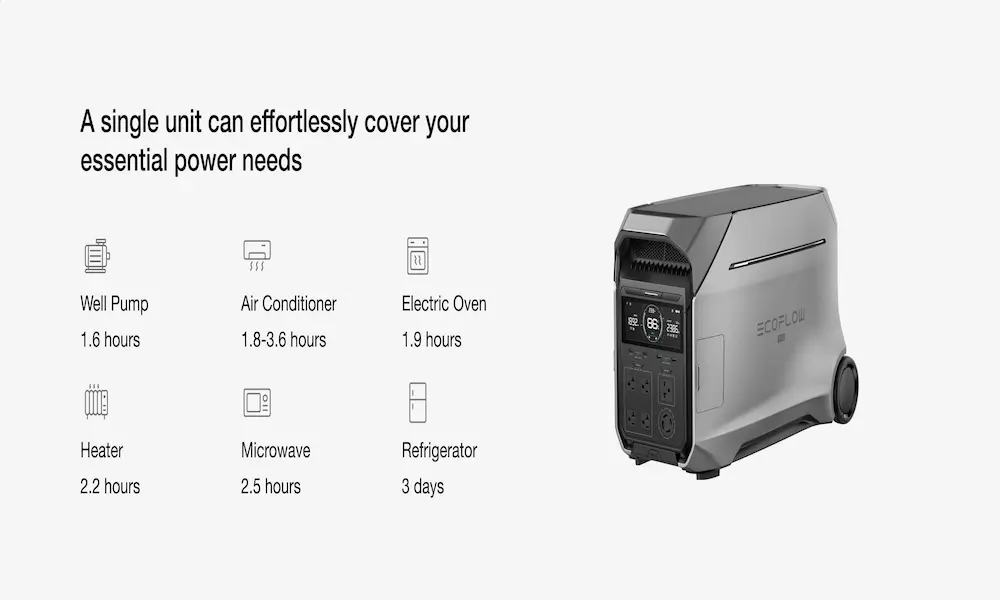
Output is where this machine really shines. It delivers both 120V and 240V, with 4000W continuous power and the ability to surge to 6000W when appliances demand it. That means it’s not just about lights and laptops. It can keep a three-ton AC system humming, run your well pump, or support medical devices without breaking a sweat.
The EcoFlow app gives you full control of your DELTA Pro 3 from anywhere. Monitor battery levels, adjust settings, and manage charging modes with just a few taps on your phone. Whether you’re at home or away, staying connected to your power supply has never been easier.
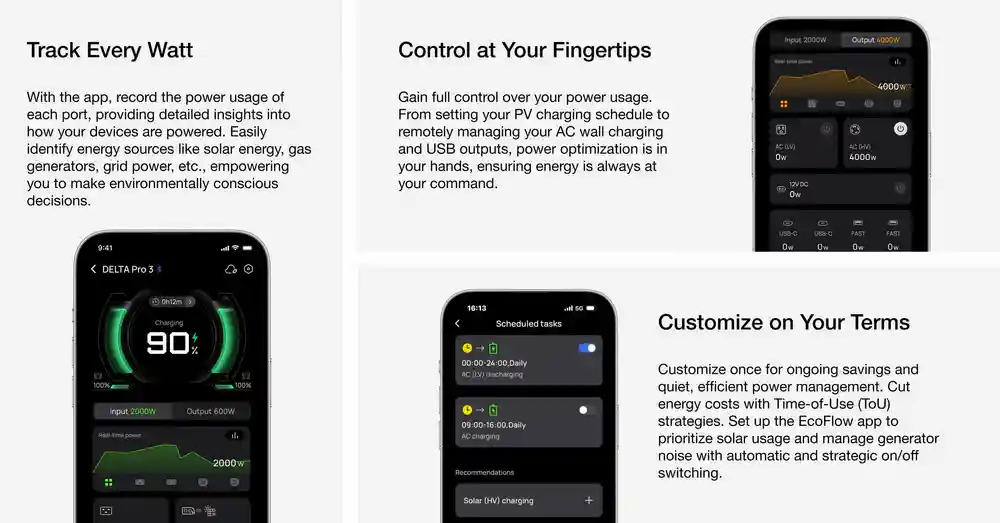
Charging is just as impressive. In under an hour, you can go from nearly empty to 80% using a wall outlet. Pair it with solar, and you’ve got renewable energy as long as the sun rises. EcoFlow even built it to recharge automatically if you connect their Smart Generator 4000.
For durability, it’s built on EV-grade LFP battery tech, with over 4000 cycles before capacity dips to 80%. In plain English: it’ll last years, not just a few seasons.
Yes, it’s a beast, but EcoFlow made it portable with wheels and a handle, so it feels more like pulling luggage than dragging machinery.
Silent Comfort for Your Home and Neighbors
One of the biggest concerns people have about backup generators is the noise. The EcoFlow DELTA Pro 3 solves this problem with its X-Quiet technology, running at noise
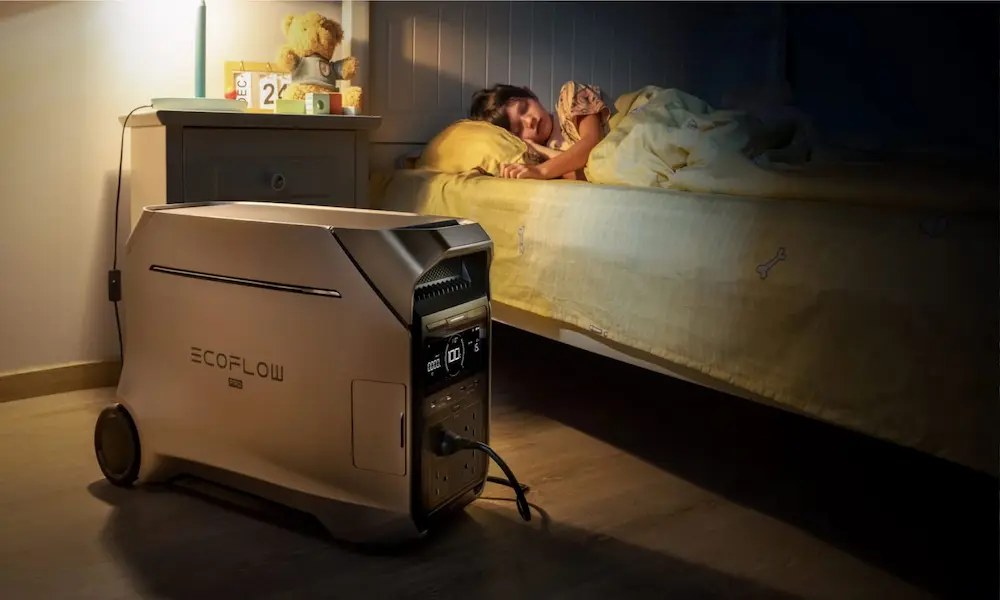
levels as low as 30 dB — about the same as a whisper or a quiet library. That means you can place it near your living room or even your bedroom without losing sleep.
This isn’t just a benefit for you — it’s also considerate for your neighbors, especially during long outages when everyone is on edge. Quiet, reliable, and powerful, the DELTA Pro 3 delivers peace of mind in every sense.
EcoFlow DELTA Pro 3 – Strengths and Weaknesses
Strengths:
High Capacity & Expandability: Offers a base capacity of 4.6kWh, expandable up to 48kWh, making it suitable for whole-home backup.
Fast Charging: Can charge from 0–80% in under 1 hour, ensuring quick readiness.
Dual Voltage Support: Provides both 120V and 240V outputs, accommodating a wide range of appliances.
Quiet Operation: Operates at a noise level as low as 30 dB, ideal for indoor use.
Durable Battery: Utilizes EV-grade LFP batteries with over 4,000 charge cycles.
Weaknesses:
High Price Point: Priced at approximately $2,699, it may be considered expensive for some users.
Portability Concerns: Weighs over 100 lbs, making it less portable compared to other models.
Pass-Through Power Limitations: Some users have reported issues with pass-through AC power, especially when powering devices like air conditioners.
EcoFlow DELTA Pro 3 – Pricing & Where to Buy
If you’re thinking about investing in the EcoFlow DELTA Pro 3, the cost depends on where you live — and each region has unique perks you might want to take advantage of.
United States: The current price is $2,699 (discounted from $3,699). If you install it as a home power solution, you could be eligible for a 30% federal tax credit, making this powerhouse even more affordable. Be sure to check if it ships to your state and any available local promotions.
U.K.: Prices are roughly £2,399 GBP, though shipping, VAT, and local taxes may vary. Be sure to check the latest price, delivery options, and any available deals before making your purchase.
Get EcoFlow DELTA Pro 3 – U.K. ReadersCanada: Prices are roughly $3,599 CAD, though exchange rates can fluctuate. Many buyers enjoy free shipping to select provinces, so check if your location qualifies and whether there are ongoing deals to maximize savings.
Get EcoFlow DELTA Pro 3 – Canadian ReadersEuropean Union: For EU readers, the price is around €2,899 EUR. Shipping options, VAT, and local taxes vary by country, so it’s worth checking the latest pricing and delivery options before purchasing. Some regions may also have special bundles or seasonal promotions.
Buy EcoFlow DELTA Pro 3 – EU Readers
For households that want true whole-home security, the DELTA Pro 3 is the closest thing to turning your living room into a safe harbor, no matter what’s happening outside.
Bluetti AC240 Review
Reliable Backup Without the Price Shock
Not everyone needs to keep a central AC running during an outage. For many families, the goal is simpler: keep the fridge on, power a few lights, run the router, and maybe plug in a TV or CPAP machine. That’s where the Bluetti AC240 shines.
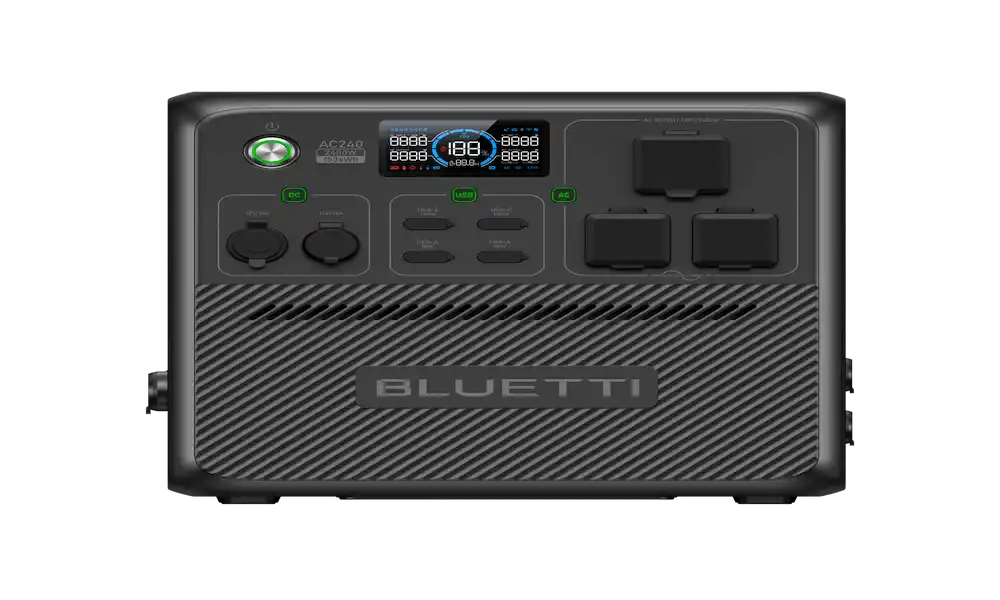
At just over 1.5kWh of storage, the AC240 starts small. But don’t let that fool you. It’s expandable — connect extra batteries, and suddenly you’ve got over 10kWh of backup at your fingertips. That flexibility means you can start modest and grow later if you decide you need more.
Its 2400W output is enough for essentials, and when you need more muscle, Bluetti’s Power Lifting mode boosts it to 3600W. In practice, this means you won’t have to choose between cooking on your induction stove and keeping your fridge cold — it can handle both.
One of the features I love is how quickly it recharges. In just 45 minutes plugged into the wall, you’re back to 80%. Pair it with solar panels, and you’re not just surviving an outage, you’re living through it comfortably.
Durability is another plus. With IP65 water and dust resistance, it’s rugged enough for camping or RV use, not just emergencies.
And Bluetti’s warranty — six years, plus lifetime customer support — tells you they stand by their machines.
Bluetti AC240: Built for All Weather Conditions
One of the standout features of the Bluetti AC240 solar generator is its ability to keep going no matter the weather. With an IP65 water- and dust-resistant rating, it’s built tough enough to handle rain, mud, dust, and even salt corrosion. This makes it perfect for outdoor adventures, camping trips, or backup power during stormy weather.

Bluetti has also designed the AC240 with smart ventilation that protects the internal components, ensuring long-lasting performance without overheating. In short, this isn’t just a home backup system — it’s a go-anywhere, do-anything power companion for families, travelers, and off-grid living.
Bluetti AC240 – Strengths and Weaknesses
Strengths:
Affordable Entry Point: Priced at $1,099, it’s a budget-friendly option for those seeking reliable backup power.
Expandable Capacity: Base capacity of 1.5kWh, expandable up to 10kWh+, suitable for extended outages.
Rugged Design: IP65 water and dust resistance make it ideal for outdoor use.
Versatile Output: 2,400W output, with a surge capacity of 3,600W, handles most household appliances.
Long Warranty: Comes with a 6-year warranty and lifetime customer support.
Weaknesses:
Weight: At 70 lbs, it may be cumbersome to move without assistance.
Limited High-Wattage Support: Not suitable for powering high-wattage appliances like central air conditioners.
App Dependency: Requires a separate app for monitoring and control, which some users find inconvenient.
Price: $1,099, down from $2,199, with free local shipping and a price-match guarantee. The Bluetti AC240 is a top choice for families and off-grid enthusiasts alike.
- Check the latest price, shipping options, and special offers for your region before making your purchase.
For anyone who wants a dependable solar generator without spending thousands, Bluetti is a solid, trustworthy choice.
Zendure SuperBase V4600 Review
The Smart Power Giant
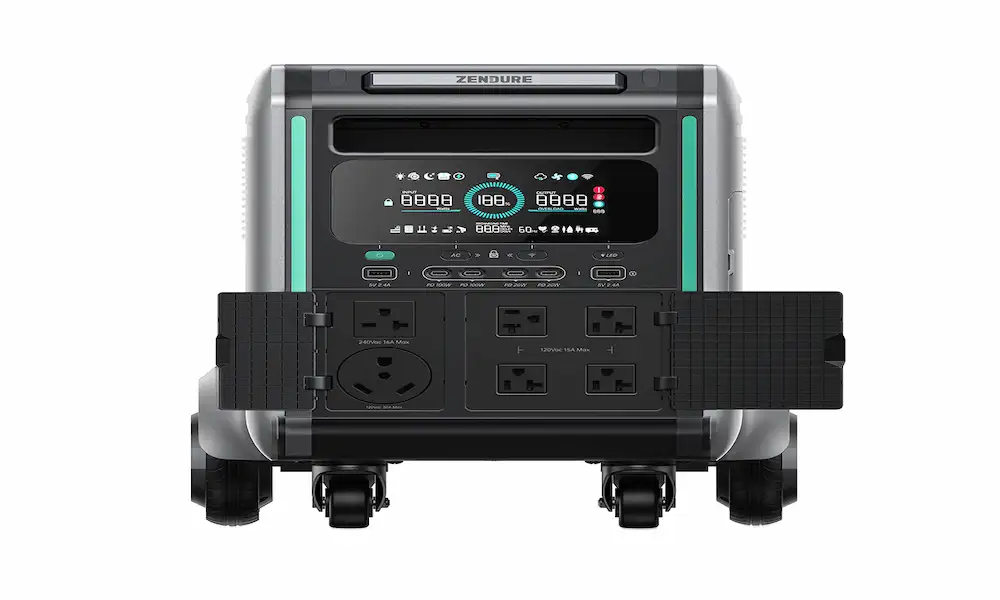
Then there’s the Zendure SuperBase V4600, which feels like something out of the future. If EcoFlow is a powerhouse and Bluetti is the budget-friendly workhorse, Zendure is the smart giant designed for people who want to go big.
At its core, the V4600 has 4.6kWh of capacity. But here’s where it gets wild: expand it with extra batteries, and you can scale up to 46kWh. Or even double it with two units and eight batteries, hitting over 92kWh. That’s not backup — that’s a personal power station.
Massive Power Output for Every Home Need
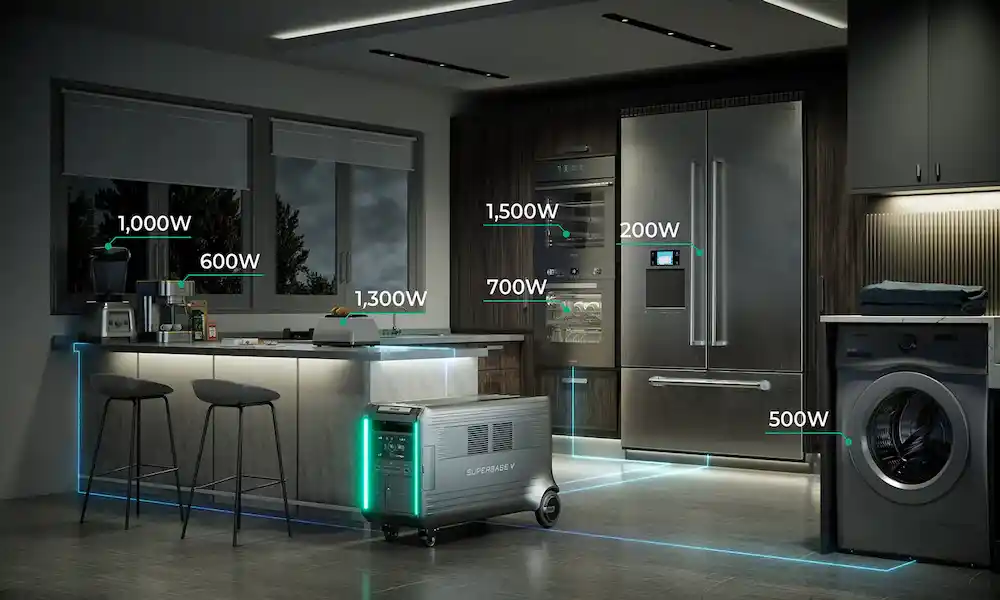
The Zendure SuperBase V isn’t just portable power — it’s a true home energy solution. With a base capacity of 4.6kWh or 6.4kWh, it can easily cover your daily essentials. Need more? The system is scalable up to an incredible 23kWh or 32kWh, giving you the flexibility to expand as your energy demands grow.
On its own, a single SuperBase V delivers up to 3,800W of output, more than enough to run appliances like a washer, dryer, heater, and refrigerator simultaneously. Pair two units together and you get a whopping 7,600W of power, enough to support a typical household during outages or for full-time off-grid living.
It supports AC, car, solar (up to 3000W), and even EV charging. The versatility is unmatched. And with both 120V and 240V outputs, it’s capable of powering just about anything you throw at it.
Intelligent Energy Management for Smarter Savings
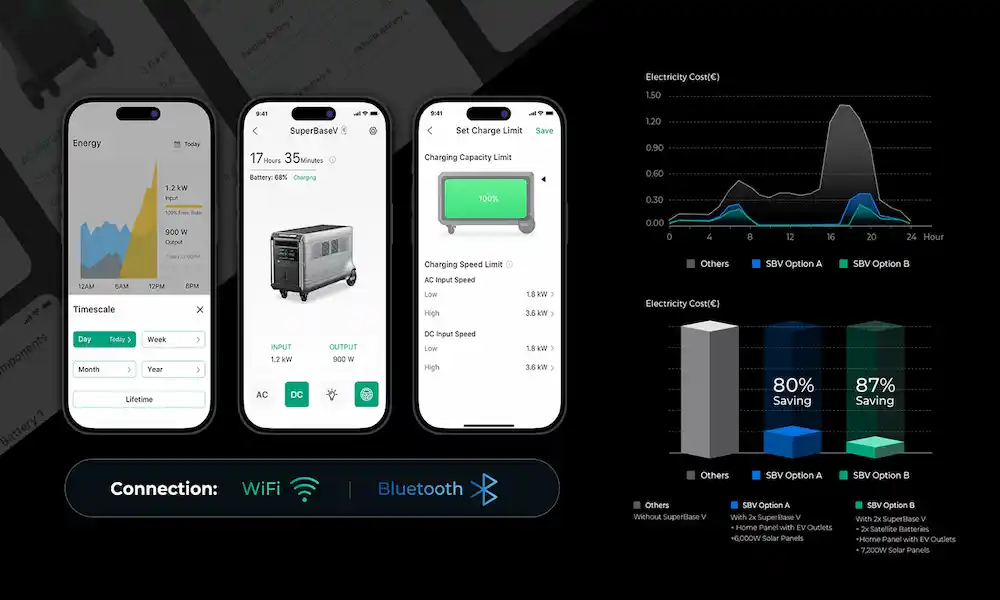
The Zendure SuperBase V goes beyond backup power — it’s designed to help you save money and manage energy smarter. With the optional Home Panel and EV outlets, you can connect the system directly to your home’s electrical circuits, powering everything from lights to large appliances seamlessly.
Through the Zendure app, you get real-time tools to monitor, manage, and even customize your energy usage. One standout feature is Zendure’s Time of Use management, which lets you charge when electricity rates are low and power your home when rates are high. The result? Reliable power during outages and significant savings on your monthly energy bill.
Yes, it’s heavy at over 120 lbs, but this is meant for serious setups, not carrying to a picnic. And with app control, WiFi, and Bluetooth, you don’t just own power — you manage it with your phone.
Zendure SuperBase V4600
Strengths:
Massive Capacity: Base capacity of 4.6kWh, expandable up to 92kWh, capable of powering an entire home.
High Output: 3,800W output, with a peak of 7,600W when using two units.
Smart Features: Includes app monitoring and energy-saving tools for efficient usage.
Dual Voltage Support: Offers both 120V and 240V outputs, providing flexibility for various appliances.
Weaknesses:
Premium Price: Priced at $4,999, it’s one of the more expensive options on the market.
Heavy Weight: Weighs over 120 lbs, making it less portable.
Complex Setup: Some users have reported that the user manual is sparse, leading to a steeper learning curve.
Price: $4,999
Check for availability, discount and latest price from the Zendure
For off-grid living, cabins, or families who want absolute independence, the SuperBase V4600 is the kind of investment that pays back every time the grid fails.
Related Posts
- EcoFlow DELTA Pro Ultra X Review: A Complete Analysis of the 2025 Whole-Home Backup System
- BLUETTI Elite 400 Review (2026): The Best Portable
- Bluetti FridgePower: Battery Backup
- BLUETTI Elite 30 V2 Review: The Portable Power Station Everyone’s Talking About
- EcoFlow DELTA 3 Series Review: Specs, Performance & Off-Grid Powerhouse
- Jackery HomePower 3600 Plus Solar Generator Review 2025: What Can It Power?
- BLUETTI Elite 200 V2: A Reliable Companion for Camping Adventures
- Reliable Power Anywhere: Jackery Explorer 2000 Plus Review
- Solar Generator for RV 2026: Best Portable RV Power Solutions & Buying Guide
EcoFlow vs Bluetti vs Zendure – Choosing What Fits You
The truth is, there’s no single “best solar generator for home” — there’s the best one for your home.
If you want whole-home coverage, something that keeps your AC, fridge, lights, and devices running without compromise, EcoFlow DELTA Pro 3 is the winner.
If you’re budget-conscious but still want dependable backup, Bluetti AC240 gives you peace of mind without draining your wallet.
If you dream of going off-grid, building an energy system that rivals a small utility, Zendure SuperBase V4600 is unmatched.
FAQs About Solar Generators for Home
Can a solar generator run a refrigerator?
Yes. Even smaller models like the Bluetti AC240 can keep a fridge going for many hours. Larger models like EcoFlow and Zendure can handle them for days.
Can I run air conditioning with one?
Only if you choose a generator with 240V output and high wattage. EcoFlow DELTA Pro 3 and Zendure V4600 are designed for exactly that.
Do I need solar panels?
Not necessarily. You can charge from the wall or even your car. But panels give you true independence when outages last more than a day.
Are solar generators safe indoors?
Yes. Unlike gas units, they emit no fumes, so you can run them safely inside your home.
How long do they last?
With modern LFP batteries, thousands of cycles are common. EcoFlow, for example, retains 80% capacity after 4000 cycles — years of reliable use.
Final Thoughts
The world is changing. Outages are more common, energy costs are rising, and families are looking for security. A solar generator isn’t just another appliance — it’s a way to take control.
If your goal is comfort during storms and outages, EcoFlow DELTA Pro 3 gives you whole-home reliability.
If you want affordable peace of mind, Bluetti AC240 is a fantastic starting point.
If you’re chasing true independence, Zendure SuperBase V4600 gives you freedom from the grid itself.
Whichever you choose, remember this: the best solar generator for home use isn’t about watts or volts. It’s about knowing that when the lights go out, your life doesn’t have to stop.
Recommended Posts
Author

John Tanko is the founder of Top Solar Picks and a solar energy researcher whose work has been featured in leading technology and sustainability publications. Learn more on our About page.