
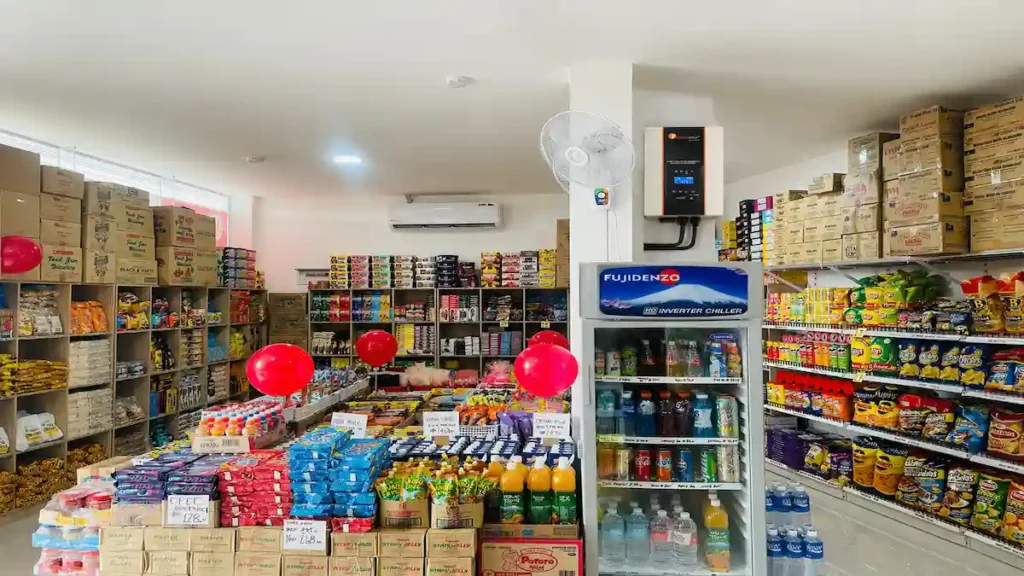
Running a business in Nigeria can be expensive because of unreliable grid power and rising generator fuel costs. A small business solar system in Nigeria typically costs ₦1.3M to ₦5.5M depending on power needs, but many businesses recover the cost within 18–36 months through fuel savings.
Solar System Cost for Businesses in Nigeria (2026)
The cost of installing a solar system for businesses in Nigeria in 2026 depends mainly on your daily power usage, the size of your inverter system, battery capacity, and quality of solar components. Small businesses like barbershops and retail stores require lower-capacity systems, while offices, pharmacies, and clinics need larger setups with higher storage capacity.
In most cases, solar installation for businesses is a one-time investment that replaces monthly generator fuel and maintenance costs. Although the upfront price may look high, most business owners recover their investment within 18–36 months through fuel savings and reduced downtime.
Recommended Solar Guides for Cost Planning
Learn how system size affects cost in real homes:
- Solar Panel Prices in Nigeria 2026: How Much Do They Really Cost?
- How to Power a 2-Bedroom Apartment with Solar in Nigeria (Setup & Cost)
This guide on Solar System for Businesses was last updated by John Tanko on April 23, 2026, to ensure accurate and up-to-date information for homeowners, farmers, and off-grid users.
Here is a breakdown of typical solar system sizes and costs for different business types:
Estimated Solar Installation Cost for Businesses in Nigeria
| Business Type | Solar System Size | Estimated Cost (2026) |
|---|---|---|
| Barbershop | 2kW | ₦1.8M – ₦2.5M |
| Retail Shop | 1.5kW | ₦1.3M – ₦1.8M |
| Pharmacy | 3kW | ₦2.5M – ₦3.8M |
| Small Office | 5kW | ₦4M – ₦5.5M |
1. Why Businesses in Nigeria Are Switching to Solar Power
The Issue: Unreliable Power, Increasing Costs
- Grid power is not reliable — the average outage time is 4–8 hours a day in most states.
- Generators are expensive to power, noisy, and prone to breakdowns.
- Fuel subsidy removal has driven prices up — diesel has gone over ₦1,200/litre in some places.
- Downtime for business caused by a power outage equals lost revenues.
The Solar Advantage
- Peaceful and hygienic — no smoke, no sound.
- Long-term cost savings — after the installation, your energy is basically free.
- More dependable than grid electricity — with batteries, your shop is open all day.
Helpful to the brand image — green businesses are seen to be innovative and ethical.
Avoid These Costly Solar Buying Mistakes Many business owners waste money on wrong systems. Learn here: 5 Big Mistakes Nigerians Make When Buying Solar – How to Avoid Them
2. Can One Operate an Entire Business Using Solar Power in Nigeria?
Yes — especially small and medium-sized businesses. This is what solar can power:
| Business Type | Can Solar Power It Fully? | Typical Load Range |
|---|---|---|
| Barbershop | ✅ Yes | 1.5kW – 2.5kW |
| Retail Store / Boutique | ✅ Yes | 1kW – 2kW |
| Pharmacy | ✅ Yes | 1.5kW – 3kW (incl. fridge) |
| Cyber Café | ⚡ Yes (with backup) | 2kW – 3.5kW |
| Cold Room / Bakery | ⚠️ Hybrid or Partial | 4kW – 10kW (high load) |
Critical: You must scale your system based on actual usage — guessing leads to failure.
3. How Much Does It Cost to Run a Business Using Solar Power in Nigeria?
Let’s break it down using practical examples.
Example 1: Small Retail Shop (with light bulbs, fans, POS, CCTV)
- Load demand: ~1.5kW
- System needed: 1.5kW solar + 2kVA inverter + 2 batteries
Estimated cost (2025): ₦1.3M – ₦1.8M
Example 2: Barbershop with clippers, TV, fans, and fridge
- Load demand: ~2.5kW
- Equipment needed: 2.5kW solar power + 3kVA inverter + 4 batteries
Price range: ₦2M – ₦3.2M
Example 3: Small office or clinic with AC, computers, lighting
- Load demand: 3.5–5kW
- System needed: 5kW solar + 5kVA inverter + 6 batteries
- Price range: ₦4M – ₦5.5M
Prices vary by battery type (lead-acid or lithium), brand, and installer margin.
4. How Long Before You Recover the Cost? (ROI Breakdown)
Generator vs Solar Power Cost Comparison for Nigerian Businesses
| Generator-Based Business | Solar-Powered Business |
|---|---|
| 💰 Fuel: ₦100,000 – ₦300,000/month | ☀️ ₦0 fuel cost |
| 🛠️ Maintenance: ₦10,000 – ₦25,000/month | 🔧 ₦0 (minimal inverter maintenance only) |
| ⛔ Downtime: 10+ hours/month | ⚡ 0–1 hour/month (battery switching) |
ROI Timeframe:
Most companies recoup their solar investment in 18–36 months and then have 5–10+ years of free electricity.
5. What Solar Components Will You Need?
Key Components of a Solar Power System and Their Functions
| Component | Function |
|---|---|
| ☀️ Solar Panels | Capture sunlight and generate DC (direct current) electricity |
| ⚡ Inverter | Converts DC electricity into usable AC power for home and business appliances |
| 🔋 Charge Controller | Regulates voltage and current between solar panels and battery to prevent overcharging |
| 🔌 Battery Bank | Stores excess energy for use at night or during cloudy weather |
| 🛠️ Installation System | Includes wiring, mounting structure, safety breakers, and surge protection setup |
Expert tip: Use only reputable solar installers certified by NREA or REAN to avoid poor installations.
6. Common Mistakes Businesses Make with Solar (and How to Avoid Them)
| ❌ Mistake | ✅ Solution |
|---|---|
| Buying cheap inverters or panels | Use quality brands like Victron, Felicity, or trusted installers |
| Undersizing the battery bank | Calculate daily energy usage before selecting battery size |
| Skipping energy audit | Always run a proper load assessment before installation |
| Not planning for future growth | Design system with 20–30% expansion capacity |
| DIY installations without expertise | Always use trained and certified solar technicians |
Recommended Posts
Can Solar Run a Fridge, TV & Fan All Day?
How to Power a 2-Bedroom Apartment with Solar in Nigeria
5 Big Mistakes Nigerians Make When Buying Solar
Solar Panel Prices in Nigeria (2025) & Felicity Solar Review
Frequently Asked Questions (FAQs)
Can I remove my generator totally?
Yes — for the majority of offices, salons, and stores, you can be 100% solar + battery if the sizing has been properly done.
Does solar power function during rainy season?
Yes. Panels continue to generate electricity on cloudy days, but less effectively. Battery storage gets you through.
What is the most appropriate battery for business?
Lead-acid costs less initially, 2–4 years old. Lithium-ion is pricier, but lasts 7–10 years, occupies less space, and charges faster.
Is there a government incentive for solar in Nigeria?
There are a number of state and federal programs (e.g., Solar Naija) that assist SMEs, but with limited availability. Some installers provide pay-as-you-go financing.
Last Remarks
Invest Once, Save for Years Transitioning your business to solar power is not merely about savings on fuel — it is about stability, growth, and having peace of mind. As generator prices rise and NEPA supply becomes less and less reliable, the time to go solar is now.
Want a customized quote for your business? Start with an energy audit and get customized suggestions for your business
Author

John Tanko is the founder of Top Solar Picks and a solar energy researcher whose work has been featured in leading technology and sustainability publications. Learn more on our About page.