
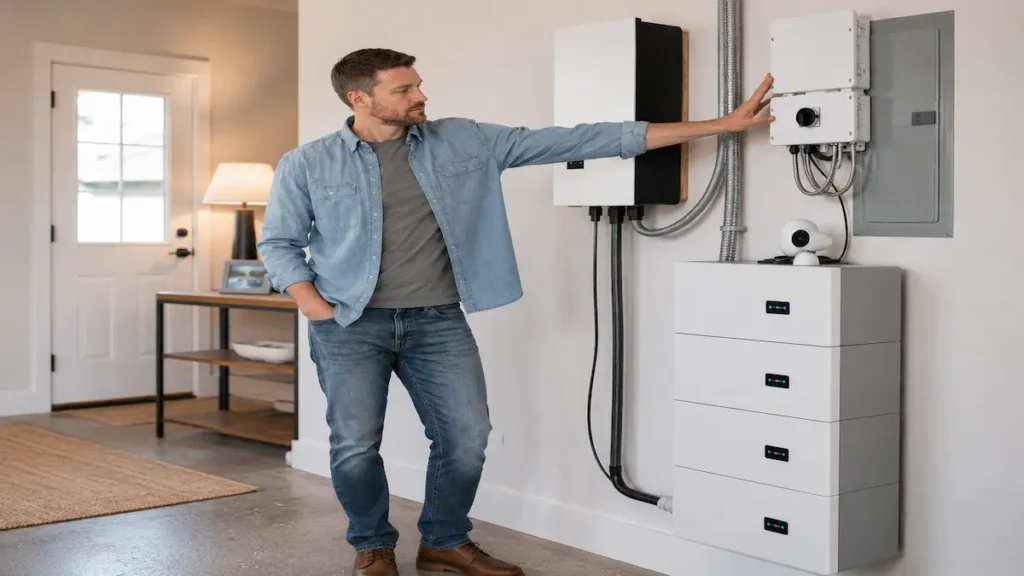
If your solar lithium battery is not turning on after it runs down, there are several possible reasons why this happens. In many cases, the battery may have entered a protective shutdown because it was discharged too deeply.
Some lithium batteries have a built-in Battery Management System (BMS) that protects the battery when the voltage gets too low. Your solar inverter can also continue consuming a small amount of power even when you think it has already been turned off.
This can become a problem when the battery is already very low.
In this guide, I’ll explain why a solar lithium battery may stop working after running down, what you can safely check, what to do if the battery won’t charge even when the sun is out, and how to prevent the problem from happening again.

Why You Can Trust Top Solar Picks
At Top Solar Picks, we focus on the problems people actually face when using solar equipment—not just what manufacturers say their products can do. Our guides combine manufacturer specifications, technical information, real-world user experiences, product research, and practical troubleshooting knowledge to explain what can go wrong and what you can safely check
Learn more →Solar Lithium Battery Troubleshooting Guide
Follow these checks when a lithium battery stops turning on after running down.
Battery runs very low
A low-battery warning appears and the battery is close to being fully discharged.
Battery may enter BMS protection
The Battery Management System may shut the battery down to protect the cells from excessive discharge.
Check the basic system connections
Check the battery switch, appropriate MCBs or disconnects, and visible system connections according to the manufacturer's instructions.
Try compatible AC charging
If your inverter supports AC charging, use the manufacturer's recommended charging settings and procedure.
Still not turning on?
The problem may involve the BMS, battery cells, wiring, inverter, charger, or another component.
Get professional diagnosis
If the battery remains unresponsive, contact the manufacturer or a qualified battery technician.
Do not open a lithium battery pack or connect an improvised charger to the battery. Charging and recovery procedures vary between battery models. Follow the manufacturer's instructions or have the system checked by a qualified professional.
If the Solar Panels Are Producing Power but the Battery Isn't Charging
Why a Solar Lithium Battery May Stop Turning On After Running Down
One situation I have seen is when the solar inverter starts giving a low-battery warning, but the inverter is left running.
At this point, the battery is already close to being fully discharged. Even if the inverter is no longer powering your appliances, some inverters can continue drawing a small amount of power from the battery.
That small consumption may continue for hours.This is where the problem can become confusing. The battery may have enough sunlight available the next morning, but it still won’t come on because it has already gone into protection.. The next morning, even when the sun comes up and the solar panels are producing power, the battery may not immediately turn back on or begin charging normally.
This is one reason you should not ignore a low-battery warning from your inverter.
What to Do When Your Solar Lithium Battery Won’t Turn On
If your battery has run down and is no longer coming on, there are a few things you can check before assuming that the battery is damaged.
1. Check the Solar and Battery Connections
First, check that the battery, inverter, and solar connections are properly connected.
If your solar system has an MCB or disconnect switch for the solar input, make sure the appropriate switch is on and that the solar system is actually receiving power.
Also check the battery’s own power switch, if it has one.
If the battery still does not come on, move to the next step.
Don’t repeatedly switch components on and off without understanding how your particular system is wired. If you’re unsure, check the manufacturer’s instructions or have a qualified installer inspect it.
2. Try Charging the Battery From AC
If your inverter has an AC charging function, another option is to connect the inverter to a suitable AC power source and allow it to charge the battery.
This can sometimes help bring a low-voltage lithium battery back into its normal operating range.
Before doing this, make sure the inverter’s charging settings are appropriate for the battery chemistry and voltage. A lithium battery should be charged using a charger or inverter charger that is designed and configured for that battery.
If the battery begins charging and comes back on normally, allow it to charge properly before putting a heavy load back on the system.
3. A Severely Discharged Battery May Need a Manufacturer-Approved Recovery Method
If AC charging does not bring the battery back, the next step depends on the battery’s voltage and design.
For example, a 12V lithium battery is different from a 24V or 48V battery, and different lithium batteries can have different charging requirements.
You may come across advice telling you to use a separate charger with a particular voltage and connect it directly to the battery terminals. I would strongly recommend checking the battery manufacturer’s instructions before doing this.
The correct charging voltage, current, and recovery procedure depend on the battery chemistry and BMS design.
If the manufacturer specifically provides an approved recovery procedure, follow that procedure exactly.
Do not simply connect an unknown charger to a lithium battery because its voltage appears to be close to the battery’s nominal voltage.
4. Give the Battery Some Time to Recover
Sometimes a battery that has entered BMS protection may not immediately respond when you try to turn it back on.
If the battery is otherwise in good condition, allowing it to sit for some time and then trying the manufacturer’s normal startup procedure again may help.
You can leave it for several hours and then check it again.
However, if the battery remains completely unresponsive, don’t keep repeatedly attempting different charging methods. At that point, the battery may need professional diagnosis.
Editorial Note: Battery behavior can vary significantly between lithium battery models, BMS designs, and inverter systems. The troubleshooting steps in this guide are intended to help identify common causes and safe first checks. Always follow the battery and inverter manufacturer’s instructions for charging, recovery, and electrical connections.
What If the Solar Panels Are Producing Power but the Battery Is Still Not Charging?
This is a slightly different situation from the battery simply refusing to turn on.
You may have sunlight, the solar panels may be producing power, and your inverter may even show solar input, but the lithium battery still isn’t charging.
There are several things that could cause this.
The BMS May Still Be in Protection
If the battery was deeply discharged, the BMS may have disconnected the battery to protect the cells.
In this situation, the solar panels can be producing electricity without the battery accepting the charge normally.
Depending on the battery design, the BMS may need the battery to reach a certain voltage or follow a specific startup and charging procedure before normal charging resumes.
Check That the Battery Is Actually Turned On
This sounds simple, but it is worth checking.
Some lithium batteries have a physical power switch, while others have a button or another startup procedure.
If the battery switch is off, the inverter may be receiving solar power while the battery remains disconnected.
Check the battery’s manual for the correct startup procedure.
Check the Inverter’s Charging Settings
Incorrect inverter settings can also prevent a lithium battery from charging properly.
The inverter needs to be configured for the correct battery type and voltage. On some systems, charging parameters can be adjusted manually.
If the inverter is configured incorrectly, the battery may not receive the charging profile it requires.
Don’t change unfamiliar charging parameters randomly. Use the battery and inverter manufacturer’s recommended settings.
Check the Solar Input and MCB
If the solar panels are supposed to be charging the battery, check whether the solar input is actually reaching the inverter.
A tripped MCB, disconnect switch, loose connection, or another problem in the solar circuit can stop charging.
If you are not comfortable working around the electrical connections, have a qualified solar technician check the system instead of attempting repairs yourself.
Check Battery-to-Inverter Communication
Some lithium batteries communicate with compatible inverters through a communication connection such as CAN or RS485.
If that communication is interrupted or configured incorrectly, the inverter may not charge the battery as expected.
This is more common with systems where the inverter relies on battery communication to manage charging and protection parameters.
If your battery and inverter are designed to communicate, check the manufacturer’s instructions for the correct communication settings and cable.
The Charger or Wiring Could Be Faulty
If you are using AC charging and the battery still isn’t charging, the charger, inverter charger, wiring, fuse, or connection could be part of the problem.
This is another situation where professional diagnosis may be necessary.
The Battery Cells or BMS Could Have a Fault
If everything else appears to be working but the battery still refuses to accept a charge, there could be an internal battery problem.
The BMS could be faulty, or one or more battery cells could have an issue.
At this stage, don’t open the battery yourself. A qualified technician can test the battery and determine what is actually causing the problem.
Don’t Open a Lithium Battery Pack Yourself
If you are not trained to work on lithium battery packs, do not open the battery yourself.
Lithium battery packs contain multiple cells, electrical connections, and a BMS. Attempting to diagnose or repair the internal components without the proper knowledge and equipment can be dangerous.
If the BMS is suspected to be damaged, take the battery to a qualified battery technician or contact the manufacturer.
A professional can determine whether the problem is with the BMS, individual cells, wiring, or another part of the battery system.
How to Prevent Your Solar Lithium Battery From Running Too Low
The easiest way to deal with this problem is to prevent the battery from reaching that point in the first place.
In many cases, the problem happens at night.
You may be using your inverter in the evening, and as the battery gets lower, the inverter eventually starts giving you a low-battery warning.
When you hear that warning, don’t simply continue using the same amount of power.
Reduce Your Load When the Battery Is Low
The first thing you should do when you hear a low-battery warning is reduce the amount of power you are consuming.
Turn off appliances that you don’t need and reduce the load on the inverter.
This gives the battery a better chance of maintaining enough charge to remain operational until the solar panels begin charging it again.
Turn Off the Inverter When You Are No Longer Using It
If the battery is already very low and you are not using the inverter, it is better to turn the inverter off according to the manufacturer’s recommended shutdown procedure.
This is particularly important because some inverter systems can continue consuming a small amount of power even when they are not actively powering appliances.
That small consumption may not seem important when the battery is well charged, but it can matter when the battery is already close to empty.
The goal is to avoid allowing the remaining battery capacity to drain completely overnight.
Don’t Ignore a Low-Battery Warning
A low-battery warning is there for a reason.
When your inverter tells you that the battery is running low, treat it as a signal to reduce your electrical load or stop using the inverter if appropriate.
Allowing a lithium battery to continue discharging until the system shuts down completely can increase the chances of the BMS entering a protective state.
Instead of waiting for the battery to completely collapse, take action when you first receive the warning.
Frequently Asked Questions
Why won’t my lithium battery turn on after it dies?
A lithium battery may stop turning on after a deep discharge because its Battery Management System has entered a protective shutdown. Other possible causes include a low battery voltage, a problem with the battery switch, inverter settings, wiring, the BMS, or the battery cells themselves.
Can a completely dead lithium battery be recharged?
Sometimes a deeply discharged lithium battery can be recovered, but it depends on the battery’s condition and BMS. If the battery manufacturer provides a recovery or charging procedure, follow it. If the battery remains unresponsive, have it professionally checked rather than trying an improvised charging method.
How do I wake up a lithium battery?
The correct procedure depends on the battery. Some batteries can return to normal operation after being connected to a compatible charger, while others require a specific startup or recovery procedure. Always follow the manufacturer’s instructions rather than using a generic method.
Can an inverter drain a lithium battery when it’s turned off?
Some inverter systems can continue drawing a small amount of standby power even when they are not supplying power to appliances. When a lithium battery is already very low, that small consumption can contribute to further discharge. Check your inverter’s specifications to determine its standby consumption.
How do I prevent my solar battery from completely discharging?
Pay attention to your inverter’s low-battery warning. Reduce your electrical load when the battery gets low and turn off the inverter when appropriate if you are no longer using it. Proper battery settings and avoiding unnecessary overnight loads can also help prevent excessive discharge.
Final Thoughts
A solar lithium battery that refuses to turn on after running down does not necessarily mean that the battery is permanently damaged.
Sometimes the BMS has simply placed the battery into a protective shutdown because its voltage became too low. In other cases, continued small power consumption from the inverter may have contributed to the battery becoming deeply discharged.
The best approach is to start with the simple and safe checks: verify the connections, follow the battery manufacturer’s normal startup procedure, and use an appropriately configured AC charger if your system supports it.
If the solar panels are producing power but the battery still won’t charge, check the battery switch, inverter settings, solar input, communication connection where applicable, and charging equipment.
Most importantly, try to prevent the problem from happening again. When your inverter gives you a low-battery warning, reduce your load and avoid leaving the system consuming power when the battery is already nearly empty.
And if the battery remains completely unresponsive, especially after proper charging attempts, don’t open the battery or attempt an improvised repair. Have it checked by a qualified technician or contact the manufacturer.
Author

John Tanko is the founder of Top Solar Picks and a solar energy researcher whose work has been featured in leading technology and sustainability publications. Learn more on our About page.