
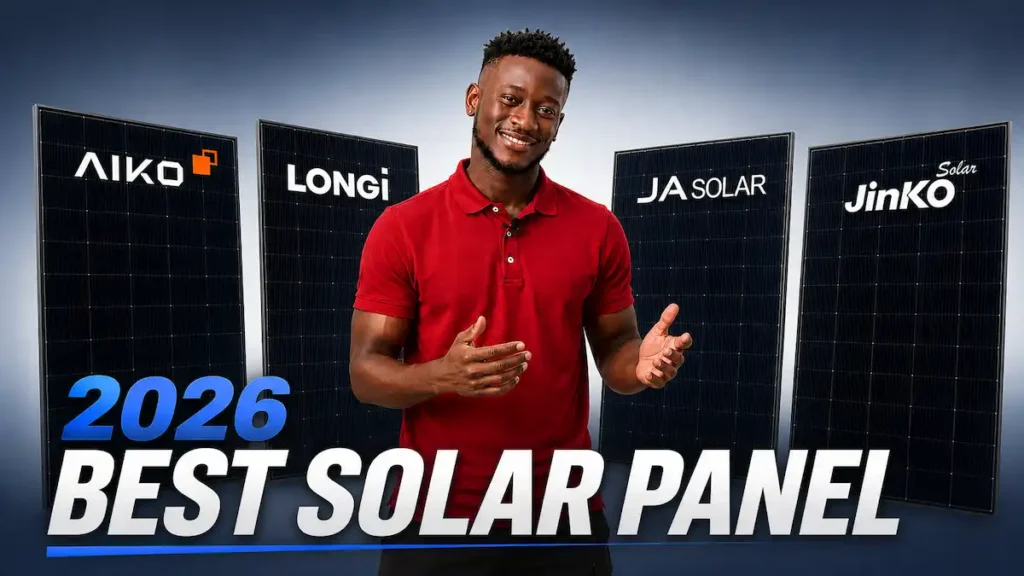
I’ve looked at the latest residential solar panels from Maxeon, Aiko, Jinko, LONGi, REC, Canadian Solar, and Qcells. Maxeon 7 still comes out on top for 2026. It’s got unbeatable durability, a super low degradation rate, and an impressive 40-year warranty.
But if you don’t have a lot of roof space, Aiko’s ultra-efficient ABC panels are probably the smarter pick. Jinko’s Tiger Neo is also worth a look—it gives you a solid mix of performance and price.
This guide breaks down how these panels stack up when it comes to efficiency, degradation rates, warranties, temperature handling, and long-term value. The idea is to help you figure out which solar panel fits you best.
Quick Comparison: Best Solar Panels of 2026
There are many good solar panels out there in the market in 2026, but a few brands really stand out for real world performance, efficiency, and how well they last. Some panels are designed to get as much power as possible from small roof spaces, while others focus more on being tough and offering solid value year after year.
| Solar Panel | Efficiency | Warranty | Best For | Heat Performance | Price Range |
|---|---|---|---|---|---|
| Maxeon 7 | Up to 24% | 40 Years | Long-term performance and maximum reliability | Excellent | Premium |
| Aiko ABC Series | 24%+ | 25 Years | Homes with limited roof space | Very Good | Premium |
| Jinko Tiger Neo | Around 23% | 30 Years | Strong performance at a more affordable price | Excellent | Mid-Range |
| LONGi Hi-MO Series | Around 23% | 25 Years | Everyday residential and commercial installs | Very Good | Mid-Range |
| REC Alpha Pure | Around 22.5% | 25 Years | Consistent performance and trusted quality | Very Good | Mid-to-Premium |
What’s interesting now is just how close most of these panels are when you look at how they perform day to day. You might think a panel with slightly lower efficiency loses out, but sometimes it actually ends up delivering more usable energy in the long run—say, if it manages heat better or breaks down less. That’s why a lot of installers these days look past the efficiency numbers and care more about long-term output and reliability.
you can also understand this better by looking at how solar panel output actually works in real homes and different wattage levels like 100W, 200W, and 400W systems, especially when sizing a full setup.
If you’re investing in solar in 2026, whether you’re a homeowner or running a business, the smart move is to look at total lifetime energy. That number matters way more than the highest efficiency figure you see in a lab.
Before choosing panels, you should also check How to Choose The Solar Best Inverter And Battery (Complete 2026 Guide) and plan your system properly using How many solar panels to charge a 200Ah lithium battery
Why You Can Trust Top Solar Picks
We compare real-world solar performance, charging reliability, long-term user experiences, and practical testing — not just manufacturer claims. Products from brands like EcoFlow, Bluetti, Jackery, and Eco-Worthy are cross-checked using actual usage data and customer feedback.
Learn more →How Top Solar Picks Picked the Best Solar Panels for 2026
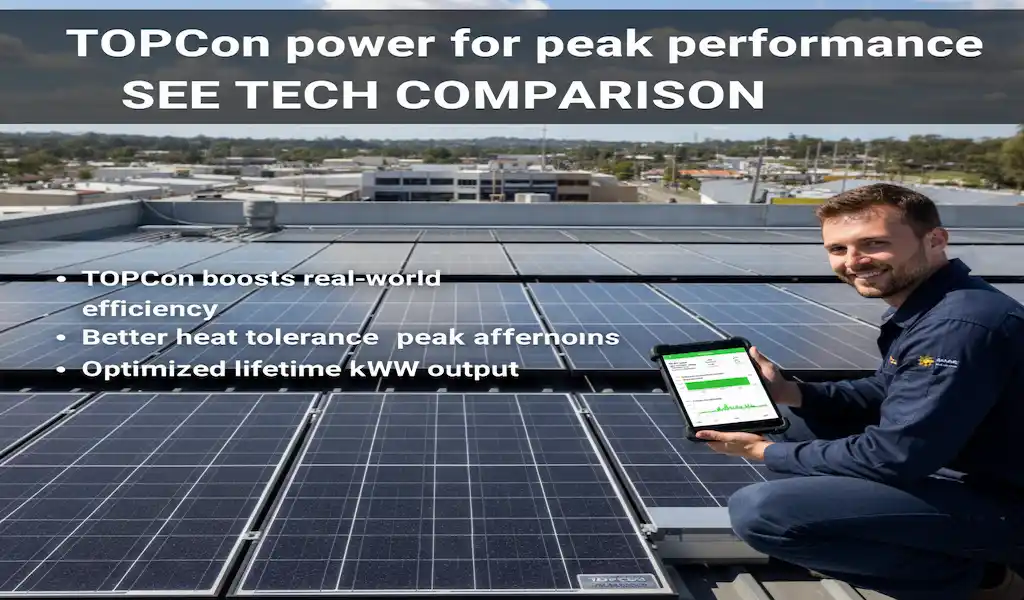
To really compare the top solar panels this year, you have to look at how they perform out in the wild, not just what they do in perfect lab conditions.
One of the biggest things that affects performance? Heat. All panels lose some punch as they get hotter, but the best ones handle the heat better, which means more electricity — especially on summer afternoons when you need it most.
Degradation is just as big a deal. Good panels these days lose about 0.25% of their output each year. Cheaper ones? More like 0.4%. That difference adds up over 25 or 30 years, both in energy and savings.
And then there’s the company behind the panel. A 25-year warranty means nothing if the company disappears in ten. You want a manufacturer with a solid track record and the muscle to stick around.
Last thing: we cared way more about how much energy a panel makes over its life, and how much that energy costs per kilowatt-hour, than just the sticker price. Sometimes paying a bit more upfront means thousands of extra dollars in electricity over the years. real-world performance depends heavily on installation, especially What’s the Best Direction for Solar Panels to Get Maximum Power.
The Best Solar Panels of 2026
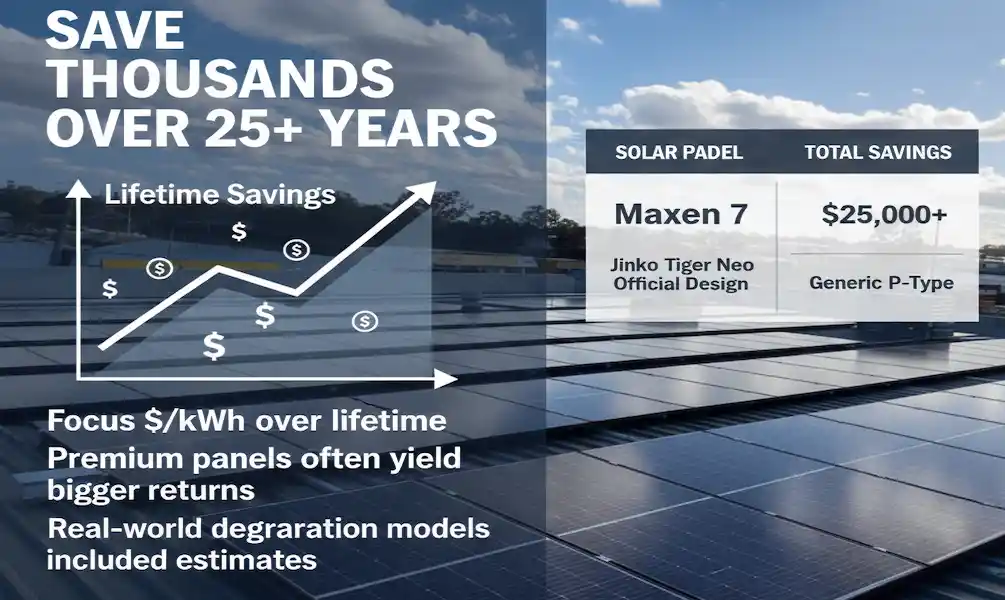
Maxeon 7: The Gold Standard for Long-Term Performance
Maxeon’s not chasing the highest efficiency numbers just for bragging rights. For years, they’ve focused on durability and how much energy a panel actually holds onto over time. The Maxeon 7 sits right at the 24% efficiency mark, but what sets it apart is how it just keeps delivering, year after year.
Its interdigitated back-contact cell design ditches the front metal grid lines, so more sunlight actually makes it into the cell. It also means less mechanical stress over time. That’s a big reason why these panels keep putting out strong numbers long after others start to fade.
What really makes Maxeon pop in 2026 is how well it handles tough conditions. Heat, partial shade, you name it — independent tests show these panels keep cranking when others drop off. If you’re planning to stay in your home for the long haul, or you’ve only got so much roof space, Maxeon 7 is still one of the safest bets out there. Long-term durability also impacts impact on your home, to learn more on this check our guide on Do Solar Panels Increase Home Value in 2026? Yes – Here’s Exactly How Much ($15K–$29K on Average
What Stands Out, What’s Lacking
Strengths
- Unmatched durability and top-tier long-term performance
- Barely any yearly degradation
- Handles heat with ease
- Warranty up to 40 years
- Legacy of strong results across generations
Weaknesses
- Easily one of the priciest panels out there
- High costs can lead to longer payback
- Sometimes hard to find based on location and installer
Best for: Homeowners all about maximum durability and lifetime energy yield.
Aiko ABC Series: Chasing the Edge of Efficiency
Aiko’s the name on everyone’s lips lately, and for good reason. They’re obsessed with efficiency, and their advanced back-contact tech is pushing the limits of what silicon panels can do.
By moving all the contacts to the back of the cell, these panels cut down on shading and soak up more sunlight. That means crazy high energy density. If you’re short on roof space, these are a lifesaver.
Yeah, they’re priced at the premium end, but honestly, this is where the whole industry’s headed. Everyone’s racing to squeeze out as much efficiency as possible. roof space limitations are closely tied to Solar Panel Dimensions & Space Calculator: Plan Your Solar Setup Easily
What Stands Out, What’s Lacking
Strengths
- Among the highest efficiency you’ll find for homes
- Great option for roofs with limited space
- Advanced back-contact cell design
- Sleek, all-black style
- Stays productive, even in low light
Weaknesses
- Premium price tag
- Newer tech, so less long-term data in real-world installations
- Not as many installer partners as older brands
Jinko Tiger Neo Series: Big Efficiency Without the Big Price Tag
Jinko’s Tiger Neo panels show just how fast TOPCon has gone from “new tech” to “industry standard.” A couple years ago, it was the next big thing. Now in 2026, it’s everywhere. TOPCon helps the panel pull more electricity out of every ray of sun, and it shrugs off heat better than older designs. If you live somewhere hot, that matters. for folks who want great efficiency and reliability without paying through the nose, the Tiger Neo series hits a real sweet spot. Efficiency in different conditions is explained further in Best Solar Panels for Cloudy Weather: A Deep Dive
What Stands Out, What’s Lacking
Strengths
- Fantastic bang for your buck
- Uses advanced TOPCon technology
- Thrives in hot weather
- Warranty holds up well
- Easy to source worldwide
Weaknesse
- Still building up years of long-term performance data
- The absolute best brands might edge it out for durability
- Warranty help can depend a lot on your local distributor
Best for: Homeowners who want both value and performance without a massive price.
LONGi Hi-MO Series: High Performance for the World’s Rooftops
LONGi stands out in the solar world. Their Hi-MO series blends smart cell design with massive manufacturing power, so you get solid efficiency without the price tag shooting through the roof. honestly, that balance is why so many people choose LONGi panels for both homes and businesses.
Most folks care more about the whole system making sense financially than squeezing out every last drop of efficiency. another thing—LONGi moves fast. When a new technology works, they ramp it up quickly, which pushes solar costs down worldwide. long-term savings analysis connects with Is Solar Worth It in 2026? Real Payback Math for Homeowners
What Stands Out, What’s Lacking
Strengths
- Good efficiency at wallet-friendly prices
- Large, consistent manufacturing operation
- Strong N-type tech choices
- Reliable for homes and businesses
- Easy to find almost everywhere
Weaknesses
- Warranty isn’t quite as generous as some rivals
- Fewer installer recommendations than top-tier brands
- A notch lower in efficiency than the best back-contact panels
Best for: Anyone who wants solid performance without overspending.
REC Alpha Pure Series: Built for Trust, Not Just Numbers
REC’s approach is different. They put consistency and quality first, not getting caught up in the efficiency race. The Alpha Pure series delivers steady real-world results, thanks to tight manufacturing standards.
Installers like REC because the panels behave the way you expect, wherever you put them. And for most homeowners, that kind of reliability means more than a tiny bump in lab-tested efficiency.
What Stands Out, What’s Lacking
Strengths
- High-quality manufacturing
- Installers trust the brand
- Reliable, efficient performance
- Handles heat well
- Excellent warranty support
Weaknesses
- Costs more than value-focused brands
- Sometimes hard to get, depending on your region
- Not leading the efficiency race anymore
Best for: Homeowners who want quality assurance and installer confidence.
Qcells: Steady Performance and Trusted U.S. Brand
Qcells is now one of the easiest-to-spot solar brands across North America. People know it for good performance, solid reliability, and panels you can actually find in stock. Sure, Qcells doesn’t always hit the absolute highest efficiency scores, but it delivers consistent, real-world output and packs in lots of value for the money.
One thing that really sets Qcells apart is its focus on quality and long-term dependability. The company pours resources into tight manufacturing standards and tough testing. This has earned a lot of trust with both installers and homeowners.
If you want a brand that’s stood the test of time and keeps prices competitive, Qcells remains a safe bet for homeowners going solar in 2026.
What Stands Out, What’s Lacking
Strengths
- Big reputation in the U.S. market
- Reasonable prices
- Consistent, reliable long-term results
- Strong network of installers
- Manufacturing quality you can count on
Weaknesses
- Doesn’t match the top panels for efficiency
- Warranty is solid but not the industry’s top offer
- Not for those chasing maximum output per panel
Best for: Folks who want a proven, easily available solar brand.
Canadian Solar: Dependable Panels, Global Footprint
Canadian Solar has spent years building up a name for reliable panels that don’t cost a fortune. You’ll find its products everywhere, from houses to big utility projects across the world.
The draw with Canadian Solar is that you get solid panel efficiency and helpful warranties—without paying top dollar like you would for some “luxury” brands.
If you want tech that’s proven itself, made by one of the biggest players in the solar industry, Canadian Solar still stands strong in 2026.
What Stands Out, What’s Lacking
Strengths
- Strikes a good balance between price and performance
- Big footprint in global markets
- Reliable performance, just about anywhere
- Attractive pricing
- Lots of installer options
Weaknesses
- Lower efficiency than the high-end competition
- Fewer fancy features compared to premium panels
- Warranties can differ based on the panel line
Best for: Homeowners who want dependability without going over budget.
Trina Solar: Pushing Technology, Keeping Prices Down
Trina Solar is always working to bring new tech into its panels, and somehow keeps them affordable at the same time. This company is a front-runner when it comes to rolling out advanced cell designs and nudging efficiency higher.
Their newest residential panels are top-notch in terms of real-world performance, heat management, and warranties. Homeowners looking to squeeze every bit of value out of their dollars should take a hard look at Trina—modern tech without the jaw-dropping price tag.
For most homes, Trina hits a sweet spot between efficiency, reliability, and what you pay.
What Stands Out, What’s Lacking
Strengths
- Strong value overall
- Competitive on efficiency
- Packs in advanced cell tech
- Handles warm conditions well
- Known and respected internationally
Weaknesses
- Not as established in the high-end home market
- Warranty terms shift by region
- Doesn’t have as long a field track record as Maxeon
Best for: Anyone after modern solar tech and solid value.
JA Solar: High Specs without a Luxury Price
JA Solar is one of the fastest movers in the solar world lately, thanks to strong-performing panels and a price tag that doesn’t sting as much as others. They’re rolling out new N-type technology that bumps up efficiency and keeps your system delivering more energy for longer.
In a lot of places, JA Solar rivals the features of more expensive brands but ends up being much more budget friendly. If you want up-to-date solar panels but don’t want to overspend, JA Solar is a value pick that’s hard to ignore.
What Stands Out, What’s Lacking
Strengths
- High efficiency relative to its cost
- Runs on proven N-type cells
- More installers choosing it all the time
- Great performance for the price
- Reliable production standar
Weaknesses
- Brand less familiar to some buyers
- Premium competitors tend to win on warranty
- Not as many top-tier installation partners
Best for: People working with a tight budget who still care about current high-efficiency technology.
How to Pick the Right Solar Panel
There’s more to choosing the best solar panel than just chasing the highest efficiency score. A lot depends on your roof, your weather, your budget, and what you want out of your system in the long run.
Efficiency
Efficiency tells you how much sunlight your panel turns into electricity. The higher the number, the more power you get from a given space. If your roof area is tight, high efficiency is even more important.
Degradation Rate
Every panel loses a little output each year. Better panels drop about 0.25% yearly, while cheaper ones could lose 0.4% or more. Lower degradation equals more total energy over the years.
Temperature Coefficient
Heat saps performance from solar panels. Some panels handle high temps better than others. If your summers get hot, pay attention to this—lower coefficients are better.
Warranty Coverage
You want peace of mind, so look for panels with strong product and performance warranties. Longer and more generous warranties usually show the manufacturer stands behind its work.
Installer Quality
Great panels won’t help you much if the install is sloppy. Picking a reputable installer is just as important as the panel you pick.
Available Roof Space
Tiny roof? Go for higher-efficiency panels to get the most out of your space. If your roof is big, you’ve got more options—and more room to go with lower-cost panels, if you want.
Top Efficiency Panels for 2026
If you’ve got a small roof, efficiency jumps to the top of your priorities. The most efficient residential panels for 2026 are:
- Aiko ABC Series
- Maxeon 7
- REC Alpha Pure-RX
- Jinko Tiger Neo
- Trina Vertex S+
These are built to squeeze maximum electricity out of every inch of roof.
Best Panels for Hot Climates
Heat hits solar performance hard, so if you live somewhere warm, panel temperature management matters.
Some of the best performers in hot regions:
- Maxeon 7
- Jinko Tiger Neo
- REC Alpha Pure
- Trina Vertex Series
- LONGi Hi-MO Series
These brands don’t wilt during extreme heat.
Best Panels for Small Roofs
On small roofs, every panel has to give you as much as possible.
Top options include:
- Aiko ABC Series
- Maxeon 7
- REC Alpha Pure-RX
- JA Solar DeepBlue Series
- Jinko Tiger Neo
They’re all about high output from small areas.
Most Reliable Panels in 2026
Reliability is often even more important than squeezing out an extra point or two of efficiency. In 2026, these brands are trusted for long-term performance:
- Maxeon
- REC
- Qcells
- Canadian Solar
- LONGi
They all have strong track records and high marks for durability.
Best Value Panels in 2026
Not everyone wants or needs the fanciest panel money can buy. For lots of homeowners, it’s all about getting good performance without overspending.
Great value choices:
- Jinko Tiger Neo
- LONGi Hi-MO Series
- JA Solar DeepBlue
- Trina Vertex Series
- Canadian Solar
These panels get you solid output at reasonable prices.
Top Warranties in 2026
A reliable warranty signals the manufacturer’s confidence. The best in the industry right now are:
- Maxeon – Up to 40 Years
- Jinko Solar – Up to 30 Years
- REC – 25 Years
- Qcells – 25 Years
- Canadian Solar – 25 Years
Long warranties don’t guarantee performance, but they do give you protection down the road.
Solar Panel Tech in 2026: What’s Actually Changing
The biggest thing shaking up the industry right now? N-type solar cells. They last longer and don’t fade as fast as the older P-type versions.
TOPCon technology is everywhere these days, giving you better efficiency without sending costs through the ceiling. Heterojunction panels are still out there too, especially where heat is a problem and you need top-tier performance.
If you want the absolute highest efficiency, back-contact panels still lead the pack—but they’re tricky and expensive to make.
What Solar Panels Really Cost in 2026
People are always surprised—panel price isn’t the whole story. How well your system performs depends a lot on the installation, the inverter, and the system design. The brand matters, but within a quality range, it’s not everything. Top-tier panels cost more upfront, sure, but they crank out more power over the years. If you look at cost per kilowatt-hour over a panel’s lifetime, sometimes the premium option actually saves you money.
full breakdown is explained in How Much Does Solar Panel Installation Cost in 2026? and financial returns are covered in Is Solar Worth It in 2026? Real Payback Math for Homeowners
Explore the latest solar deals and discounts on trusted brands like Bluetti, EcoFlow, ECO-WORTHY, and Jackery. Browse solar generators, panels, and accessories at great prices.
View DealsRelated Posts
EcoFlow, Bluetti, Jackery, and Eco-Worthy: Best Solar Panel Brands in 2026
Compare leading portable solar and power storage brands based on performance, reliability, and value.Solar Energy Advantages and Disadvantages: 2026 Breakdown
A clear look at the real benefits and limitations of solar energy for homes and businesses.How Many Solar Panels Do You Need to Power a House?
Learn how to estimate panel requirements based on energy use, home size, and location.Off-Grid Solar System: How It Works and What You Need to Know
Understand off-grid solar setups, including batteries, inverters, and system sizing basics.
Why Your Climate Matters for Solar
Where you live changes everything. Heat, humidity, dust, and clouds all take a bite out of solar output.
Panels that shrug off high temps and resist long-term wear give more stable results, especially in hot places where panel temperatures soar way past the air temperature.
The Future of Solar Technology Beyond 2026
Researchers keep pushing forward, especially with tandem solar cells like perovskite-silicon mixes. These could break the 30% efficiency mark in the next decade.
But if you’re buying solar now, the safest bet is still proven tech from manufacturers who stand behind their products.
Frequently Asked Questions About Solar Panels in 2026
Which solar panel lasts the longest?
Maxeon panels have a strong reputation for lasting a long time and barely degrading over the years. Some premium options are built to keep pumping out power for 25, 30, even up to 40 years. But it’s not just about the panel—installing them right, looking after them, and the weather in your area all play a big role in how long they actually last.
Are premium solar panels worth it?
If you’re not planning to move anytime soon or your roof isn’t all that big, premium panels really pay off. They tend to be more efficient, hold up better against age and heat, and usually come with rock-solid warranties. Sure, you pay more upfront, but over the years, you often get more electricity—and bigger savings.
What is the best solar panel brand in 2026?
There’s no single best solar panel brand in 2026, it’s really about what matters most to you. Some people want panels that last forever, while others are hunting for the highest efficiency, especially if their roof’s tiny. Maxeon, Aiko, Jinko, LONGi, and REC are the names everyone’s talking about lately. They’ve proven themselves in different climates and types of installations.
If you’re after reliable, premium panels that’ll go the distance, Maxeon still leads the pack. When efficiency’s what you need, especially with limited space, Aiko gets all the buzz this year. Jinko and LONGi hit a sweet spot for anyone trying to stretch their budget without giving up much on performance. REC keeps winning over installers and homeowners thanks to its steady reputation and trustworthiness.
Which solar panels perform best in hot weather?
Panels that have better (lower) temperature coefficients don’t suffer as much in the heat. Models like Maxeon, Jinko Tiger Neo, or some of the newer heterojunction panels are known for holding up well in higher temps. That’s especially important if you live somewhere your rooftop bakes in the sun and gets much hotter than the air outside.
Is solar panel efficiency the most important thing?
Not really. Efficiency counts for a lot if you’re tight on space, but it’s not the only thing. Long-term energy production is usually what matters more—so look at things like how slowly the panels degrade, how they deal with heat, the warranty backup, and who’s doing the installation. Those factors often end up saving you more in the long run.
How long do solar panels usually last?
Most newer panels are built to last 25 or 30 years—and sometimes longer. Plenty of higher-end models are still cranking out 85% or more of their original power after decades on your roof. Even once the warranty runs out, they’re usually still working, just not quite as efficiently as when they were new.
Final Thoughts: Choosing the Right Solar Panel in 2026
The “best” panel isn’t always the one with the flashiest efficiency number. You want the one that keeps delivering steady, reliable energy year after year, no matter what life throws at it.
For most people, that means going with a company known for reliability, panels that don’t degrade much, and a real warranty you can count on. Premium panels might win on total long-term output, while high-efficiency value panels can be a smart buy if you’re watching your upfront costs.
Solar tech keeps getting better, but in the end, the big wins come from panels that deliver over their whole lifespan—not just on paper. If you keep your eye on lifetime energy, not just marketing claims, you’ll usually come out ahead.
Author

Top Solar Picks is a team of solar enthusiasts and renewable energy researchers with hands-on experience testing solar generators, panels, and battery storage systems.