
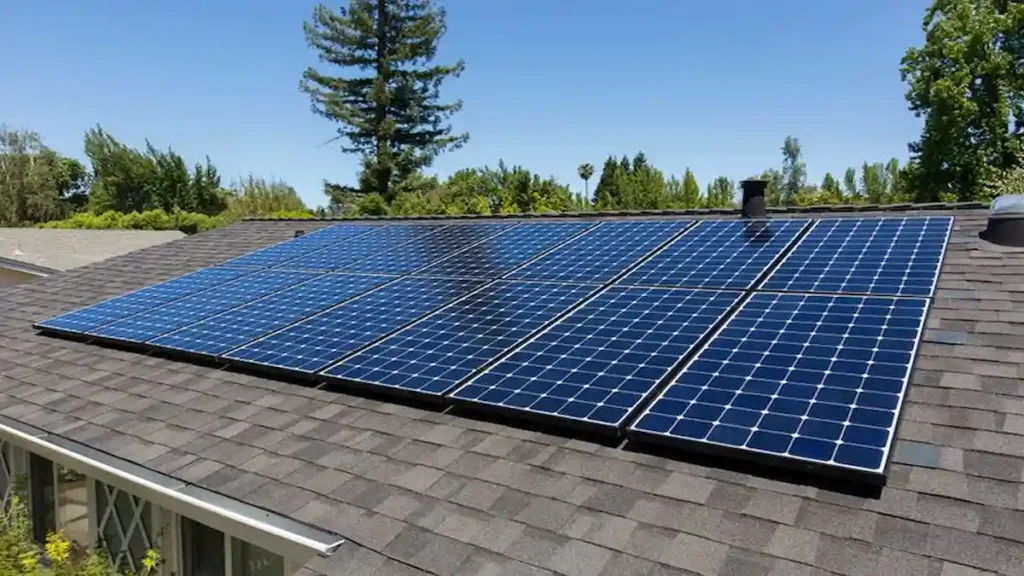
Yes, you can actually run a home 100% on an off-grid solar system — as long as the system is matched to your daily energy habits, your location, and your battery storage. Most American homes need something in the range of 6kW to 10kW of solar panels, plus roughly 20kWh to 40kWh of lithium batteries, to truly stay powered day and night with no grid backup.
But going off-grid is a lot more than just slapping panels on your roof. The real challenge is your day-to-day electricity use (things like heating, AC, fridges, and other big appliances), how many peak sun hours you actually get where you live, and whether you have backup something for those cloudy stretches or storms.
Here’s what you’ll find in this guide:
- How much solar power a house realistically needs to be 100% off-grid
- Real-world system sizing (down to kW and battery examples)
- What it actually costs to set up a full off-grid solar system in 2026
- And, honestly, whether it’s really worth it for your situation
What Does Off-Grid Solar Actually Mean?
An off-grid solar system is fully independent from the utility company. You generate, store, and manage 100% of your electricity onsite using. Unlike an on-grid solar system, that gives users the ability to switch to utility power, off-grid systems need a solar panel array, battery storage, an inverter and a backup generator to ensure its energy supply.
The Real Energy Breakdown
If you want to know if a home can actually run fully off-grid, you first have to look at how much power you use every day—then see how much solar you can squeeze out of your roof in real life.
Most American homes burn through 25-35 kilowatt-hours (kWh) daily. If you have central AC, electric heat, or a lot of appliances, it’s easy to hit 40-60 kWh a day. This daily number is the anchor for your off-grid system.
Then you have the solar side. Panels are rated for ideal lab conditions, but in real life, they only pump out that peak power for as long as you get strong sunlight. Most of the U.S. gets about 4–5 “peak sun hours” a day. Basically, for every 1 kW of solar, you’ll make 4–5 kWh of energy daily.
When you put those two together, things become clearer. For a household using about 30 kWh per day, you’ll usually need around an 8kW solar setup to stay on track. Lower-use homes might get by with 6kW, while bigger or older houses usually land closer to 10kW to actually rely on solar alone.
Now for batteries: you need those to keep the lights on when the sun’s down. Most homes will want at least 20 kWh in batteries, but 30–40 kWh is much safer for a truly smooth year-round setup. Without hefty battery capacity, all those panels are kind of pointless when it’s dark, or the weather doesn’t cooperate. basically, living off the grid is really about watching your use, right-sizing your panels, and having enough battery to bridge the gaps when the sun isn’t doing its job.
A Good Example: 3-Bedroom House Off-Grid
Let’s say you have a three-bedroom house and you want to take it off-grid in 2026. You don’t just slam a bunch of panels up there—it’s a carefully planned system that needs to ride out both normal days and occasional surprises.
For most average-sized homes, an 8kW solar array matched up with about 25kWh of lithium batteries is a pretty standard (and realistic) setup. You’ll also have a 6kW hybrid inverter, which steers the flow of electricity between the panels, the battery, and your outlets. Most actual off-grid installs toss in a backup generator, too, in case the clouds hang around too long or you have a spike in power demand.
With gear like this, you can run your essentials—fridge, lights, Wi-Fi, TVs, laptops, and your regular electronics. You can also handle things like laundry and some air conditioning, as long as you’re smart about when you use them (it’s best to hit those high-energy chores while the panels are working during the day).
Still, there are limits. Running the AC all day, blasting electric water heaters, or running two ovens and a dryer at once can empty your batteries fast. Even really well-built off-grid homes usually keep a generator close by, just in case the sun or batteries can’t keep up.
Why Off-Grid Solar Sometimes Fails
Off-grid solar absolutely works—but only when it’s designed for your reality, not a fantasy. There are some situations where these systems just can’t cut it. winter and long stretches with little sun are the biggest challenges. Solar output can tank by 30-70%, depending on where you live and what the weather does. With shorter days, batteries don’t charge as much, and you can run into outages if your setup isn’t oversized.
Another problem is high energy demand. If you lean on heavy AC, electric heat, or have a bunch of big appliances going at once, your batteries can drain faster than your panels refill them—especially at peak times.
Weather is just as important. If you live somewhere that’s often cloudy or rainy, solar production becomes a guessing game. In those regions, you’re really playing it risky without some kind of backup.
And batteries don’t last forever. Even the best lithium batteries lose capacity the longer you use them; they last 8-15 years on average. As they fade, so does your overnight or backup power. You’ve got to factor in the cost of replacements if you want to stay off-grid for life.
Cost vs. Reality
Most people think going off-grid just means buying a pile of panels, but the price of batteries and installation is what really makes the total add up. as of 2026, home solar usually runs about $1.50 to $2.50 per watt, depending on what you buy and how tough it is to install. For an 8kW array, that’s $12,000 to $20,000.
But batteries are the real hit. Lithium batteries average anywhere from $400 to $800 per kWh of storage. So just the battery—say, 20kWh—is $8,000 to $16,000, sometimes more if you want the best tech or a really clean install.
Bundle it all up—solar, batteries, installation, inverters, wiring, and so on—and an off-grid system for an average house usually lands between $30,000 and $60,000. Bigger homes, or homes where you want total reliability, go even higher.
Over the years, you’ll save on electricity bills—most people pay $1,500 to $3,000 a year to the power company. But even so, the “payback” on an off-grid setup tends to take 10-15 years, sometimes less in places with huge power bills or lots of sun, but it’s not a quick win.
At the end of the day, going off-grid with solar isn’t usually about saving piles of money right away. It’s more about being independent, skipping outages, and knowing exactly where your power comes from long-term.
Why go off-grid?
You live in a remote area without grid access
Certain residences in isolated locations can survive off the grid with less costly, smaller solar and storage systems. These homes, which are frequently made especially for off-grid living, may utilize minimal energy for heating and cooling and have a limited range of electrical systems. It can be necessary to adjust your way of living to account for times of the year when energy is unavailable.
You want autonomy from your utility company
It’s possible that you don’t always agree with the way regulators and utilities run their businesses and want to stop using them. Establishing autonomy can be a means of regaining control over your life, regardless of your preferences for free market principles, opposing fossil fuel-powered grids, or avoiding extra costs associated with connecting your solar array to the grid.
Your utility’s electricity supply isn’t always reliable
If your utility service is unreliable or prone to outages, an off-grid solar system can keep your home powered during storms or grid failures. Even installing one or two batteries can help “island” your home during emergencies.
How Much Solar Power Do You Need to Live Off-Grid?

The amount of solar power you need will depend on how much energy you consume and your location. Here’s a rough guide:
- Small off grid cabin (Very low usage): ~3kW+ solar + 10kWh (battery) storage
- Typical home (Med Use): ~6kW solar + 20kWh batt storage
- Output data are collected for different home sizes and usage levels: Large home (High use): ~10kW solar + 40kWh battery storage
Example Calculation:
So if your house uses 30 kWh/day, you’ll require:
- It means: Solar panels: ~8-10 kW system (depending on sun hours in your region)
- Battery storage: 30-40 kWh to provide power overnight and on cloudy days
Advantages of Going Off-Grid
Energy Independence
The most significant advantage of an off-grid solar system is self-generating and storing your own power, which removes you from the utility grid, so becoming immune to changing energy costs.
Eco-Friendly Solution
Solar Power Pros: There are many benefits in switching to solar power for your home, especially if you are an environmentally conscious homeowner looking to reduce your carbon footprint.
No More Power Outages
You never have to worry again about blackouts and unexpected power outages; with a properly sized system, you will always have power.
Cost Savings in the Long Run
While the upfront cost is large, off-grid solar power means you never pay an electricity bill again, saving you money in the long run.
Off-Grid Solar: Challenges & Limitations
Off-grid solar can provide energy independence, but there are some downsides:
High Initial Costs
An off-grid system needs batteries and other equipment that can be costly. Full setups run anywhere from $20,000 – $60,000+
Energy Storage Limitations
Batteries deteriorate with wear and tear, are not too good at storage, must be properly maintained, and at some stage, @9-15 years, they must be replaced.
Issues with Seasonality & Weather Variance
Solar efficiency sinks on cloudy days and during winter months, so backup generators or extra battery capacity are key.
Space Requirements
A high-capacity off-grid system needs sufficient roof or ground space for solar panels and battery storage.
Cost and Savings: Is It Worth It?
Here’s a typical cost breakdown for an off-grid home system:
| Component | Estimated Cost |
|---|---|
| Solar Panels (6kW) | $10,000-$15,000 |
| Battery Storage (20kWh) | $10,000-$20,000 |
| Inverter & Controller | $3,000-$5,000 |
| Large Solar Powered Generator | $2,000-$5,000 |
| Off-Grid Solar Kit | $5,000-$10,000 |
| Total Cost | $30,000-$60,000 |
Long-Term Savings
Installing an off-grid solar system typically requires a large initial investment, though the system’s utility erases the monthly electricity bill, saving anywhere from $1,500 to $3,000 annually. After federal and state tax incentives, that payback period can be down to 10–15 years.
Related Posts
Solar System for Off-Grid Living Guide
Power Your Home with Renewable Energy
500W Solar Panel Output & Cost
Frequently Asked Questions
1. Which is better off grid solar system or on grid solar system?
It depends on your needs. Off-grid systems require more battery storage and higher upfront costs but offer total energy autonomy. On-grid systems let you generate electricity for your needs and to sell any excess back to the utility company, but you still depend on the grid.
2. Can I power my whole house off of a big solar generator?
But, a large enough solar powered generator can keep crucial appliances operating, though may not power an entire apartment. Best as a backup power source for off-grid homes
3. How long do off-grid solar batteries last?
Most lithium-ion batteries last 10-15 years, while lead-acid batteries last 5-7 years with proper maintenance.
4. What is an off-grid solar kit, and do I need one?
Off-grid solar kits come with all the necessary components (solar panels, batteries, inverter, and charge controller) in one package. For DIYers who want a relatively simple setup, this is a nice choice.
5. Are cloudy or snowy places too shady for off-grid solar?
Yes, but efficiency is lower. You might need additional panels and a backup generator to supplement the diminished sunlight.
Conclusion: Are 100% Off-Grid Living Right for You?
Though it is possible to live completely off-grid using solar, it is a challenge which necessitates severe, thoughtful planning; a considerably high initial investment; and an acceptance of energy restrictions. If you are searching for energy independence and sustainability, it can be a fulfilling lifestyle.
Are you looking into off-grid solar? What are your thoughts and questions? Share in the comments!
Author

John Tanko is the founder of Top Solar Picks and a solar energy researcher whose work has been featured in leading technology and sustainability publications. Learn more on our About page.