
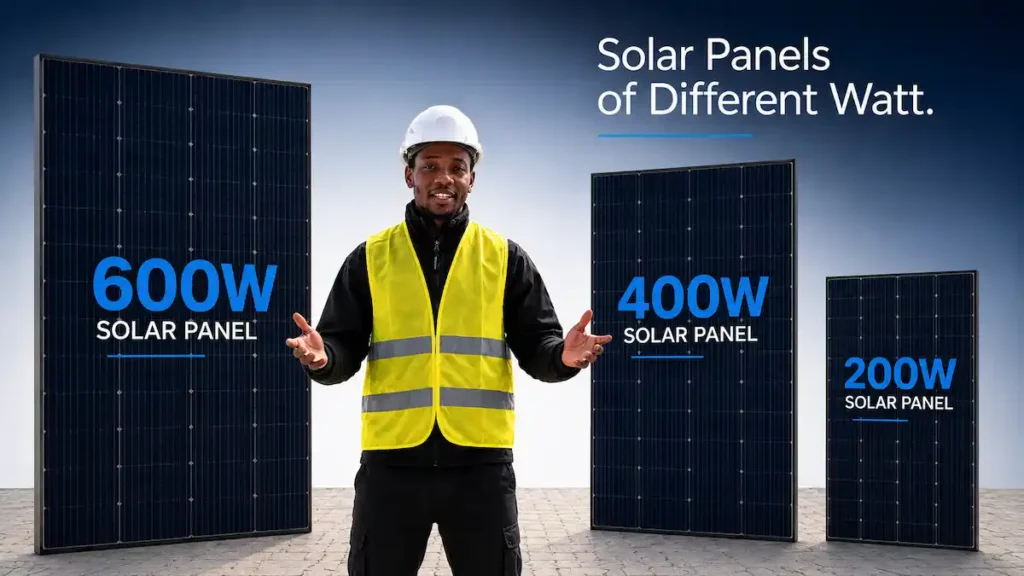
Yes, you can connect solar panels with different wattages, voltages, and currents, but honestly, it’s not usually a good idea. Doing this often cuts system efficiency, and sometimes you even risk damaging your equipment or running into annoying performance problems.
Here’s what happens: when you mix panels with different electrical specs, your whole system gets held back by the weakest panel. You lose power, the components don’t play nice together, and you end up with a pretty unbalanced setup. Still, if you really need to use mismatched panels, there are ways to do it safely—like wiring them separately or using extra charge controllers.
This guide was last updated by John Tanko on May 17, 2026, to ensure accurate and up-to-date information for homeowners and off-grid users.
When to Mix Solar Panels & When Not to
| Panel Combination Type | Safe to Connect? | What Happens | Recommendation |
|---|---|---|---|
| Same watt, voltage, and current | Yes | Everything works efficiently, no drama | Go for it |
| Different watt, same voltage (parallel) | Sometimes | The weakest panel limits total power | Not ideal, expect lower efficiency |
| Different voltage panels | No | Causes power loss and system headaches | Don’t mix these |
| Different watt, voltage, current | No | Wastes power and can damage equipment | Really, don’t do this |
| Mixed panels with separate charge controllers | Yes | Each panel does its own thing independently | Great workaround |
Disclaimer: This guide is for informational purposes only. Always consult a qualified solar professional before making changes to your solar system.
Why You Can Trust Top Solar Picks
We compare real-world solar performance, charging reliability, long-term user experiences, and practical testing — not just manufacturer claims. Products from brands like EcoFlow, Bluetti, Jackery, and Eco-Worthy are cross-checked using actual usage data and customer feedback.
Learn more →3 Things That Can Go Wrong When You Connect Mismatched Solar Panels
Before you start wiring mismatched panels, it’s important to understand what can actually go wrong in the system.
1. The System Will Operate at the Capability of the Weakest Panel
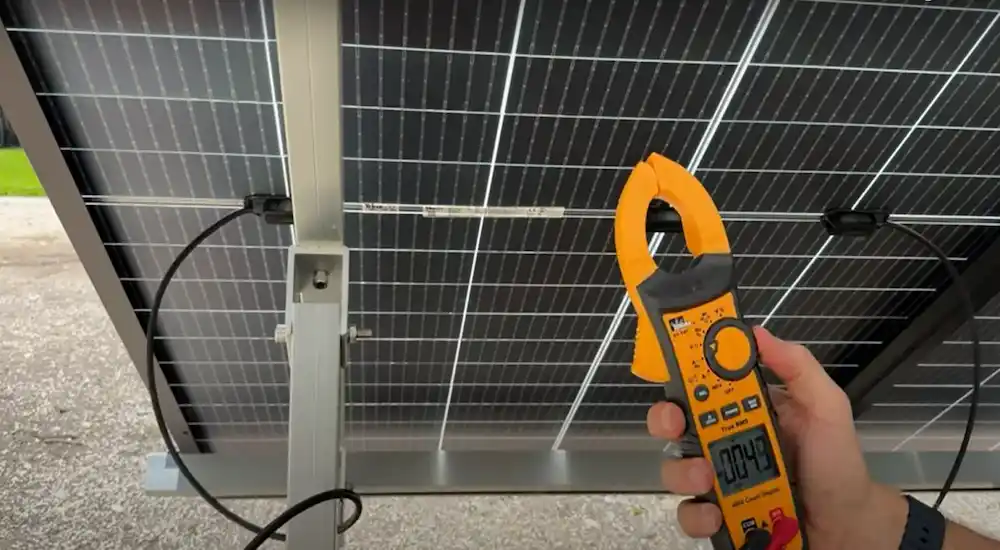
A 300-watt panel connected with a 100-watt panel means your system will be down-graded to work at 100 watts. Which means you’re throwing away 200 watts of possible power — a big squandering of funds and energy.
Example:
In the case of a 300W and a 100W panel wired together in a series circuit, these will ultimately be limited by the smallest panel in the chain as they are wired in series (which limits the total output to the smallest panel in terms of current (amps) versus in a parallel circuit limiting volt output (volts).
2. Mismatch Causes Imbalance, Overheating, and Potential Damage
Now, why does mismatching cause problems? Panels with different voltages and currents, when hooked up directly, can lead to trouble fast. Higher voltage panels will try to force too much current through lower voltage ones—and that can make the smaller panels overheat. Charge controllers and inverters get hit with unstable inputs, which isn’t just inefficient; it can kill these components before their time.
Trying to keep a system like this running smoothly is a pain. Maintenance gets tougher, and you probably won’t see a great return on your investment.
3. System Design Limitations and Lower Efficiency
Most solar systems are tailored for a particular voltage and current combination.
- Mismatched panels cause confusion for the MPPT (Maximum Power Point Tracking) of your charge controller.
- If panels are mismatched, it will lead to voltage and current fluctuations, which the inverter does not translate → less output.
Combining varying watt solar panels is contradictory to the goal of getting reliable and efficient solar production.
Is It Possible to Use Different Solar Panels Together? The Safe Way to Do It
Now, let’s say you already have different solar panels, and you don’t want to waste them. Can you combine different solar panels? Yes — but only with precautions.
Solution 1: Use Separate Charge Controllers
The best, safest method is to group similar panels together, and give each group its own charge controller.
For example:
- 100W panel + 10A MPPT controller → battery bank
- 300W panel + 30A MPPT controller → same battery bank
This way, every charge controller can get the most out of its panels without fighting the others, and the batteries get charged efficiently. Plus, you keep the big panels from getting underused and protect the small ones from overload.
Solution 2: Match Voltages in Parallel (But Still Risky)
If your panels all have the same voltage (even if the wattages are different), you can wire them in parallel. But be careful—plan this really well.
With parallel connections:
- All panel voltages must match exactly
- The currents (amps) add together
A heads up: If the voltages are even a little bit off, the lower-voltage panel will hold back the higher-voltage one. That cuts output and can even cause overheating.
Bottom line? When in doubt, stick with matching panels or be absolutely sure your setup is planned out. Otherwise, you’ll end up with a messy, inefficient solar system.
What Happens When You Mix Solar Panels with Different Ratings?
Different Wattages:
- The panel with lower wattage limits the total system output.
- System wastes the excess capacity of larger panels.
Different Voltages:
- In parallel: Voltage must match, or power losses and damage occur.
- In series: Current limited to smallest panel, and higher voltage panels may “overwork” smaller ones.
Different Currents (Amps):
- Connect in series: As limited by the panel with the least current.
- Parallel: The probability of overloading the smaller panels and the voltage drop.
Maintenance of Solar Panel systems with Different panels
If you absolutely have to mix and match panels, regular maintenance becomes important:
1. Monitor Panel Output Per Item
- Solar monitoring tools can record the voltage, current and wattage for each solar panel.
- Keep an eye out for poorly performing or overheating panels.
2. Check Wiring and Connections
- Look for corroded terminals, loose connections and damaged cables — especially in mixed setups.
3. Do not let debris get stuck on the panels
- Opening for timing, regular cleaning improves efficiency.
- Pollution and slam keep leaving the panel surface less suitable for smaller panels in mixed systems.
4. Assess the health of the charge controllers
- Make sure every controller has enough going on, and isn’t overloaded.
Pro Tip: A properly maintained solar system can increase power output by 10-20%, which makes regular maintenance for solar panels a necessity — especially when mixing panels.
Frequently Asked Questions About Mixing Solar Panels
Can you connect solar panels of different wattage together?
Yes, you can connect solar panels of different wattage, but it is not always recommended. The system will usually perform based on the weakest panel, which can reduce overall efficiency.
Is it safe to mix solar panels with different voltage or current?
It depends on how they are connected. Mixing panels with different voltages or current directly in the same string can cause imbalance, power loss, or system stress. In most cases, it should be avoided unless properly designed.
What happens if I connect different solar panels together?
When mismatched panels are connected, the total output is often reduced. In some cases, it can also lead to overheating, uneven charging, or poor performance from your charge controller or inverter.
Can I use different solar panels in the same system?
Yes, but only under the right conditions. The safest method is to separate them using different charge controllers or ensure they are closely matched in voltage before connecting.
What is the best way to combine different solar panels safely?
The safest setup is to group similar panels together or use separate MPPT charge controllers for different panel types. This helps each panel operate at its best without affecting the others.
Final Word: Is It Okay to Connect Solar Panels of Different Watt, Voltage, and Current?
Connecting solar panels of different wattage, voltage, and current is possible, but it should always be approached with caution. While some configurations can work safely, most mismatched setups lead to reduced efficiency, imbalance in performance, and potential stress on system components over time.
In real-world solar installations, the best results always come from using properly matched panels or separating different panel types with dedicated charge controllers. This ensures stable output, better energy harvest, and a longer lifespan for your system.
If you already have mixed panels, the key is not to rush the setup but to design it correctly around your system’s voltage, controller type, and power needs. When in doubt, getting guidance from a qualified solar installer is the safest way to protect both your equipment and your investment.
Ultimately, solar systems perform best when they are planned for consistency — not compromise.
To avoid problems and inefficiency in your solar system, purchase matching panels, and enlist a professional for your system design.
Related searches and resources
- How to connect solar panels in a safe way
- Alternate Solar Charge Controllers for Mixed Panels
- Different sizes of solar panel systems maintenance
Did you find this guide useful, share with your Friends and Family who are planning on solar project and check out our other expert guides to solar energy tips, solar panel maintenance help and tips to get the most from your solar.
If you need a wiring diagram with connector picture for mixed panels? Let me know!
Disclaimer:
This article is for informational and educational purposes only and is not professional advice. It is dangerous to connect solar panels of different wattages, voltages, or currents unless you know what you are doing, and incorrectly connecting your solar equipment can lead to damage to your solar equipment, fire, and personal injury. This advice are for informational purposes only and, as always, consult a licensed solar installer or qualified electrician before attempting any solar panel installation or modification. The information provided herein is for informative purposes only and the author and publisher of this material accept absolutely no responsibility for any damages incurred from the used or misuse of the information presented herein.
Author

John Tanko is the founder of Top Solar Picks and a solar energy researcher whose work has been featured in leading technology and sustainability publications. Learn more on our About page.