
Solar energy is one of the fastest-growing renewable power sources in the world. But if you’re thinking about putting solar panels on your house, you probably want the real story: What are the advantages and disadvantages of solar energy? Yes, solar can slash your energy bills and shrink your carbon footprint, but it’s not perfect. Big upfront costs, your dependency on the sun, and a few other challenges still matter. So let’s dig in. Here are the real pros and cons of solar energy to help you figure out if going solar in 2026 actually makes sense for you.
This guide on advantages and disadvantages of solar energy was last updated by John Tanko on April 18, 2026, to ensure accurate and up-to-date information for homeowners, farmers, and off-grid users.
Solar energy has many benefits, but it also comes with limitations. Understanding the advantages and disadvantages of solar power helps homeowners decide if installing solar panels is the right investment.
Advantages and Disadvantages of Solar Energy (Quick Overview)
| Advantages | Disadvantages |
|---|---|
| Renewable and unlimited energy | High upfront installation cost |
| Reduces electricity bills | Weather dependent |
| Low maintenance costs | Requires roof space |
| Reduces carbon emissions | Battery storage can be expensive |
| Energy independence | Output lower in winter |
Advantages of Solar Energy
People are jumping on the solar bandwagon for good reason—over time, it can save money and help the planet.
Lower Electricity Bills
Once you’ve got panels up, sunlight powers your home for free. That means real savings on your utility bill every month. Some homes even create extra power, which you can send back to the grid (if your local utility allows it), and that puts even more cash back in your pocket.
Renewable Energy Source
Solar energy isn’t running out anytime soon. As long as the sun’s up, you can turn that light into power—without worrying about fuel shortages.
Environmental Benefits
Every kilowatt generated from solar is one less produced by gas or coal. No direct greenhouse gases, no smoke, no guilt. It’s just cleaner energy, plain and simple.
Energy Independence
Panels on your roof mean you don’t have to lean so hard on your utility company. With solar, you’re more protected from those annoying electricity price hikes. you can strengthen this benefit with real-world applications in home systems like solar-powered appliances and off-grid setups, as explained in our guide on Solar System for Off-Grid Living: The Complete 2026 Guide
Disadvantages of Solar Energy
Now, don’t get me wrong—solar is great, but it’s not all sunshine and rainbows. Here’s what you should watch out for before taking the leap.
High Upfront Installation Cost
Solar isn’t cheap to start. Prices have dropped, but you’re still looking at several thousand bucks, depending on how big a system you want and where you live.
Weather Dependency
If the sun disappears—clouds roll in, or it’s nighttime—your panels won’t crank out as much electricity. Production goes up and down unless you’ve got a home battery stashed away.
Battery Storage Cost
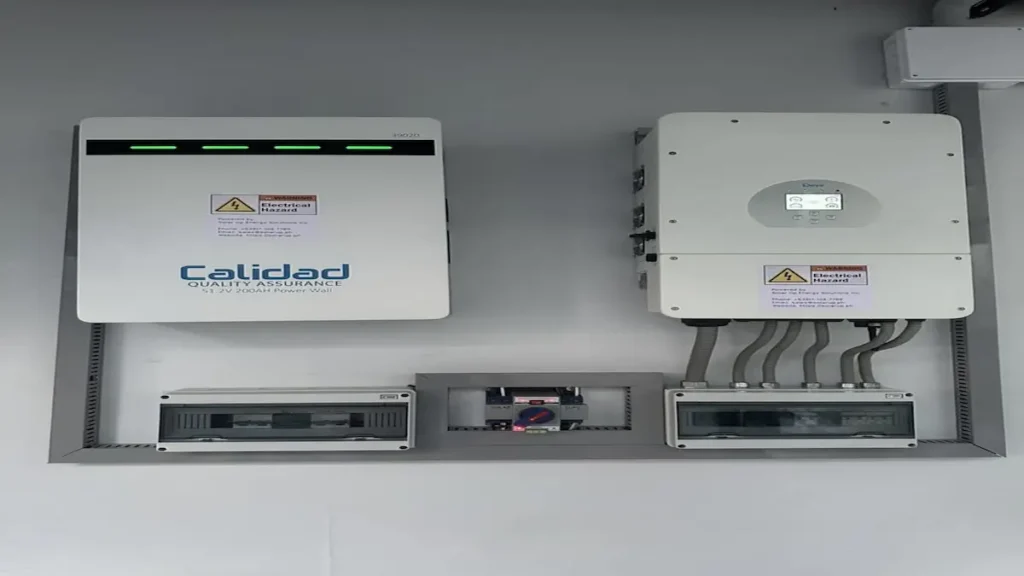
Want power at night or during blackouts? You’ll need batteries. Right now, lithium batteries aren’t exactly cheap, so that tacks on more to your total price. battery sizing and backup systems are critical for solving this problem, especially when planning real installations. A deeper breakdown of storage sizing is covered in How to Choose the Best Inverter and Battery (Complete 2026 Guide)
Roof Space Requirements
Not every house is a good fit for solar. Small roofs, heavy shade from trees, or the wrong angle can cut down how much sun—and savings—you get.
Is Solar Energy Worth It in 2026?
So, does solar still pay off in 2026? For a lot of people, the answer is yes—but it really hinges on where you live and what deals you can get. if you’re in a sunny state with sweet incentives, you’ll see your investment pay off faster and save more in the long run. But if you get less sun or your state drags its feet with solar programs, payback might take longer. to understand real payback and financial return, especially with rising electricity costs, you should also review Is Solar Worth It in 2026? Real Payback Math for Homeowners
Think about these before you commit:
- What’s your electric bill look like?
- Are there state or utility rebates?
- Is your roof sunny and in good shape?
- Will you need battery storage?
In most cases, solar remains a strong long-term investment due to rising energy costs.
How Long Does It Take Solar Panels to Pay for Themselves?
Usually, you’ll get your money back on solar in 6 to 10 years. payback time also depends on system size and daily energy production, which varies based on panel wattage and efficiency. You can calculate this more accurately using How Much Power Can a 500 Watt Solar Panel Produce? Full Breakdown + Cost
The timeline depends on several things:
- How expensive is power where you live
- How big is your solar setup
- Are there government rebates or tax credits
- How much sun does your roof get
After they’ve paid for themselves, your solar panels keep cranking out free electricity for another 15 to 20 years—real savings, year after year. And if you live in a sunny place with good rebates, you might see your system pay for itself even sooner.
The Case for Solar Energy: Why More Homes and Businesses Are Turning to Solar
Solar energy, harnessed from the sun’s radiation, is plentiful, renewable, and very powerful. In one hour, the planet receives more energy from the sun than all of humanity consumes in twelve months. As solar panel technology evolves and equipment prices come down, making this power available has never been simpler.
One of the best arguments in favor of individuals choosing to go solar is the radical reduction of their average monthly utility bill. Installed solar panels produce watts for free, and utility bills get replaced — or even eliminated — in the long term. Housing in the sunniest areas can save residents thousands of dollars each year in the life of the system. Companies and farms are going solar in bulk in an effort to put an end to long-term utility bills as well as achieve energy independence.
Aside from economics, the sun is a renewable source of clean energy. It produces power by failing to emit greenhouse gases, emissions, or water scarcity. That renders it one of the greenest option on the menu for energy, particularly in comparison with the fossil fuels such as coal or natural gas.
Government Incentives: Making Solar More Affordable
The principal deterrent from most Americans adopting solar is the upfront installation cost. Although the price dropped by over 70% in the last 10 years, the average residential solar array still costs $10,000 to $25,000 in installation costs.
But government incentives have brought this barrier within the reach of millions of homeowners. In the United States, Australia, Germany, and Canada, among others, tax credits, rebates, and grants have been offered by the government to make the cost within reach. In the United States, the federal solar tax credit (ITC), for example, enables homeowners to offset up to 30% of the installation cost as tax deduction from income — a huge financial incentive making the cost-benefit analysis tip in favour of solar.
Understanding the Drawbacks: When Solar Isn’t So Simple
All the optimism about clean energy aside, solar energy is not ideal. Its biggest flaw is the problem of intermittency. Solar panels can only produce electricity during the day with sunshine. That is, zero when dark and low levels when it rains or when the sun is behind clouds. Solar energy in most places becomes useless in the absence of a back-up system, like battery banks or grid linkage.
This leaves us with the next biggest challenge in the list, which is the question of energy storage. Batteries where the solar energy is stored for usage in non-sun-hours are expensive and in the majority of the cases non-economical for small dwellings. While the lithium-ion store technologies have progressed quite significantly, the costs tend to double the price of the solar system, and the majority of the batteries tend to have shorter lifespans in comparison with the panels.
But another of the very widely under-estimated drawbacks is space requirement. The ideal for rooftop solar is the single-family house with good sunlight exposure; it’s much less practical for apartments, heavily shaded houses, or urban dwellers with restricted roof access. Then the homeowner will need to go to a ground-mounted installation — and that means already occupied ground space and added expense.
Lastly, we should address the fact that even though the fact involving work on sunlight is renewable, panels are created by mining, energy usage, and byproducts in waste form. Even though the environmental side effect for this production from fossil fuels is smaller in size, it is not nil unless panels are correctly recycled at the end-of-life.
Economic versus Environmental Returns: The Long-Term Perspective
For most solar adopters, it’s not so much about the planet — it’s about the bottom line. It costs a standard solar system anywhere from 6 to 10 years to pay for itself, depending on the price of electricity, incentives, and sunlight in your area. Then the electricity created is essentially profit.
Payback is great in sunnier climates. California, Arizona, and Queensland in Australia have 250+ sun days per year, and therefore the systems will be capable of producing at full capacity. The cold/cloudy areas can still make use of the system, however, with longer payback.
Environmentally speaking, the reward is instantaneous. For each kilowatt-hour (kWh) of electricity we generate from the sun rather than coal, we avoid generating approximately 0.6 kilograms of carbon. Within 25 years, the average home system can prevent releasing more than 100,000 pounds of CO₂ into the air, the same as planting more than 1,200 trees.
Is Solar Energy Right for You?
It’s not a political matter, or a fad — it’s a very Personal choice that’s based on place, expense, lifestyle, and values.
You can be a good prospect for solar if:
- Live in a location where there is maximum sunlight exposure year-round
- Own your own home and have an unshaded south-facing roof
- Can utilize local or central level incentives
- Wants to invest in long-term savings and energy independence
- Sympathy for decreasing carbon footprints
Or if you are a renter, a mobile home owner, or possess a very shaded or condominium-type of residence, solar won’t be worthwhile or economical — at least not just yet.
Solar in Australia vs. Canada: Location is Everything
Australia is a world leader in solar energy due to the vast landmass, high sunlight exposure, and government policy support. A typical Australian residence averages 5-6 peak sun-hours per day, making rooftop solar highly productive. Homes are also able to sell surplus electricity back into the grid with feed-in tariffs, maximizing the savings.
Relative to the United States, Canadian solar opportunity is more diverse. Solar opportunities exist in Ontario, Alberta, and British Columbia in the south, though extreme winters and diminished daylight reduce output significantly at the northern extremity. In either case, the solar incentives provided through the Greener Homes Grant and provincial incentives offset performance problems.
Key point: Both nations perform well with solar but the payback comes sooner in the sun-oriented Australia, whereas the performance in the Canadian area depends on regional conditions and subsidies.
Comparative Cost: Solar Energy vs. Fossil Fuels
To understand whether solar is truly cost-effective, you must look at the Levelized Cost of Energy (LCOE) — the average cost to produce one unit of electricity over a system’s lifetime.
| Energy Source | LCOE (Global Average, 2025) | Environmental Cost | Fuel Dependency |
|---|---|---|---|
| Solar PV | $0.03 – $0.06 per kWh | Very Low | None |
| Coal | $0.06 – $0.15 per kWh | Very High | Yes |
| Natural Gas | $0.05 – $0.10 per kWh | High | Yes |
| Nuclear | $0.09 – $0.13 per kWh | Moderate | No |
Summary: More people can afford solar in most places now compared to most fossil fuels — even before subsidies. And it protects consumers from surging international fuel prices and carbon fees.
Related Posts
- Australian Solar Panel Costs 2026: What to Know
- Solar Panel Costs 2026: Price & Savings Guide
- DIY Solar Panel Installation Guide
- Solar Panel Dimensions & Space Calculator
- 500 Watt Solar Panel Power & Cost Breakdown
Questions People Ask Answered
What are the 3 advantages of solar energy?
Solar lowers the cost of electricity, emits no point-of-use greenhouse gases, and provides energy independence through on-site generation of electricity.
What are the 3 cons of solar power?
Major negatives include the high upfront installation price, dependence on the weather, and lack of production during nighttime if battery storage has not been added.
Is solar energy superior to electricity?
Solar is energy — just a cleaner, renewable one. Solar is cheaper and more sustainable over the long run than existing grid energy from coal or gas.
How many years hence the solar panels will earn the money back?
On average, the panels will return their investment within 6-10 years based on the size of the system, usage level, local cost of grid power, and current incentives.
Will the panels work on cloudy days or winter days?
In fact, despite the reduced production. The panels will still have current from the diffuse sun, but the production can be 30-50% less if it is snowy or cloudy.
Final Considerations
A Promising Future with Reasonable Expectations Solar power is perhaps the safest bet humans have on a renewable future. Cleaner, getting cheaper, and more widely distributed. many site such as cleantechnica has also write about the rapid growing of solar. But being technology, it has limitations. Understanding the advantages and disadvantages of solar power places you in control where you can make a smart choice — not a hype choice, an informed choice. With good planning, smart budgeting, and clear expectations, solar can be a smart investment that benefits your bank account and the world. As the technology advances and the energy policy changes, the efficiency will go up, the price will go down, and the usage will become more prevalent in our daily lives. The future is solar — but we’d better look at it with eyes wide open.
Author

John Tanko is the founder of Top Solar Picks and a solar energy researcher whose work has been featured in leading technology and sustainability publications. Learn more on our About page.