
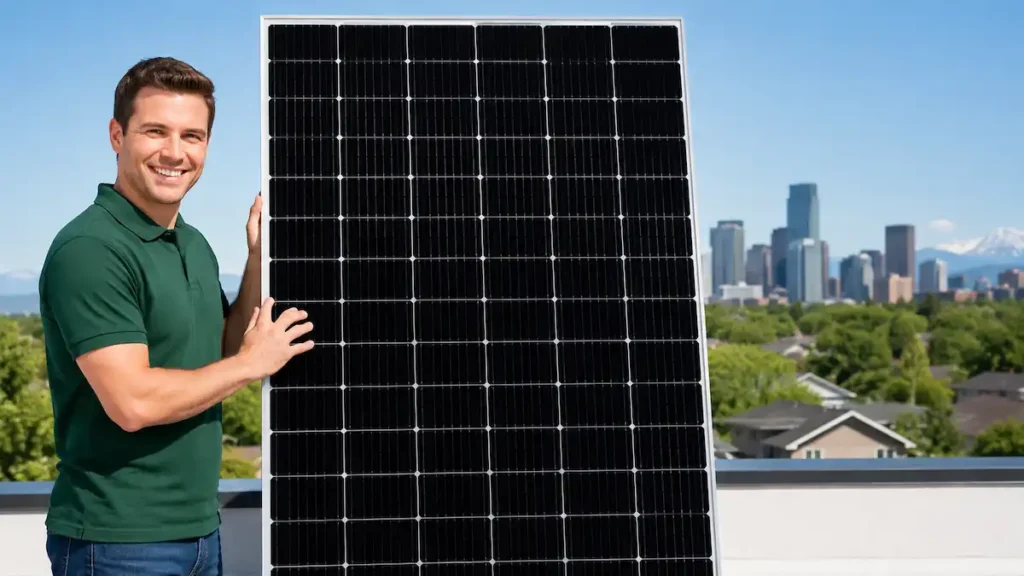
A 500W solar panel usually gives you about 2 to 3 kWh of electricity each day under real-world conditions. if you’re living in the U.S. and getting typical sunlight, it can hit over 3.5 kWh a day, sometimes even close to 4. That’s enough to keep your basic stuff running—think lights, a laptop, Wi-Fi, small fans, even a little fridge if you’ve got a battery hooked up.
But the honest truth is, output isn’t a one-size-fits-all thing. It really depends on where you live, how many hours of good sunlight you get, the direction and angle of your panels, and whether it’s sunny or cloudy. This is why two people with the exact same panel can get way different results.
This guide breaks down exactly how much power a 500W panel actually makes in typical settings. It also shows how it stacks up against 400W and 600W panels, and gives you a quick trick for figuring out your own numbers without getting tangled up in the math.
A 500W solar panel usually makes about 2 to 3 kWh each day. If you live somewhere that’s really sunny, you might see 3.5 to 4 kWh a day. In cloudier or low-sun spots, you’re probably closer to 1.5 to 2 kWh.
That’s enough power for things like:
- Lights and fans
- A laptop and Wi-Fi
- A small fridge (if you’ve got a battery)
- Charging your phone and running other basic stuff
This guide on solar panel kit was last updated by John Tanko on May 16, 2026, to ensure accurate and up-to-date information for homeowners and off-grid users.
Solar Panel Output: 400W vs 500W vs 600W (Daily kWh)
| Panel Size | Low Sun (kWh/day) | Average Sun (kWh/day) | High Sun (kWh/day) |
|---|---|---|---|
| 400W | 1.2 – 1.8 | 1.6 – 2.5 | 2.5 – 3.2 |
| 500W | 1.5 – 2.5 | 2 – 3 | 3 – 4 |
| 600W | 2 – 3 | 2.5 – 4 | 4 – 5+ |
400W panels are best for budget or small systems, 500W is the sweet spot for most homes and RV setups, while 600W panels deliver higher output and reduce the number of panels needed for larger solar systems.
Mini Solar Calculator (Super Simple Formula)
If you want a quick guess at your solar panel’s daily output, here’s the formula:
E = P × H × 0.75
Where:
E = Energy per day (kWh)
P = Panel wattage (so 500W is 0.5 kW)
H = Peak sunlight hours per day
0.75 = Real-world efficiency (covers losses from heat, wiring, inverter inefficiency, etc.)
For example, a 500W panel with 5 peak sunlight hours a day makes:
0.5 × 5 × 0.75 = about 1.9 kWh a day
The real number could be a bit higher or lower depending on your weather and setup, but you’ll pretty much never hit the “perfect” panel wattage in real life. Where you live makes a huge difference.
What Exactly is a 500 Watt Solar Panel?
Let’s break it down. When people talk about “500 watts,” they’re referring to the maximum power the panel can produce under perfect conditions—full sunshine, clear skies, ideal angle. This is the panel’s peak capacity, the highest amount of electricity it can churn out when everything is going just right. But, let’s be real, things like location, weather, and even the time of day can mess with that number. Solar panels love direct sunlight, so any shade or clouds will drop their output.
Here’s how the daily output shakes out, depending on sunlight hours:
500W Solar Panel Daily Output by Sunlight Hours
| Peak Sunlight Hours | Estimated Daily Energy | What You Can Run |
|---|---|---|
| 3 Hours | 1.5 kWh | Basic stuff—lights, Wi-Fi, phone charging, small electronics |
| 4 Hours | 2 kWh | Adds a TV, fan, laptop, mini fridge for a few hours |
| 5 Hours | 2.5 kWh | Great for RVs, camping setups, and small backup systems |
| 6 Hours | 3 kWh | Able to power several appliances during the day |
| 7 Hours | 3.5 kWh | Perfect for sunny places like Arizona, Texas, or Australia |
| 8 Hours | 4 kWh | Maximum output if you’ve got ideal conditions |
A 500W solar panel will usually generate between 2 and 3 kWh per day in most locations. The exact output depends on sunlight hours, weather conditions, panel angle, and shading.
Mostly, a 500W panel gives you between 2 and 3 kWh per day in typical spots, but in super sunny regions you can hit 4 kWh daily. What can you actually power with one of these panels? Quite a bit, especially during daylight or if you’ve got a battery hooked up.
What can you actually power with one of these panels?
Quite a bit, especially during daylight or if you’ve got a battery hooked up. Here’s a quick breakdown on what you can actually run:
Appliances a 500W Solar Panel Can Power
| Appliance | Power Use | Approximate Runtime (per day) |
|---|---|---|
| LED light bulb | 10W | 200–300 hours |
| Wi-Fi router | 10–20W | 100–150 hours |
| Laptop | 50–100W | 20–40 hours |
| Ceiling fan | 70W | 25–35 hours |
| 42-inch LED TV | 80–120W | 15–25 hours |
| Mini fridge | 100–200W | 10–20 hours |
| CPAP machine | 30–60W | 30–50 hours |
| Smartphone charging | 5–20W | Multiple full charges |
| Portable blender | 300W | Quick, brief uses |
| Microwave | 600–1200W | Short uses (needs battery + inverter) |
These values are based on a 500W solar panel producing average daily energy (about 2–3 kWh). Actual runtime depends on sunlight hours, battery storage size, inverter efficiency, and real-world usage patterns.

Why You Can Trust Top Solar Picks
We compare real-world solar performance, charging reliability, long-term user experiences, and practical testing — not just manufacturer claims. Products from brands like EcoFlow, Bluetti, Jackery, and Eco-Worthy are cross-checked using actual usage data and customer feedback.
Learn more →How Much Power Does a 500-Watt Panel Actually Deliver?
It depends on a bunch of things, but here’s the average: in sunny spots, you can expect 2.5 to 4 kWh per day, based on getting about 5 to 6 hours of good sunlight. If you live where sunshine isn’t a sure thing or clouds are common, you’ll see less—probably closer to 2 kWh daily.
Over a full year, you’re looking at somewhere between 900 and 1,460 kWh, depending on your local weather, the angle of the panel, and seasonal sunlight changes. to compare: the average U.S. household eats up about 10,000 kWh each year. One 500W panel won’t cover that, but it’ll chop a chunk off your bill—especially if you add more panels.
Thinking about powering your whole house? You’ll need more than one. Most homes use 25–30 kWh daily; since each 500W panel turns out 2–4 kWh, you’re looking at needing 10 to 16 panels to cover most or all of your power use. Small homes with efficient appliances might get away with less; bigger houses, central AC, or electric heat will need more.
That’s a quick overview on what a 500W solar panel can do—and how many you’ll need if you want to go big.
How Many Amps Does a 500W Solar Panel Produce?
A 500-watt panel packs more charging power than most people expect—especially when the sun’s at its peak. The actual amps depend on what voltage you’re using. Most solar setups run at 12V, 24V, or 48V, and the same panel puts out different amps for each.
The formula’s pretty basic: I = P / V
So, with a 12V system, you’re looking at about 41 amps if conditions are ideal. Switch to 24V and it’s roughly 20 amps; with 48V, you get around 10 amps. In the real world, though, numbers drop a bit—heat, shade, and inverter losses all chip away at the efficiency.
For folks in homes or RVs, this amount of current means a 500W panel is plenty to keep up with battery storage, portable power stations, and small off-grid needs during the day.
Can a 500W Solar Panel Charge Batteries?
Absolutely—charging batteries is where a 500W panel really shines. They’re popular in RVs, cabins, backup power systems, and off-grid setups because they pump out enough energy to recharge batteries within a single day if the sun’s strong.
As long as you’ve got the right solar charge controller, you can use a 500W panel to recharge lithium, AGM, or basic deep-cycle solar batteries. For example, under good sunlight, a 12V 200Ah lithium battery could get charged in about a day, assuming you’re not dealing with bad weather or inefficient batteries.
This comes in handy if you need backup power when the grid goes down—or when you want stored energy for the night. Lots of portable solar generators rely on panels in this range since they balance fast charging and affordability.
If you’re building a battery-based solar setup, using an MPPT charge controller is definitely the way to go—it boosts efficiency and pulls the most useful power from your panel.
The exact number always depends on your electricity consumption, roof space, local climate, and how much sunlight your area receives throughout the year. Homes in sunny regions usually need fewer panels because each panel produces more electricity daily.
500W vs 400W vs 600W Solar Panels
Choosing between 400W, 500W, or 600W panels comes down to how much power you need and what kind of space you have. The 400W panels are usually cheaper and easier to put up, so people with smaller systems like them. The 500W option is a sweet spot—big enough for solid output, but not so big or pricey that it’s a hassle.
Now, 600W panels are for those who want max production from limited roof space. They make more power each day, but they’re heavier, expensive, and might need tougher mounts.
For most homeowners, 500W panels hit the right balance—they cut your power bill noticeably and fit into most setups without any problem.
500W Solar Panel Cost and Return on Investment
Looking ahead to 2026, you’ll find 500W panels costing between $180 and $400. The price depends on things like the brand, how efficient the cells are, and the warranty. The super-efficient premium solar panels cost more up front, but they produce extra power throughout their lifetime.
Of course, the panel is just part of your cost—you still need an inverter, all the mounting gear, wiring, maybe batteries, and somebody to install it. But solar is one of those rare upgrades that can pay for itself with energy savings.
A well-placed 500W panel can deliver over a thousand kWh a year if you get good sunshine. That’s real savings on your monthly bill, especially since electricity prices keep rising.
Most solar setups pay for themselves in five to ten years, depending on your local rates, sun exposure, and whatever incentives are available. After that, the power is essentially free for the rest of the panel’s life, which is usually at least 25 years.
Things That Limit Solar Panel Performance
There are a few key variables that influence how much power your 500-watt solar panel will produce. Understanding these factors is critical for maximizing your system’s efficiency.
Location and Sunlight Hours
The amount of sunlight your solar panel receives directly impacts its output. Regions with abundant sunshine, like Arizona or California, can expect to get closer to the maximum output of a 500-watt panel. On the other hand, areas with shorter days or more overcast conditions, like the northern U.S. or Europe, will see a reduced performance.Shading and Orientation
The angle at which your solar panel is installed is important. Solar panels should face the sun directly during the peak daylight hours to maximize exposure. A slight tilt or improper orientation can reduce efficiency. Additionally, shading from trees, buildings, or other obstructions can block sunlight and dramatically lower the panel’s performance.Weather and Seasonal Variations
Cloud cover, rain, or snow can temporarily reduce the amount of sunlight hitting your panel. Panels will generate less electricity on overcast days than on sunny ones. Additionally, during the winter months, the sun’s angle is lower, which can also reduce output unless the panels are installed at the right tilt to accommodate seasonal changes.Panel Efficiency
Not all 500-watt solar panels are created equal. Some panels come with higher efficiency ratings, meaning they can convert more of the sunlight they receive into usable electricity. While the cost of higher-efficiency panels may be a bit more, they can be worth the investment in areas with limited space for installation.
How Many 500W Panels Power a House?
This is where expectations matter.
A single 500W panel is not meant to run a house. It’s only one piece of a much larger system.
Most homes use roughly 25–30 kWh per day. One 500W panel gives about 2–4 kWh daily depending on sunlight. So naturally, you need several panels working together.
For most households, the numbers usually look like this:
- Small, efficient homes: around 8 panels
- Average homes: around 12–16 panels
- Large homes with AC: 18–22+ panels
It really comes down to how much electricity you use and how much sun your location gets.
The Cost of a 500 Watt Solar Panel
When considering solar energy for your home or business, the initial cost is a key factor to weigh. A 500-watt solar panel typically costs between $200 and $400, depending on the brand and efficiency. This price can vary, with premium models and those with advanced features pushing the price higher.
However, the cost of a 500-watt solar panel is just part of the equation. If you’re setting up an entire solar power system, you’ll need to account for additional components such as inverters (to convert the electricity from DC to AC), batteries (for energy storage), and mounting systems. The total cost of a complete solar power system with a 500-watt panel typically ranges from $1,000 to $3,000.
Is Solar Worth the Investment?
One of the most compelling reasons to invest in solar energy is the potential for long-term savings. While the initial costs can be substantial, over time, the energy savings can outweigh the upfront investment. On average, homeowners can expect to save anywhere from $200 to $400 per year on electricity bills by installing a solar system.
Furthermore, solar energy systems can pay for themselves within 5 to 10 years due to energy savings. After that, you can enjoy free electricity for the remaining lifespan of the system, which is typically 25 to 30 years. Many governments also offer tax incentives, rebates, and other programs that can help reduce the overall cost of installation.
Frequently Asked Questions About 500W Solar Panels
Can a 500W solar panel run a refrigerator?
Yep—a 500W panel can run a small or efficient fridge when paired with the right inverter and battery. Bigger fridges? You’ll probably need more panels.
How much electricity does a 500W solar panel produce daily?
Usually between 2 and 4 kWh a day, depending on sunlight and weather.
Is a 500W solar panel good for RVs?
Definitely. RV owners love them—they power lights, laptops, fans, routers, and easily keep batteries charged.
Can a 500W solar panel work during cloudy weather?
Solar panels will still make electricity when it’s cloudy, just less than on sunny days.
How long does a 500W solar panel last?
Most good panels last 25 to 30 years, though they get a little less efficient over time.
Maximizing Your Solar Panel’s Efficiency
If you want to ensure that your 500-watt solar panel operates at its peak efficiency, there are a few things you can do. First, make sure your panels are installed at the optimal angle and are not obstructed by shadows. Additionally, regular maintenance, such as cleaning the panels to remove dirt and debris, can help maintain their performance. Finally, investing in high-efficiency panels will give you more output from the same amount of space.
Closing Remarks
So, a 500W solar panel is a solid, practical pick. You usually get 1.8 to 2.5 kWh per day and can push up to 3–3.5 kWh if your region sees plenty of sun. That’s fantastic for RVs, cabins, backup power, and shaving your energy bill.
It won’t singlehandedly run your whole house, but combine several panels with the right inverter and battery setup, and you’ll have a powerful system that handles most household needs—maybe even cuts your reliance on the grid entirely.
With prices dropping and the savings going up, installing a 500W panel or multiple panels is one of the smartest things you can do for energy independence in 2026 and beyond.
Author

John Tanko is the founder of Top Solar Picks and a solar energy researcher whose work has been featured in leading technology and sustainability publications. Learn more on our About page.