
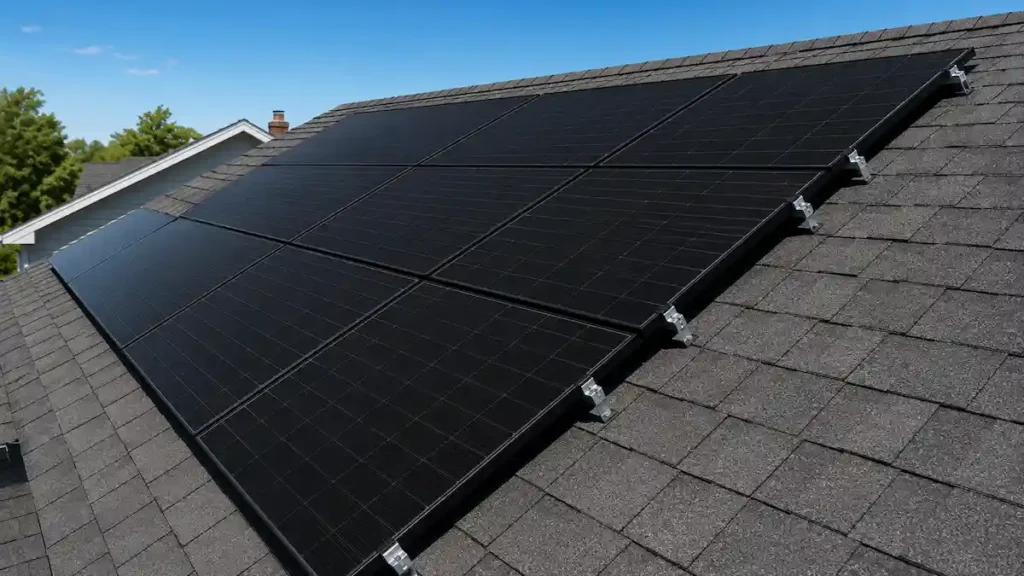
If you are looking for ways to go solar but you don’t know how many solar panels you need to power a house, the real answer depends on how much electricity your home actually uses, not just the size of the roof. A small energy-efficient home may only need 10 to 15 panels, while a larger house running air conditioning, electric appliances, or an EV charger could need 25 panels or more.
In this guide, we’ll break down real numbers using average U.S. energy usage, panel wattage, sunlight hours, and actual home examples so you can estimate how many solar panels your house would realistically need.
we will guide you step by step through all the information you need to understand how many solar panels to power a house will require — from your own usage to accounting for your location, roof space, and efficiency of panels. Upon completing this guide, you will be ready to make an intelligent investment in solar power.
Last updated by John on May 14, 2026.
What Is the Standard Residential Solar Panel Wattage in 2026?
Residential solar panels have changed a lot lately, with wattage on the rise. If you’re putting solar on your roof in 2026, you’ll probably see most homeowners picking panels rated between 400 and 500 watts. Honestly, 450W panels have become the go-to choice for many households.
Why does this matter? Well, panel wattage decides how many panels you’ll need. Higher-wattage panels mean more electricity from each one, so you can hit your energy goals with fewer panels. That’s a big deal if you don’t have a huge roof.
A few years back, most homes stuck with 300W or 350W panels—lower output and less efficient. Solar tech has stepped up since then. Now, panels put out a lot more power without taking up extra space, so you get more electricity from the same roof size.
Say you want a 9kW system for your house. Using older 400W panels, you’d need around 23 of them. Go with the latest 450W models, and you only need about 20 panels to get similar results. If you spring for the premium, high-efficiency panels, you could get by with even fewer.
When you’re figuring out how many panels to buy, don’t just focus on wattage. Electricity usage, sunlight hours, how your roof faces the sun, and local weather—all of that shapes the system you’ll need. Wattage is just one piece of the puzzle.

Why You Can Trust Top Solar Picks
We compare real-world solar performance, charging reliability, long-term user experiences, and practical testing — not just manufacturer claims. Products from brands like EcoFlow, Bluetti, Jackery, and Eco-Worthy are cross-checked using actual usage data and customer feedback.
Learn more →How Panel Wattage Affects the Number of Solar Panels Needed
| Solar Panel Wattage | Panels Needed for a 9kW System |
|---|---|
| 300W Panels | 30 panels |
| 350W Panels | 26 panels |
| 400W Panels | 23 panels |
| 450W Panels | 20 panels |
| 500W Panels | 18 panels |
Why Does the Numbers of Solar Panels Matter?
Don’t assume more solar panels always equal more energy production. With not enough panels, you’ll still be depending on the grid to get by and paying bigger electricity bills. With too many panels, you’ll be shelling out money on costly mistakes with lowered profits.
Knowing how many solar panels to power a house guarantees that:
- Maximizing your energy output
- Lower startup and ongoing costs
- Don’t waste roof space
- Meet your home’s energy requirements effectively
Also check: Solar Energy Advantages and Disadvantages —Breakdown
Achieving this balance is the key to a successful solar power system.
Step 1: Learn About Your Home’s Energy Consumption
The key to calculating how many solar panels you need to supply your home with power is knowing how much electricity you currently use. Your electricity bill provides this data, typically in kilowatt-hours (kWh). The average American home uses about 877 kWh of electricity in a month, but this number can vary depending on:
- Household size
- Appliance count and its nature
- Heating and cooling demands
- Lifestyle habits
Check your last 12 months of electric bills to calculate your actual average, since usage tends to vary with the seasons.
Step 2: Find Out How Much Sun You Get
Where you live plays a huge role in how many solar panels you’ll need. Homes in places with lots of strong, steady sunshine—think Arizona or Texas—get more electricity from each panel. If you’re in a cloudier region, you’ll probably need a bigger system to make the same amount of power.
That’s why two houses that use the same amount of electricity can end up with totally different solar setups. Someone in Arizona might only need a handful of panels, but someone in the north could need a lot more because the sun just isn’t as strong or as consistent.
Solar companies look at your area’s “peak sun hours” to figure out your system size. This number shows how much strong sunlight your roof gets each day. If your area gets around six peak sun hours a day, your panels will make a lot more power than if you’re only getting four.
Step 3: Figure Out How Much Power You Need Every Day
Once you know your monthly energy use—which you can usually find right on your utility bill—it’s time to break it down by day. Just take your monthly kilowatt-hour (kWh) usage and divide by 30 to get your daily number.
So, if you use about 900 kWh a month, that’s roughly 30 kWh per day. This daily figure is key; it helps size your whole solar setup so it fits your needs.
Step 4: Know How Much Power Each Panel Makes
Solar panels aren’t all the same. As of 2026, most home panels range from 400 to 500 watts. Some older systems might have lower-wattage panels.
The wattage rating tells you what the panel produces in perfect sunlight. For example, a 450-watt panel makes 0.45 kilowatts under ideal conditions during the best part of the day.
Bigger panels mean more power from less space—which is a lifesaver if your roof isn’t huge or if you use a lot of energy.
Step 5: Do the Math—How Many Panels Do You Need?
Once you know your daily use and how much sun you get, you can estimate how many panels you’ll need.
Let’s say your home uses around 30 kWh per day, and you get five peak sun hours daily. You’ll need about a 6kW solar system.
Now, how many panels is that? With 300W panels, you’re looking at around 20 panels for a 6kW system. Go with the newer 450W panels, and you’ll get by with fewer panels for the same output.
Explore the latest solar deals and discounts on trusted brands like Bluetti, EcoFlow, ECO-WORTHY, and Jackery. Browse solar generators, panels, and accessories at great prices.
View DealsAverage Solar Panels Needed by Home Size
| Home Size | Average Monthly Usage | Estimated Solar System Size | Approximate Panels Needed (450W Panels) |
|---|---|---|---|
| Small Home (1–2 bedrooms) | 500–700 kWh | 4kW–6kW | 9–14 panels |
| Medium Home (3 bedrooms) | 800–1,000 kWh | 6kW–8kW | 14–18 panels |
| Large Home (4–5 bedrooms) | 1,200–1,500 kWh | 9kW–12kW | 20–27 panels |
| Large Home + EV Charging | 1,600+ kWh | 13kW+ | 28+ panels |
Step 6: Consider Roof Space and Orientation
The orientation and size of your roof also impact how many panels can fit. Your south-facing rooftops will get the most sun in the northern hemisphere, yet east- and west-facing rooftops can be suitable as well.
Tips
- Measure your available roof area — your typical 300-watt module is around 17.5 square feet.
- Ensure that there are no major obstructions such as trees or chimneys to create shading.
- Talk to a solar installer to determine the suitability of your roof.
Step 7: Think About Solar Panel Efficiency
Efficiency is all about how well a panel turns sunlight into electricity. The more efficient the panel, the more power you get out of each square foot. That matters a lot if your roof is on the smaller side or you go through a lot of electricity.
Monocrystalline panels usually win when it comes to efficiency, though they do cost more up front. But they can lower your total panel count and crank out more power over time, which saves money in the long run.
If you’re tight on roof space, investing in super-efficient panels often makes the most sense.
Step 8. Plan for Future Energy Needs
Do you plan on purchasing electric vehicles or new appliances in the near future? Account for this in sizing solar panels to power your home, so you will not have to make the upgrade sometime later on, which will be more expensive.
Step 9: Energy Storage and Net Metering
Solar panels generate electricity during the daytime, but your house consumes energy 24/7. So, energy storage (batteries) or net metering becomes essential.
- Batteries save surplus energy for use at night.
- Net metering lets you put excess power onto the grid and receive credits.
This will not alter the number of panels you require but will influence your system design and overall savings.
Realistic Scenario A: A 4-Bedroom Home in Texas
Solar Panel Calculator
- Monthly usage: 1,000 kWh
- Average sunshine: 6 hours/day
- Panel power: 320W
Calculation
- Daily usage: 1,000 ÷ 30 = ≈33 kWh
- Required system size: 33 ÷ 6 = 5.5 kW.
- Panels needed: 5.5 kW ÷ 0.32 kW = ~17 panels
Cost Factors
The price of solar panels ranges from $250 to $400 depending on quality and wattage. Therefore, 20 panels would cost between $5,000 and $8,000 in panels only. With labor, inverters, wire, and permits, the price is more.
But don’t forget that tax incentives and credits can greatly decrease your initial outlay.
Frequently Asked Questions
1. How many solar panels does the average home need?
15 to 30 solar panels are necessary in most houses depending on energy usage, panel wattage, and available sunlight. The actual number is quite broad, and thus it’s better to have an individual estimate.
2. Is it possible to install fewer panels and ultimately save money?
Yes, your electric costs will be lowered by having a smaller solar system. But to power your entire home with solar, you will need enough panels to accommodate your total consumption.
3. What if my roof doesn’t have enough space for all the panels I need?
You can attempt alternatives such as Utilizing more efficient panels with increased power output on each panel Installing panels on other areas of the property (i.e., ground mounts) Combining solar with efficiency measures to reduce overall consumption
Closing Remarks
Deciding on how many panels to install to supply your home is not cut and dry. It’s more about considering your usage, roof area, where you live, and your plans down the line. But with basic calculations and expert advice, you can plan your solar array to both save you money and protect the planet. now how many solar panels to power a house? If you’re serious about installing solar, start by gathering your power bills, checking your local solar hours, and consulting with a trusted solar installer. The work you put in to get it right now will be well worth the savings on your bill later.
Related Posts
Author

John Tanko is the founder of Top Solar Picks and a solar energy researcher whose work has been featured in leading technology and sustainability publications. Learn more on our About page.